





Dutchman's breeches
Dicentra cucullaria
Dutchman's breeches are beautiful flowers that look like tiny, white pants hanging on a line! They bloom in spring and are a special sight in the woods.
Habitat: Forests
The Dutchman's breeches has delicate, fern-like green leaves. Its distinctive white flowers hang in rows, resembling tiny upside-down puffy trousers or breeches. The petals often have a touch of yellow at the tips, making them stand out.
Category
PlantsRarity
Common
Danger
2/5 · Low
Snaps
21
Ants get a tasty reward from the seeds, then accidentally help plant new Dutchman's breeches in their nests!
Bumblebees are super important pollinators because their long tongues can reach the nectar deep inside the flowers!
The funny name comes from its flowers, which look exactly like miniature puffy pants hanging on a clothesline!
These plants vanish completely by early summer, only to reappear magically next spring!
Dutchman's breeches can grow, bloom, and set seeds quickly in early spring before overhead trees fully leaf out, capturing sunlight.
This plant's seeds have a special fatty treat for ants, which helps them carry the seeds to new spots for dispersal.
Bombus impatiens
Main pollinator with a long tongue for nectar access.

Aphaenogaster rudis
Disperses seeds by carrying them to their nests for elaiosomes.
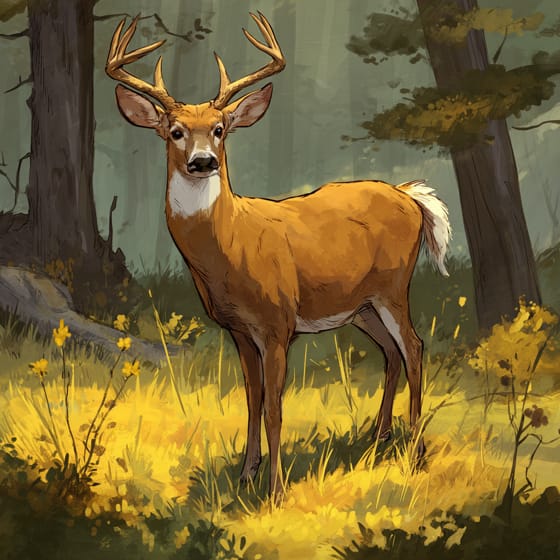
Odocoileus virginianus
Browses the early spring foliage and flowers.
Deciduous plants periodically shed all their leaves, typically during autumn or dry seasons.
Flowering plants are any plants that produce flowers as part of their reproductive cycle.
Shade tolerant plants are adapted to grow and thrive in areas with low light levels, requiring less direct sunlight.
Spring blooming plants produce their flowers during the spring season, often signifying the end of winter and the start of new growth.

Fragrant flowers emit a pleasant aroma, often to attract pollinators or for defense.

Describes plants that are particularly attractive and beneficial to a wide range of pollinating organisms.

Forest habitats are terrestrial environments dominated by dense tree cover, supporting a high diversity of plant and animal life.
No aliases listed yet.
Danger
2/5 · Low
Do not touch or eat any wild plants without asking an adult first.
The easiest way to identify Dutchman's breeches is to use the Snappit nature identifier app.
15-30 cm
15-25 cm
1.5-2.5 cm
Spring
No
Moderate
Perennial
Zoom in to split clusters and explore where this object has been snapped.

Vermont, US
You might spot Japanese Knotweed and Red-Bellied Woodpecker.
View guide →

Iowa, US
You might spot American Toad and Silver-Spotted Skipper.
View guide →

Iowa, US
You might spot False Rue Anemone, Sharp-Lobed Hepatica, and Common Shiner.
View guide →

Kentucky, US
You might spot Large White Trillium and Sharp-Lobed Hepatica.
View guide →

Indiana, US
You might spot Mayapple, Virginia Springbeauty, and Bloodroot.
View guide →

West Virginia, US
You might spot Eastern Boxelder Bug, Canada Goose, and Groundhog.
View guide →
Take the discovery with you
Snap it with Snappit to identify it, learn what makes it special, and add the discovery to your collection.






.jpg&width=800)


_001.jpg&width=800)



