





Ebony Jewelwing
Calopteryx maculata
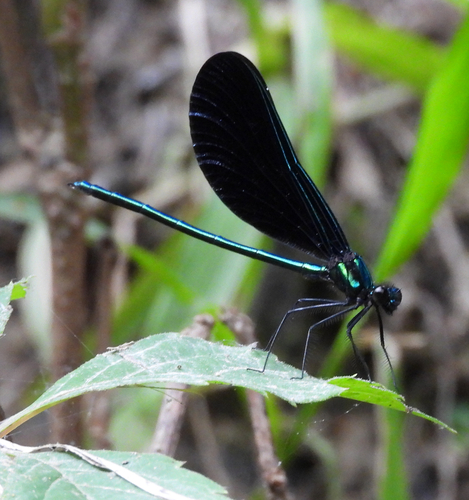
The Ebony Jewelwing is a beautiful dragonfly with shiny black wings and a sparkling blue-green body. They love to flutter around near water and are fun to watch as they dance in the air.
Habitat: Wetlands
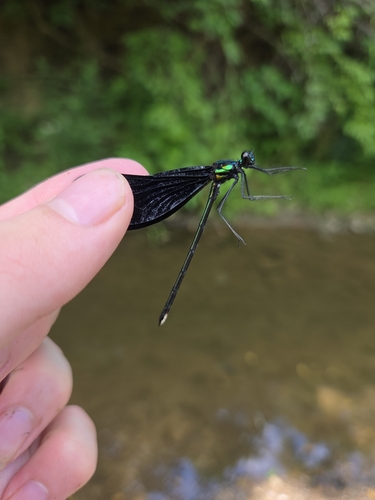
The Ebony Jewelwing is a striking damselfly with a shimmering metallic green body. Males have distinctive, completely opaque black wings, while females have dark, smoky wings with a white spot near the tip. This unique combination of bright body and dark wings makes it easily identifiable.
Category
InsectsRarity
Common
Danger
1/5 · Very low
Snaps
111
Males have wings so dark, they absorb sunlight to help warm up for flight!
These dainty insects often "perch" with their wings folded tightly along their body!
They spend over a year as a fierce larva, hidden at the bottom of streams!
Wow! Baby jewelwings breathe underwater using feathery gills on their tails!
Ebony Jewelwing males can perform elaborate aerial dances because of their powerful wings that help them attract mates.
Ebony Jewelwing females can lay eggs inside aquatic plant stems because of their special ovipositor that helps protect their young.
Ebony Jewelwing has large compound eyes that help them spot tiny flying insects while hunting over water.
Ebony Jewelwing males have completely black wings that flash in sunlight, helping them signal territory to other damselflies.
Ebony Jewelwings are aerial predators, snatching up tiny flying insects with lightning speed!
Age differences: Larvae eat tiny aquatic invertebrates, while adults feast on flying insects.
.jpg&width=800)
Tyrannus tyrannus
Adults are caught by quick-flying insectivorous birds.
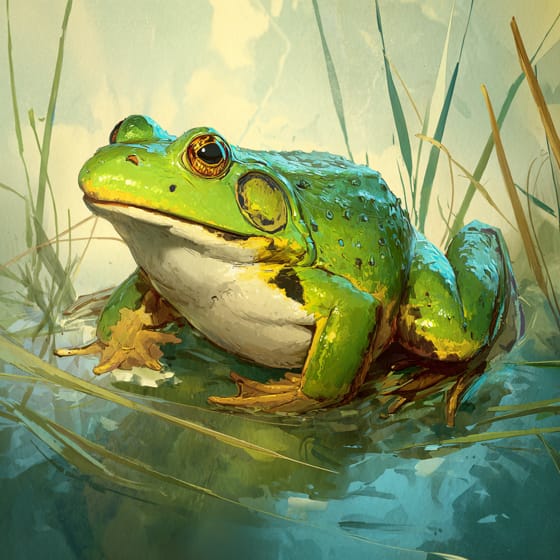
Lithobates clamitans
Frogs ambush adult damselflies that fly too close to the water.
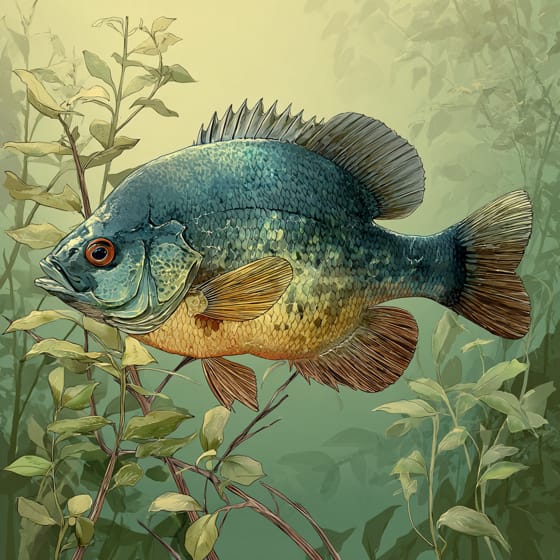
Lepomis macrochirus
Fish eat the aquatic larvae as a source of protein.
Typha latifolia
Adults perch on stems near water, resting and hunting.
Solitary animals live alone for most of their lives, only interacting with others for mating or parental care.
Aerial creatures spend a significant portion of their lives airborne, utilizing flight for various activities such as hunting, migration, or nesting.
Colorful describes organisms or objects displaying a wide range of bright and distinct colors.
This trait identifies organisms whose diet primarily consists of insects and other small invertebrates.

This habitat trait identifies species found in wetlands, which are areas of land saturated with water, either permanently or seasonally, including marshes, swamps, and bogs.

Diurnal animals are primarily active during daylight hours, typically resting or sleeping at night.

This trait identifies organisms that exhibit exceptional swiftness in movement for hunting, escape, or travel.

Aquatic habitats encompass environments where organisms live predominantly in water, including oceans, rivers, lakes, and wetlands.

Describes organisms that transfer pollen, enabling the fertilization and reproduction of plants.
Danger
1/5 · Very low
Be careful near water where they live, and watch them from a safe distance.
The easiest way to identify Ebony Jewelwing is to use the Snappit nature identifier app.
50-70 mm
38-57 mm
30-60 days
8 km/h
Ebony Jewelwings are aerial predators, snatching up tiny flying insects with lightning speed!
Wetlands
Pursuit
Zoom in to split clusters and explore where this object has been snapped.
Jun 6, 2026
Hocking Valley Scenic Railway Historic DistrictPhoto attribution
(c) Anna Hess, some rights reserved (CC BY)
License: CC BY 4.0 ↗
Image may be shown cropped inside the card frame.
Jul 9, 2025
Shimek State ForestPhoto attribution
(c) -Rorey-, some rights reserved (CC BY)
License: CC BY 4.0 ↗
Image may be shown cropped inside the card frame.

Illinois, US
You might spot Common Eastern Bumble Bee and Brown-Belted Bumble Bee.
View guide →

South Carolina, US
You might spot Anole, Green Treefrog, and Eastern Gray Squirrel.
View guide →

Tennessee, US
You might spot Black Bear, Yellow Wakerobin, and Pipevine Swallowtail.
View guide →

Rhode Island, US
You might spot Common Mugwort, Duck, and Azure Bluet.
View guide →

Pennsylvania, US
You might spot Mountain Laurel, Ghost Pipe, and Sweetfern.
View guide →

Maryland, US
You might spot Crane-Fly Orchid, Fragile Forktail, and Ebony Jewelwing.
View guide →
Take the discovery with you
Snap it with Snappit to identify it, learn what makes it special, and add the discovery to your collection.








.jpg&width=800)



