.jpg&width=800)





Egyptian Goose
Alopochen aegyptiaca
The Egyptian Goose is a colorful bird with a striking face and a unique honking sound. They love to swim and can often be seen waddling around parks and wetlands.
Habitat: Wetlands
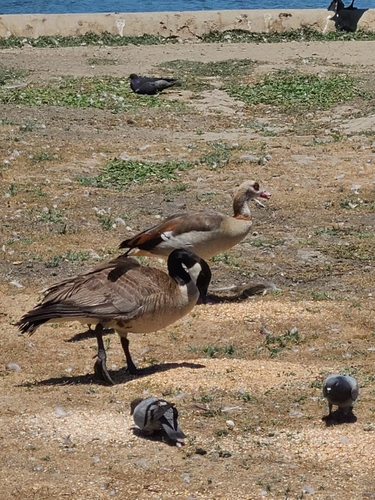
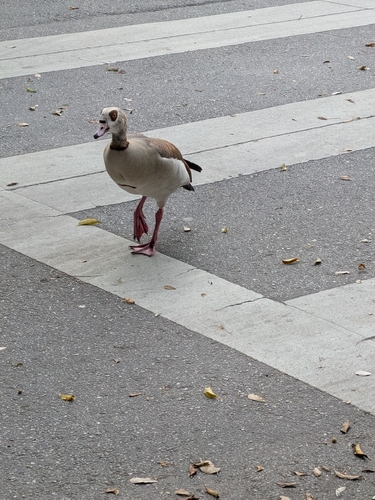
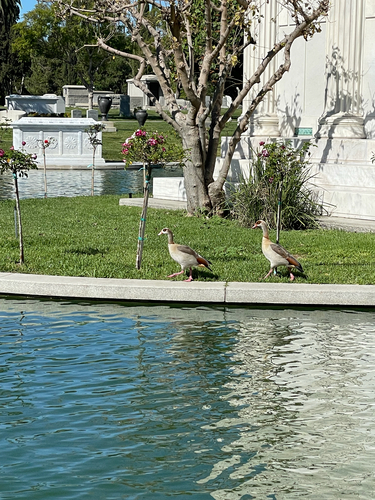
The Egyptian Goose has a distinctive dark chocolate-brown patch around its eye and a reddish-brown collar on its neck. Its body features a mix of grey, brown, and white feathers with bright pink legs, making it easily distinguishable from other geese.
Category
BirdsRarity
Common
Danger
1/5 · Very low
Snaps
26
A female can lay up to 12 eggs in a single nest, sometimes even more!
Ancient Egyptians considered these geese sacred and painted them in their tombs.
Their loud 'honk-HA-ha!' call is very distinct and can be heard far away.
Unlike most geese, they often perch in trees, using old nests from other birds!
Egyptian Geese can fiercely defend their nesting territory, even chasing away much larger birds, because of their strong territorial instincts.
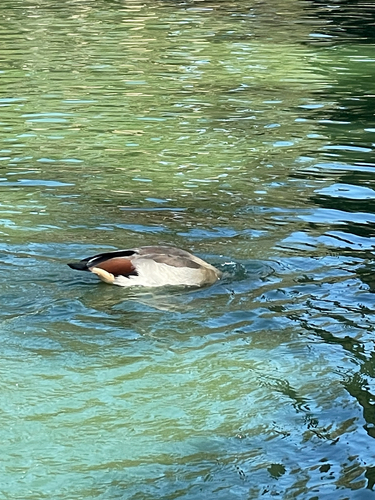
This goose can both graze on land and dabble in shallow water to find food, which helps them access a wide variety of meals.
Egyptian Geese sometimes nest high up in tree hollows or abandoned raptor nests, which provides safer nesting spots.
Egyptian Geese are mostly vegetarians, munching on various plants, but sometimes eat small insects too.
Typha latifolia
Consumes leaves and seeds of this common wetland plant.
Triticum aestivum
Graze on young shoots in agricultural fields.
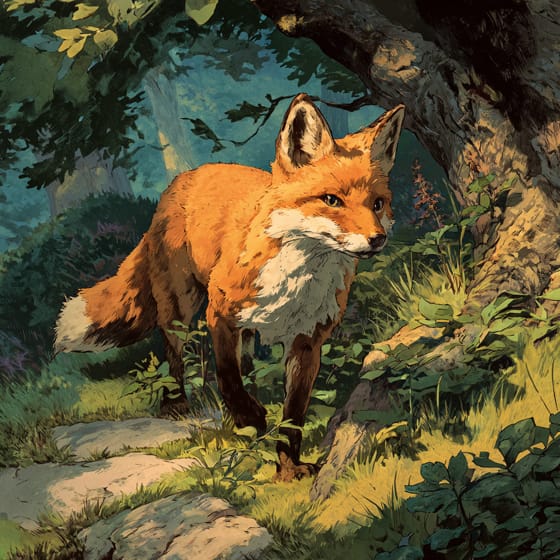
Vulpes vulpes
Foxes prey on their eggs and young goslings.

Arundo donax
Nests are sometimes hidden within dense reed beds.
Feathered describes animals, primarily birds, possessing a covering of feathers.
Social animals live in organized groups, cooperating for survival benefits such as foraging, defense, and raising offspring.
Colorful describes organisms or objects displaying a wide range of bright and distinct colors.
This trait characterizes organisms whose diet consists entirely or primarily of plant material.

This habitat trait identifies species found in wetlands, which are areas of land saturated with water, either permanently or seasonally, including marshes, swamps, and bogs.

Diurnal animals are primarily active during daylight hours, typically resting or sleeping at night.
No aliases listed yet.
Danger
1/5 · Very low
Always watch birds from a distance and do not try to touch or feed them.
The easiest way to identify Egyptian Goose is to use the Snappit nature identifier app.
63-73 cm
134-154 cm
1.5-2.3 kg
10-15 years
70 km/h
Egyptian Geese are mostly vegetarians, munching on various plants, but sometimes eat small insects too.
Wetlands
Zoom in to split clusters and explore where this object has been snapped.
Jun 7, 2026
Los Encinos State Historic ParkPhoto attribution
(c) Mariana Vee, some rights reserved (CC BY)
License: CC BY 4.0 ↗
Image may be shown cropped inside the card frame.
Apr 19, 2026
Collins Waterfront Architectural DistrictPhoto attribution
no rights reserved
License: CC0 1.0 ↗
Image may be shown cropped inside the card frame.
Feb 13, 2026
Hollywood Forever CemeteryPhoto attribution
(c) Max, some rights reserved (CC BY)
License: CC BY 4.0 ↗
Image may be shown cropped inside the card frame.
Feb 13, 2026
Hollywood Forever CemeteryPhoto attribution
(c) Max, some rights reserved (CC BY)
License: CC BY 4.0 ↗
Image may be shown cropped inside the card frame.

Texas, US
You might spot Eastern Fox Squirrel and Great-Tailed Grackle.
View guide →

California, US
You might spot Western Fence Lizard and Eastern Fox Squirrel.
View guide →

Florida, US
You might spot Crested Anole, Brown Anole, and Peters's Rock Agama.
View guide →

Florida, US
You might spot White Ibis, Green Iguana, and Black-Crowned Night Heron.
View guide →

Florida, US
You might spot Brown Anole, White Ibis, and Anhinga.
View guide →

California, US
You might spot Duck, Mute Swan, and Pond Slider.
View guide →
Take the discovery with you
Snap it with Snappit to identify it, learn what makes it special, and add the discovery to your collection.




.jpg&width=800)







