





Engelmann daisy
Engelmannia peristenia
The Engelmann daisy is a bright yellow flower that loves to grow in sunny places. Its cheerful petals can make any garden look happy and bright!
Habitat: Grasslands
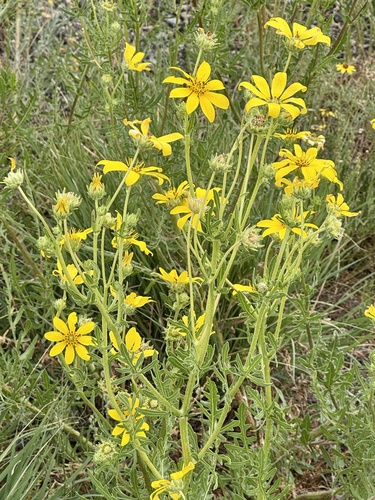
The Engelmann daisy has bright yellow, ray-like petals surrounding a darker yellow central disk. Its fuzzy leaves and stems give it a slightly rough texture. It stands out with its cheerful, daisy-like flowers on slender stalks.
Category
PlantsRarity
Common
Danger
1/5 · Very low
Snaps
11
It's a tough plant that loves to grow in rocky, limestone soils.
Its leaves feel rough and fuzzy, almost like sandpaper!
The Engelmann daisy can bloom for many months, from spring well into fall!
This daisy is named after a German-American botanist, George Engelmann.
Engelmann daisy has a deep taproot that helps it find water deep underground, surviving long dry spells.
Engelmann daisy can drop its seeds easily, allowing it to spread and create new plants without much help.
Engelmann daisy has hairy leaves and stems that help protect it from thirsty animals and reduce water loss.
Apis mellifera
collects nectar and pollen
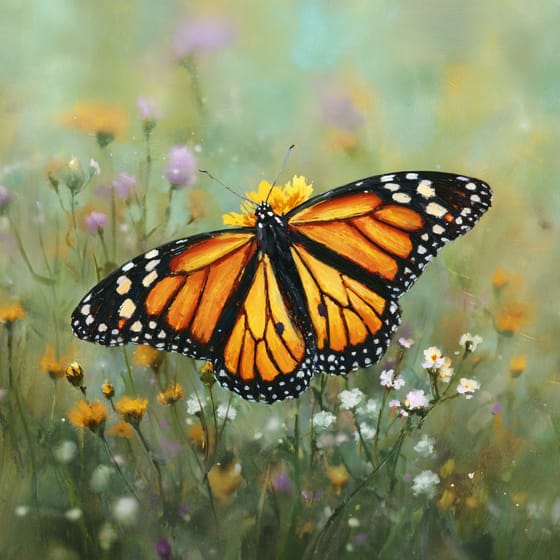
Danaus plexippus
visits flowers for nectar

Odocoileus virginianus
browses on leaves and stems

Schizachyrium scoparium
grows alongside in prairies
Flowering plants are any plants that produce flowers as part of their reproductive cycle.
Spring blooming plants produce their flowers during the spring season, often signifying the end of winter and the start of new growth.
Summer blooming plants produce their flowers during the summer season, often providing vibrant color when many other plants have finished.
Colorful describes organisms or objects displaying a wide range of bright and distinct colors.

Grassland habitats are terrestrial biomes dominated by grasses and herbaceous plants, supporting a variety of grazing animals.

Describes plants that are particularly attractive and beneficial to a wide range of pollinating organisms.

Rapid growing plants exhibit accelerated growth rates, quickly increasing in size and biomass within a short period.
No aliases listed yet.
Danger
1/5 · Very low
Always look but don't pick flowers unless an adult says it's okay.
The easiest way to identify Engelmann daisy is to use the Snappit nature identifier app.
30-60 cm
30-45 cm
2.5-5 cm
Late spring to mid-fall
No
None
Perennial
Zoom in to split clusters and explore where this object has been snapped.
May 29, 2026
Chihuahuan Desert Nature Center and Botanical GardensPhoto attribution
no rights reserved
License: CC0 1.0 ↗
Image may be shown cropped inside the card frame.

Texas, US
You might spot Anole, Monarch, and Pinkladies.
View guide →

Texas, US
You might spot Texas Hedgehog Cactus, Ornate Tree Lizard, and Cactus Wren.
View guide →

Texas, US
You might spot Silverleaf Nightshade and Green Comet Milkweed.
View guide →

Texas, US
You might spot Question Mark, Buttonbush, and Pomegranate.
View guide →

New Mexico, US
You might spot Sunflower, Sideoats Grama, and Tree Cholla.
View guide →

Texas, US
You might spot Yaupon Holly, American Beautyberry, and Loblolly Pine.
View guide →
Take the discovery with you
Snap it with Snappit to identify it, learn what makes it special, and add the discovery to your collection.








.jpg&width=800)



_001.jpg&width=800)




