





Evening Grosbeak
Hesperiphona vespertina
The Evening Grosbeak is a colorful bird with bright yellow and black feathers. They love to eat seeds and can often be seen in trees, making cheerful sounds with their friends.
Habitat: Forests
The Evening Grosbeak has a large, pale, cone-shaped beak and a short tail. Males are strikingly bright yellow with a dark head, black wings marked with large white patches. Females are duller, mostly grayish-yellow, but share the distinctive bill shape.
Category
BirdsRarity
Common
Danger
1/5 · Very low
Snaps
5
Sometimes, thousands of grosbeaks will suddenly appear in a new area to find food!
Their enormous beak can snap a cherry pit in half, just like a nutcracker!
These birds sing mostly during dawn and dusk, which is how they got their 'evening' name!
They love to eat spruce budworms and can help control outbreaks in forests.
Evening Grosbeaks have a powerful, cone-shaped beak that helps them crush tough seeds like cherry pits.
Evening Grosbeaks can travel far and wide to find food because they follow tree seed crops across North America.
Evening Grosbeaks can quickly find food sources because they often fly and feed in large, noisy flocks.
They primarily feast on tree seeds and fruits, but also enjoy munching on insects in summer!
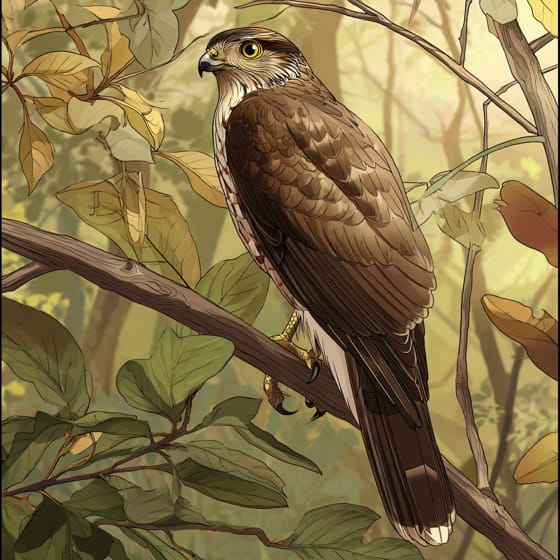
Accipiter cooperii
A common predator of small birds, including grosbeaks.
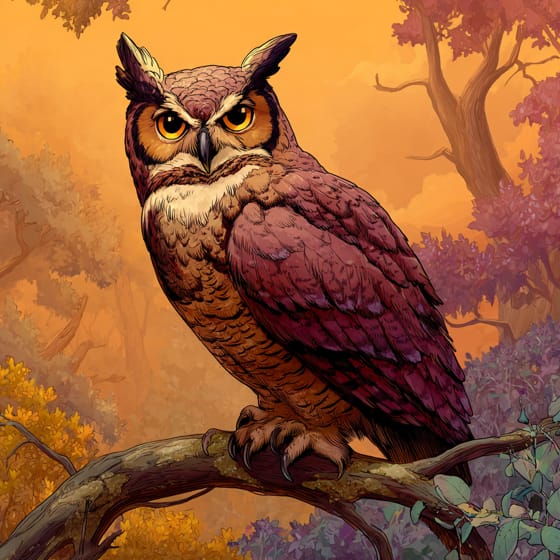
Bubo virginianus
Hunts grosbeaks, especially at night when they roost.

Acer negundo
Its seeds are a favorite food, cracked by their strong beaks.
Choristoneura fumiferana
Grosbeaks consume large quantities during outbreaks.
Feathered describes animals, primarily birds, possessing a covering of feathers.
Social animals live in organized groups, cooperating for survival benefits such as foraging, defense, and raising offspring.
Singing animals produce complex vocalizations, often for purposes of attracting mates, defending territory, or communicating within their species.
Colorful describes organisms or objects displaying a wide range of bright and distinct colors.

This trait characterizes organisms whose diet consists entirely or primarily of plant material.

Forest habitats are terrestrial environments dominated by dense tree cover, supporting a high diversity of plant and animal life.

Diurnal animals are primarily active during daylight hours, typically resting or sleeping at night.
No aliases listed yet.
Danger
1/5 · Very low
Enjoy watching birds from a distance, and don't try to touch or catch them.
The easiest way to identify Evening Grosbeak is to use the Snappit nature identifier app.
18-22 cm
30-36 cm
0.055-0.07 kg
5-7 years
50 km/h
They primarily feast on tree seeds and fruits, but also enjoy munching on insects in summer!
Forests
Zoom in to split clusters and explore where this object has been snapped.

Colorado, US
You might spot Great Basin Bristlecone Pine and Mule Deer.
View guide →

New Hampshire, US
You might spot Eastern White Pine, Trailing Arbutus, and White Oak.
View guide →

Colorado, US
You might spot Red Osier Dogwood and Creeping Mahonia.
View guide →

Colorado, US
You might spot Mule Deer, Bearberry, and Common Juniper.
View guide →

Montana, US
You might spot Grizzly Bear and North American River Otter.
View guide →
Take the discovery with you
Snap it with Snappit to identify it, learn what makes it special, and add the discovery to your collection.




.jpg&width=800)






