





Ferruginous Carpenter Ant
Camponotus chromaiodes
The Ferruginous Carpenter Ant is a hardworking insect that builds its home in wood. They are known for their strong jaws and teamwork when gathering food and caring for their young.
Habitat: Forests
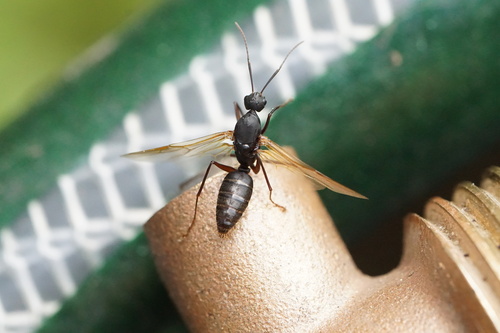
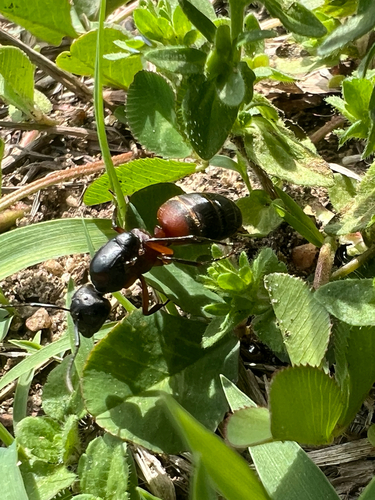
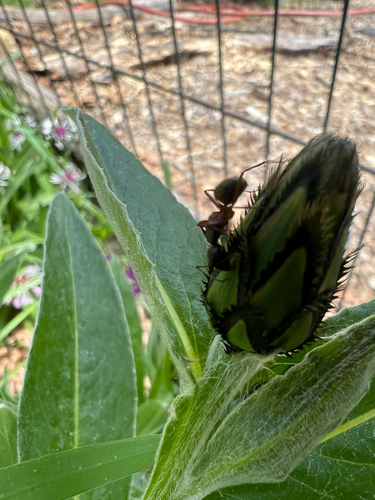
The Ferruginous Carpenter Ant is a large ant with a reddish-brown head and thorax, contrasting with a dark black abdomen. Its body often has fine, scattered hairs. Workers vary significantly in size within the colony, from smaller minors to larger majors, but all share this distinctive two-toned coloring.
Category
InsectsRarity
Common
Danger
1/5 · Very low
Snaps
35
Major worker ants are like strong 'soldiers' with huge jaws to defend the nest!
Queens can live for over 15 years, starting huge new ant cities!
These ants chew wood to make homes, but they don't eat it!
They often move their whole colony if a better nesting spot is found!
Ferruginous Carpenter Ant can tunnel through wood to create elaborate nests that shelter its colony from danger.
Ferruginous Carpenter Ant uses chemical trails to guide nestmates to food sources and back to the colony.
Ferruginous Carpenter Ant can spray formic acid from its abdomen, deterring predators and protecting its nest.
An omnivore that dines on sugary liquids and tiny insects for energy.
Aphis fabae
Tends aphids for their sugary honeydew secretions.
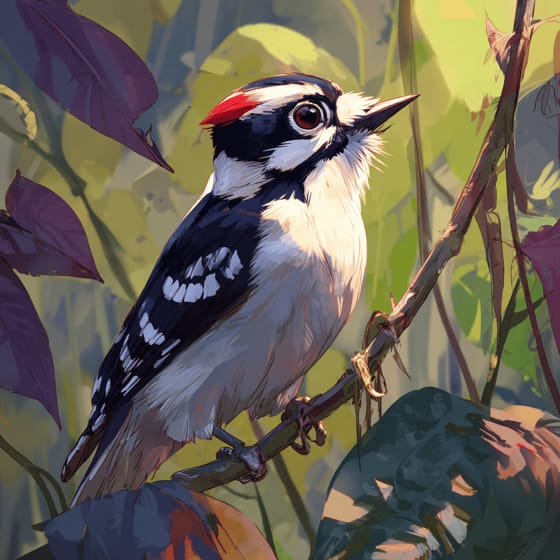
Dendrocopos pubescens
Woodpeckers can feast on ants found in wood.

Argiope aurantia
Spiders may trap foraging ants in their webs.
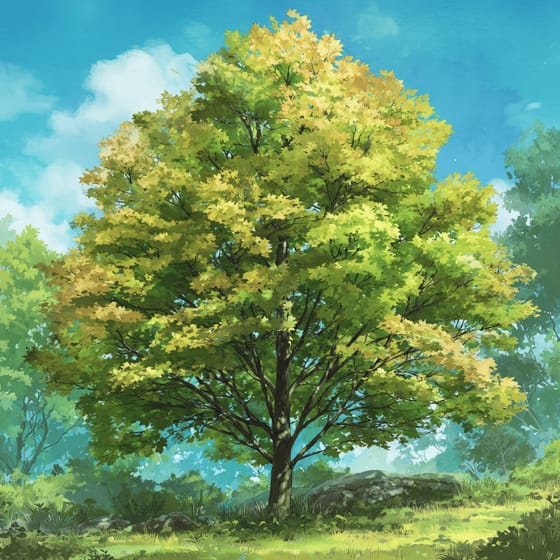
Acer saccharum
Nests are often found in decaying parts of various trees.
Social animals live in organized groups, cooperating for survival benefits such as foraging, defense, and raising offspring.
This trait identifies organisms whose diet includes both plant and animal matter.
This trait describes organisms that manipulate external objects to achieve a specific goal.
Describes organisms that break down dead organic material, recycling nutrients back into the ecosystem.

Forest habitats are terrestrial environments dominated by dense tree cover, supporting a high diversity of plant and animal life.

Diurnal animals are primarily active during daylight hours, typically resting or sleeping at night.

Describes a species whose presence and role have a disproportionately large effect on its environment.

Pertaining to species that are significantly smaller than typical or average for their kind.
No aliases listed yet.
Danger
1/5 · Very low
Watch where you step in the forest, and don't disturb ant homes.
The easiest way to identify Ferruginous Carpenter Ant is to use the Snappit nature identifier app.
15-30 mm
6-16 mm
365-5475 days
An omnivore that dines on sugary liquids and tiny insects for energy.
Forests
Foraging
6
Zoom in to split clusters and explore where this object has been snapped.
Jun 5, 2026
Wesleyan GrovePhoto attribution
(c) Matt Pelikan, some rights reserved (CC BY)
License: CC BY 4.0 ↗
Image may be shown cropped inside the card frame.
May 22, 2026
Hopkins Mill Historic DistrictPhoto attribution
(c) Deana Tempest Thomas, some rights reserved (CC BY)
License: CC BY 4.0 ↗
Image may be shown cropped inside the card frame.
May 22, 2026
Hopkins Mill Historic DistrictPhoto attribution
(c) Deana Tempest Thomas, some rights reserved (CC BY)
License: CC BY 4.0 ↗
Image may be shown cropped inside the card frame.

Illinois, US
You might spot Brown-Belted Bumble Bee and Eastern Gray Squirrel.
View guide →

Alabama, US
You might spot American Beautyberry, White-Tailed Deer, and Peppervine.
View guide →

Rhode Island, US
You might spot Common Eastern Bumble Bee and Asian Lady Beetle.
View guide →

Connecticut, US
You might spot Hay-Scented Fern, Canada Mayflower, and Wood Frog.
View guide →

Pennsylvania, US
You might spot Spotted Lanternfly, Duck, and Asian Lady Beetle.
View guide →

Ohio, US
You might spot Brown-Belted Bumble Bee and Eastern Carpenter Bee.
View guide →
Take the discovery with you
Snap it with Snappit to identify it, learn what makes it special, and add the discovery to your collection.








.jpg&width=800)


