





Gadwall
Mareca strepera
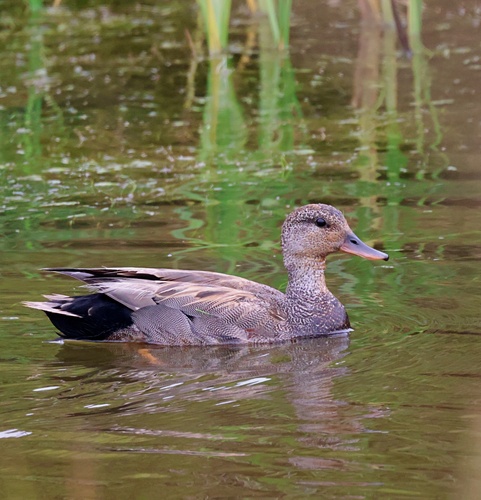
The Gadwall is a lovely duck that loves to swim in ponds and lakes. It has a grayish-brown body and is often seen with other ducks, making it a friendly bird to watch!
Habitat: Wetlands
The Gadwall is a medium-sized grey-brown duck. Males have fine patterns on their body, a black rear, and a striking white speculum (wing patch) visible in flight. Females are mottled brown but also possess a white speculum, distinguishing them from many other dabbling ducks.
Category
BirdsRarity
Common
Danger
1/5 · Very low
Snaps
24
A female Gadwall might lay her eggs in another duck's nest sometimes!
Gadwall ducks often build their nests far from water, hidden in tall grasses!
These ducks are found all over the world, from America to Asia!
They don't quack much; instead, males make a deep, reedy whistle sound!
Gadwall can tip head-first into water to reach yummy plants at the bottom, helping them find food without fully diving.
The Gadwall has subtle grey-brown plumage that helps it blend perfectly into marshy reeds, making it hard for predators to spot.
Gadwall has a bright white wing patch that flashes in flight, helping flock members stay together and identify each other.
Mostly eats watery plants and their seeds, with some tiny insects, making them primarily herbivores.
Age differences: Ducklings consume more protein-rich insects for rapid growth, shifting to more plants as they mature.

Haliaeetus leucocephalus
Nests and ducklings are vulnerable to powerful aerial hunters.
Potamogeton crispus
Relies on abundant aquatic vegetation for food source.
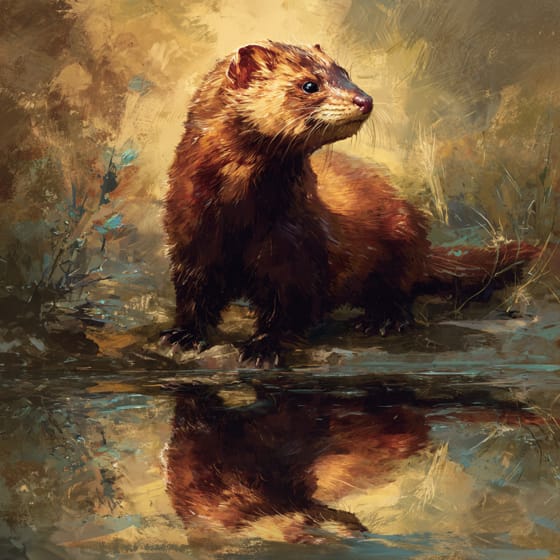
Mustela vison
Nests, eggs, and ducklings are prey for river predators.

Sagittaria latifolia
Consumes seeds and tubers from various water plants.
Feathered describes animals, primarily birds, possessing a covering of feathers.
Characterized by having toes connected by a membrane, typically aiding in swimming.
Social animals live in organized groups, cooperating for survival benefits such as foraging, defense, and raising offspring.
Filter feeders obtain nutrients by straining suspended food particles and small organisms from water.

This trait characterizes organisms whose diet consists entirely or primarily of plant material.

This habitat trait identifies species found in wetlands, which are areas of land saturated with water, either permanently or seasonally, including marshes, swamps, and bogs.

Diurnal animals are primarily active during daylight hours, typically resting or sleeping at night.

Aquatic habitats encompass environments where organisms live predominantly in water, including oceans, rivers, lakes, and wetlands.

Migratory animals undertake seasonal movements from one region to another, typically in response to changes in climate or food availability.
No aliases listed yet.
Danger
1/5 · Very low
Always watch ducks from a distance and don't feed them bread.
The easiest way to identify Gadwall is to use the Snappit nature identifier app.
46-58 cm
78-90 cm
0.7-1.3 kg
5-10 years
80 km/h
Mostly eats watery plants and their seeds, with some tiny insects, making them primarily herbivores.
Wetlands
Zoom in to split clusters and explore where this object has been snapped.
Jun 3, 2026
Humboldt Botanical GardensPhoto attribution
(c) Eric Austin, some rights reserved (CC BY)
License: CC BY 4.0 ↗
Image may be shown cropped inside the card frame.

Washington, US
You might spot Pacific Banana Slug and Oregon Forestsnail.
View guide →

California, US
You might spot Largemouth Bass and Birdcage Evening Primrose.
View guide →

Michigan, US
You might spot Bald Eagle, American White Pelican, and Painted Turtle.
View guide →

Alaska, US
You might spot Steller Sea Lion, Harbor Seal, and Tufted Puffin.
View guide →

Alabama, US
You might spot Green Treefrog, Anole, and Thin-Walled Maze Polypore.
View guide →

Washington, US
You might spot Duck, Western Sword Fern, and Rock Pigeon.
View guide →
Take the discovery with you
Snap it with Snappit to identify it, learn what makes it special, and add the discovery to your collection.




.jpg&width=800)







