





Gambel Oak
Quercus gambelii
The Gambel Oak is a friendly tree that grows in warm places. It has beautiful leaves that turn bright colors in the fall, making it a lovely sight to see!
Habitat: Mountain regions
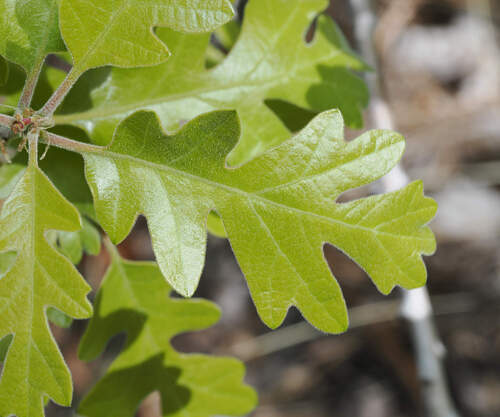
The Gambel Oak is a small to medium-sized tree or shrub, often forming dense thickets. It has deeply lobed, often glossy green leaves that turn vibrant gold, orange, or red in autumn. Its light gray, furrowed bark helps distinguish it.
Category
PlantsRarity
Common
Danger
1/5 · Very low
Snaps
21
It often acts as a "nurse tree," shading younger plants.
Its acorns are a feast for over 100 wildlife species!
Some Gambel Oaks can live for over 300 years!
This oak's deep roots help prevent soil erosion on slopes.
Gambel Oak can regenerate from extensive underground root systems, helping it recover quickly after fires or damage.
Gambel Oak bark and root systems are adapted to survive wildfires, allowing it to quickly resprout in burned areas.
Gambel Oak acorns contain special compounds called tannins, which protect them from pests.

Sciurus aberti
Its acorns are a primary food source.
Ursus americanus
Bears forage on its protein-rich acorns.
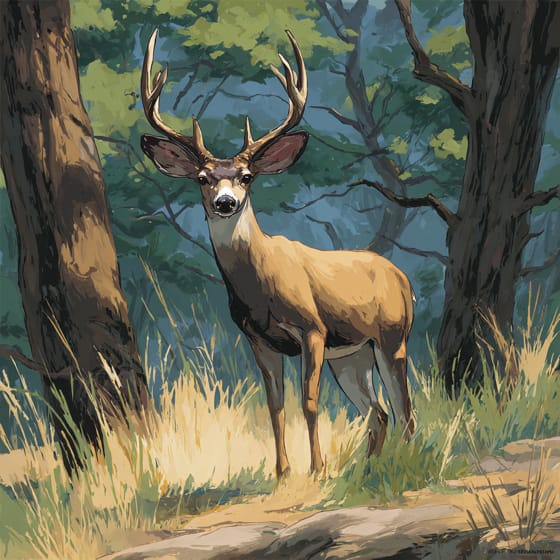
Odocoileus hemionus
Deer browse its leaves and acorns.
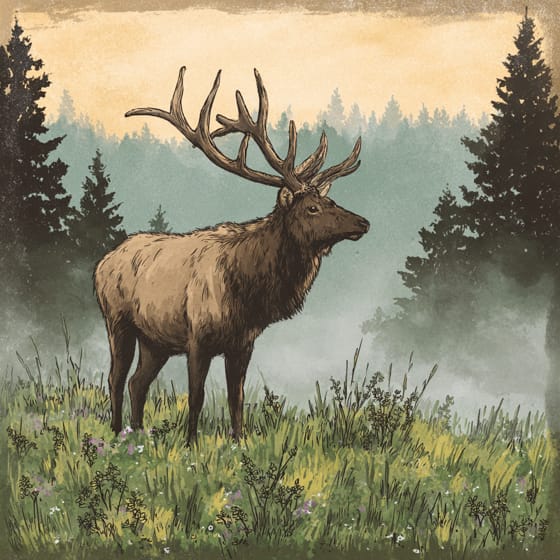
Cervus canadensis
Dense thickets provide cover and forage.
Deciduous plants periodically shed all their leaves, typically during autumn or dry seasons.
Shade tolerant plants are adapted to grow and thrive in areas with low light levels, requiring less direct sunlight.
Broadleaf trees are angiosperms characterized by flat, wide leaves that are typically shed annually in temperate climates.
Nut bearing plants produce hard-shelled fruits, commonly known as nuts, which contain a single seed and are a valuable food source.

Edible plants are those parts of a plant that are considered safe for human consumption.

Fall color refers to the seasonal change in foliage pigmentation, primarily in deciduous plants, displaying vibrant hues.

Timber refers to wood that has been prepared for use in building and carpentry.

This habitat trait identifies species found in mountainous regions, characterized by high elevation, steep slopes, and varying climate zones.

This trait characterizes organisms with an exceptionally long lifespan compared to others of their kind.

Describes a species whose presence and role have a disproportionately large effect on its environment.
Danger
1/5 · Very low
Stay away from the tree's branches and don't eat the acorns without asking an adult.
The easiest way to identify Gambel Oak is to use the Snappit nature identifier app.
300-900 cm
300-1200 cm
Spring
Yes
None
Perennial
Wind
Zoom in to split clusters and explore where this object has been snapped.
Apr 24, 2026
Grandview MinePhoto attribution
(c) Wendy McCrady, some rights reserved (CC BY)
License: CC BY 4.0 ↗
Image may be shown cropped inside the card frame.

California, US
You might spot Warrior's Plume and Purple Owl's-Clover.
View guide →

Utah, US
You might spot Common Golden-Mantled Ground Squirrel and Steller's Jay.
View guide →

Utah, US
You might spot Common Golden-Mantled Ground Squirrel and Steller's Jay.
View guide →

Arizona, US
You might spot Yarrow's Spiny Lizard and Mexican Jay.
View guide →

California, US
You might spot White Globe Lily, Rose Campion, and Pipevine Swallowtail.
View guide →

California, US
You might spot Toyon, Mule Deer, and White Globe Lily.
View guide →
Take the discovery with you
Snap it with Snappit to identify it, learn what makes it special, and add the discovery to your collection.








.jpg&width=800)


_001.jpg&width=800)

