.jpg&width=800)





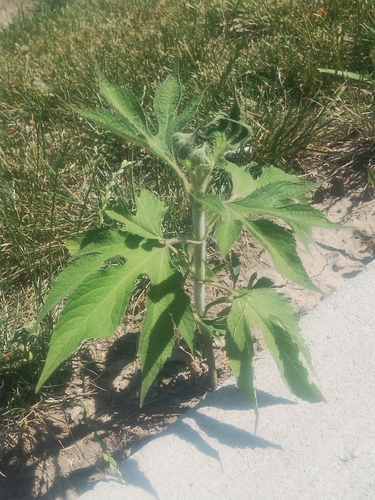
giant ragweed
Ambrosia trifida
Giant ragweed is a tall plant that can grow very high, sometimes over 10 feet! It has big, green leaves and produces lots of tiny flowers that turn into seeds.
Habitat: Grasslands
The giant ragweed is a towering plant, often reaching impressive heights, with thick, rough, reddish-green stems. Its large, deeply lobed leaves resemble a bird's foot. The inconspicuous greenish-yellow flowers grow in tall spikes, giving the plant a rather plain but imposing appearance.
Category
PlantsRarity
Common
Danger
2/5 · Low
Snaps
30
Ancient people once harvested its nutritious seeds for food and oil.
Giant ragweed can help clean polluted soil by soaking up heavy metals.
Its super-fine pollen can travel hundreds of miles, causing allergies far away!
One giant ragweed plant can produce over a billion pollen grains in a single season!
Giant ragweed can produce billions of lightweight pollen grains that travel vast distances, helping it spread far and wide.
Giant ragweed has an incredibly fast growth rate, allowing it to quickly outcompete other plants for vital sunlight and resources.
Giant ragweed seeds can remain viable, or alive, in the soil for decades, giving it a powerful advantage for future growth.
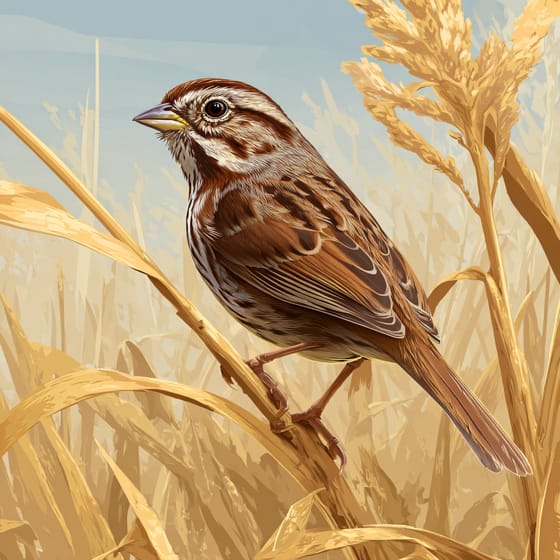
Melospiza melodia
Eats its oil-rich seeds, especially in winter.

Carduelis tristis
Feeds on the numerous seeds, a vital food source.
Puccinia xanthii
This fungus specifically infects and weakens giant ragweed plants.
Epilachna borealis
Larvae and adults sometimes feed on ragweed leaves.
Deciduous plants periodically shed all their leaves, typically during autumn or dry seasons.
Flowering plants are any plants that produce flowers as part of their reproductive cycle.
Edible plants are those parts of a plant that are considered safe for human consumption.
Grassland habitats are terrestrial biomes dominated by grasses and herbaceous plants, supporting a variety of grazing animals.

Describes plants that are particularly attractive and beneficial to a wide range of pollinating organisms.

Rapid growing plants exhibit accelerated growth rates, quickly increasing in size and biomass within a short period.

Describes a species whose presence and role have a disproportionately large effect on its environment.

Giant describes organisms or objects of significantly larger size than average for their species or type.
No aliases listed yet.
Danger
2/5 · Low
Be careful not to touch the plant if you have allergies, as it can cause sneezing.
The easiest way to identify giant ragweed is to use the Snappit nature identifier app.
100-400 cm
50-150 cm
0.2-0.5 cm
Late_summer_fall
No
None
Annual
Zoom in to split clusters and explore where this object has been snapped.
Jun 2, 2026
Lock and Dam No. 15Photo attribution
no rights reserved
License: CC0 1.0 ↗
Image may be shown cropped inside the card frame.

Tennessee, US
You might spot House Sparrow, Northern Mockingbird, and Gulf Fritillary.
View guide →

Illinois, US
You might spot Common Eastern Bumble Bee and Brown-Belted Bumble Bee.
View guide →

Iowa, US
You might spot Common Eastern Bumble Bee and Eastern Cottontail.
View guide →

New Jersey, US
You might spot Common Mugwort and White-Tailed Deer.
View guide →

New Jersey, US
You might spot Eastern Gray Squirrel and Canada Goose.
View guide →

Alabama, US
You might spot Muscovy Duck and Gulf Longear Sunfish.
View guide →
Take the discovery with you
Snap it with Snappit to identify it, learn what makes it special, and add the discovery to your collection.







.jpg&width=800)



_001.jpg&width=800)



