





Grasshopper Sparrow
Ammodramus savannarum
The Grasshopper Sparrow is a small bird that loves to hop around in grassy fields. It has a sweet, chirpy song that sounds like it's singing about summer days.
Habitat: Grasslands
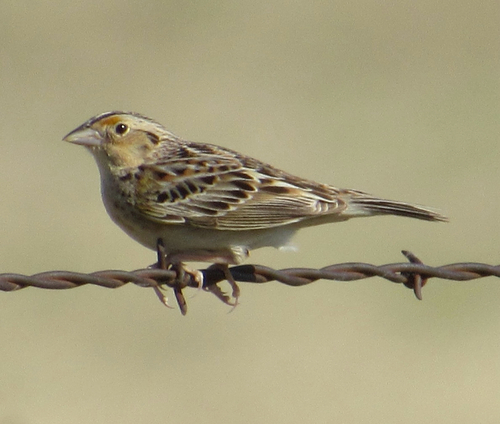
The Grasshopper Sparrow is a small, streaky brown bird with a large, flat head and a short tail. It has a buffy chest and an unstreaked pale belly, often with a yellow patch near the bend of its wing, making it look well-hidden in dry grasses.
Category
BirdsRarity
Common
Danger
1/5 · Very low
Snaps
7
Some Grasshopper Sparrows travel thousands of miles to warmer lands for winter!
Their eggs are often spotted with reddish-brown, making them tiny works of art!
Unlike many birds, they prefer to walk or run through fields rather than fly long distances!
When singing, a male Grasshopper Sparrow often tilts its head back dramatically!
Grasshopper Sparrows have streaky brown plumage that helps them blend perfectly into tall, dry grasses to hide from predators.
Grasshopper Sparrows can produce a high-pitched, insect-like buzz as a song, helping them communicate and claim territory.
Grasshopper Sparrows can run quickly through dense vegetation like a mouse, which helps them forage and evade detection.
These tiny birds feast mostly on insects like grasshoppers and beetles, plus a few seeds!
Age differences: Young birds eat mostly soft-bodied insects, while adults include more seeds in their diet.
Melanoplus femurrubrum
A primary food source for sparrows, rich in protein.

Popillia japonica
Sparrows help control this common agricultural pest.
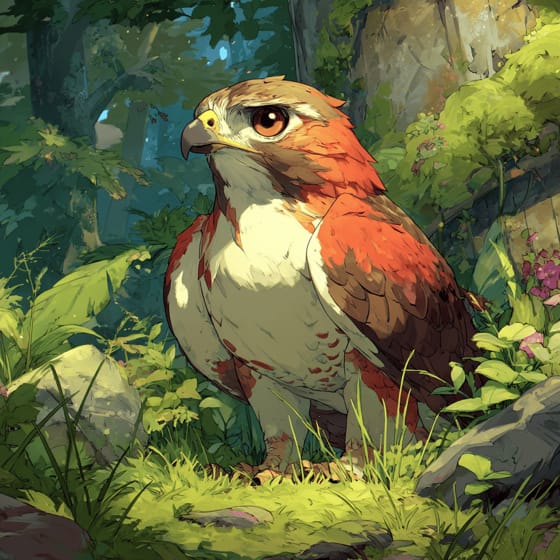
Buteo jamaicensis
A common aerial predator of small grassland birds.

Andropogon gerardii
Key prairie grass providing essential cover and nesting sites.
Feathered describes animals, primarily birds, possessing a covering of feathers.
Social animals live in organized groups, cooperating for survival benefits such as foraging, defense, and raising offspring.
Singing animals produce complex vocalizations, often for purposes of attracting mates, defending territory, or communicating within their species.
Grassland habitats are terrestrial biomes dominated by grasses and herbaceous plants, supporting a variety of grazing animals.

This trait identifies organisms whose diet primarily consists of insects and other small invertebrates.

Diurnal animals are primarily active during daylight hours, typically resting or sleeping at night.
No aliases listed yet.
Danger
1/5 · Very low
Always watch birds from a distance and don't disturb their nests.
The easiest way to identify Grasshopper Sparrow is to use the Snappit nature identifier app.
11-14 cm
17-22 cm
0.013-0.02 kg
2-4 years
35 km/h
These tiny birds feast mostly on insects like grasshoppers and beetles, plus a few seeds!
Grasslands
Zoom in to split clusters and explore where this object has been snapped.
May 16, 2026
Fort SupplyPhoto attribution
no rights reserved
License: CC0 1.0 ↗
Image may be shown cropped inside the card frame.

Illinois, US
You might spot Osage-Orange, Cutleaf Teasel, and Red Clover.
View guide →

South Carolina, US
You might spot Scissor-Tailed Flycatcher and Eastern Box Turtle.
View guide →

Oklahoma, US
You might spot Ring-Billed Gull and Great Blue Heron.
View guide →

Maryland, US
You might spot Bluntnose Minnow and Eastern Blacknose Dace.
View guide →
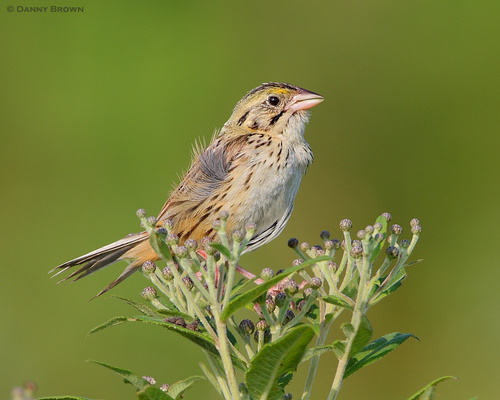
Iowa, US
You might spot Henslow's Sparrow, Grasshopper Sparrow, and Bobolink.
View guide →

Virginia, US
You might spot Autumn Olive, Japanese Barberry, and Virginia Bluebells.
View guide →
Take the discovery with you
Snap it with Snappit to identify it, learn what makes it special, and add the discovery to your collection.




.jpg&width=800)









