





Gray Catbird
Dumetella carolinensis
The Gray Catbird is a clever bird known for its beautiful gray feathers and sweet singing. It loves to hide in bushes and can mimic the sounds of other birds!
Habitat: Urban areas
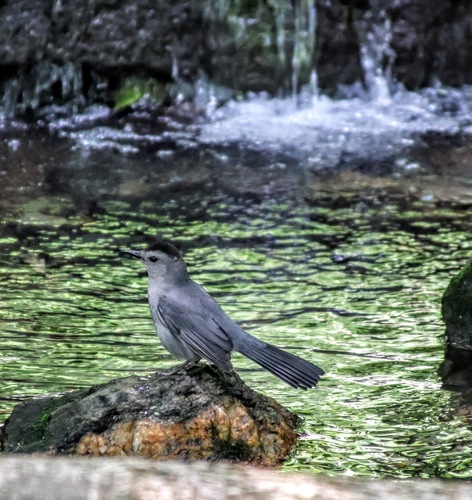
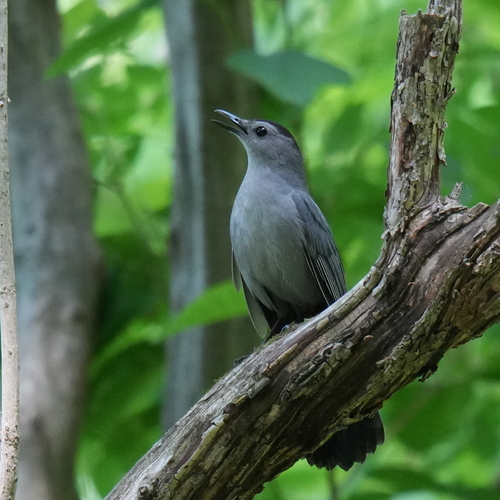
The Gray Catbird is a medium-sized songbird with a sleek, dark slaty-gray body. It has a distinctive black cap on its head and a bright rusty-brown patch hidden under its tail, making it easy to identify.
Category
BirdsRarity
Common
Danger
1/5 · Very low
Snaps
250
A male catbird can learn over 100 different songs!
The rusty patch under their tail is often hidden until they flick it!
Their nest is usually built in thorny bushes to protect chicks!
They can sing for up to 10 minutes without stopping!
Gray Catbird can mimic the songs of many other birds and even other sounds because of its complex vocal cords.
Gray Catbird has agile flight and a slender body that helps them expertly navigate thick bushes and dense vegetation.
Gray Catbird can release a foul-smelling secretion when threatened, which helps them deter predators.
Gray Catbirds are omnivores, meaning they enjoy a tasty mix of insects, spiders, and a variety of sweet berries.
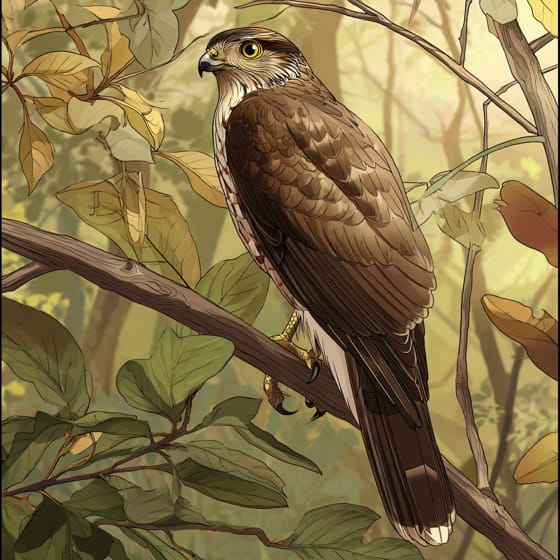
Accipiter cooperii
Young and adult catbirds are hunted by these agile raptors.
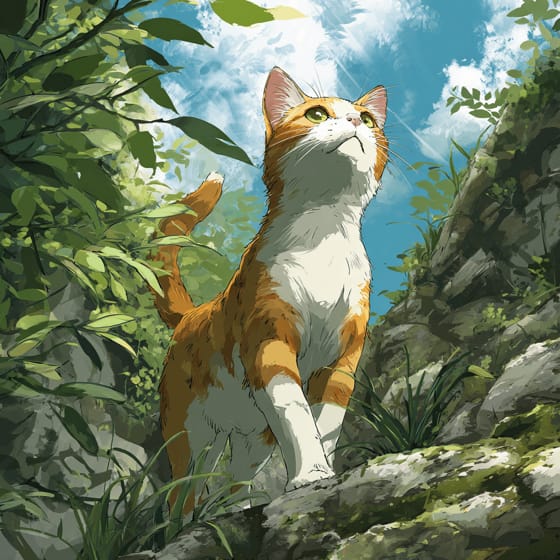
Panthera catus
Domestic cats are a significant predator, especially near human homes.
.jpg&width=800)
Molothrus ater
Cowbirds lay their eggs in catbird nests, tricking them into raising their young.
.jpg&width=800)
Rubus allegheniensis
Catbirds consume ripe berries, helping to spread their seeds.

Populus tremuloides
They build nests and find cover in the dense foliage of such trees and shrubs.
Feathered describes animals, primarily birds, possessing a covering of feathers.
Social animals live in organized groups, cooperating for survival benefits such as foraging, defense, and raising offspring.
Singing animals produce complex vocalizations, often for purposes of attracting mates, defending territory, or communicating within their species.
This trait identifies organisms whose diet primarily consists of insects and other small invertebrates.

Diurnal animals are primarily active during daylight hours, typically resting or sleeping at night.

This habitat trait indicates species that can coexist with humans in urban and suburban environments, utilizing man-made structures and green spaces.
No aliases listed yet.
Danger
1/5 · Very low
Enjoy watching birds from a distance and don't try to touch them.
The easiest way to identify Gray Catbird is to use the Snappit nature identifier app.
21-24 cm
22-30 cm
0.023-0.056 kg
2-10 years
40 km/h
Gray Catbirds are omnivores, meaning they enjoy a tasty mix of insects, spiders, and a variety of sweet berries.
Urban areas
Zoom in to split clusters and explore where this object has been snapped.
Jun 17, 2026
Centennial ArboretumPhoto attribution
(c) Joseph Rucker, some rights reserved (CC BY)
License: CC BY 4.0 ↗
Image may be shown cropped inside the card frame.
Jun 17, 2026
Tom S. Cooperrider-Kent Bog State Nature PreservePhoto attribution
no rights reserved
License: CC0 1.0 ↗
Image may be shown cropped inside the card frame.
Jun 16, 2026
Duke GardensPhoto attribution
(c) Natalie Lemanski, some rights reserved (CC BY-SA)
License: CC BY-SA 4.0 ↗
Image may be shown cropped inside the card frame.
Jun 6, 2026
Henderson Place Historic DistrictPhoto attribution
(c) cappycollins, some rights reserved (CC BY)
License: CC BY 4.0 ↗
Image may be shown cropped inside the card frame.
Jun 6, 2026
Reeves-Reed ArboretumPhoto attribution
(c) foxsu, some rights reserved (CC BY)
License: CC BY 4.0 ↗
Image may be shown cropped inside the card frame.

Alabama, US
You might spot Elf Orpine, Canada Goose, and Leatherleaf Mahonia.
View guide →

New York, US
You might spot Sundial Lupine, Spotted Horsemint, and New Jersey Tea.
View guide →

Massachusetts, US
You might spot Eastern White Pine and Common Eastern Bumble Bee.
View guide →

Tennessee, US
You might spot Black Bear, Yellow Wakerobin, and Pipevine Swallowtail.
View guide →

Rhode Island, US
You might spot Common Eastern Bumble Bee and Osprey.
View guide →

Maryland, US
You might spot Crane-Fly Orchid, Fragile Forktail, and Ebony Jewelwing.
View guide →
Take the discovery with you
Snap it with Snappit to identify it, learn what makes it special, and add the discovery to your collection.




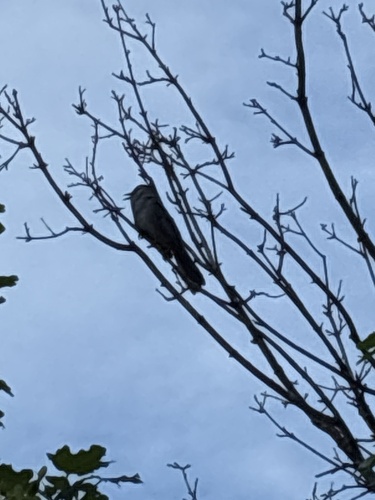
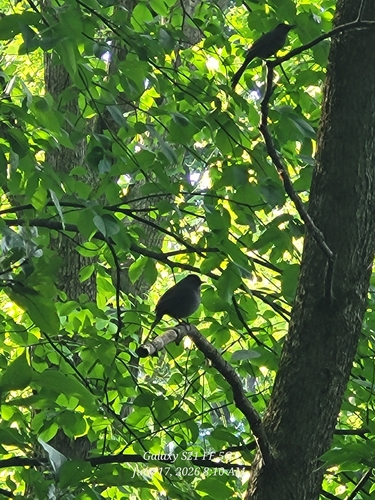
.jpg&width=800)









