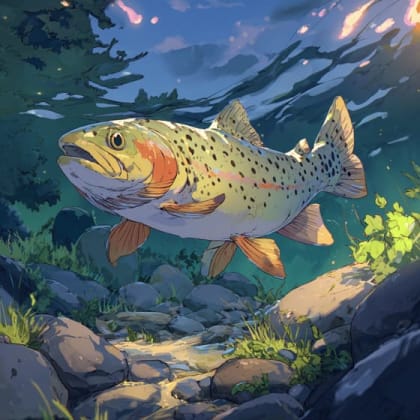
Green Sunfish
lepomis cyanellus
The Green Sunfish is a colorful fish that loves to swim in ponds and lakes! With its bright green and blue colors, it looks like a little treasure under the water.
Habitat: Freshwater lakes, ponds, and rivers
The Green Sunfish has an olive-green body with a blue or purplish sheen, often showing faint vertical bars. It features a large mouth, distinctive red-orange fin edges, and a prominent black spot with a light rim on its gill cover.
Category
FishRarity
Common
Danger
0/5 · No known danger
Snaps
29
A male Green Sunfish guards its nest and even fans the eggs with his fins.
Despite their name, their scales often shimmer more blue than green!
These fish are expert nest builders, creating circular depressions in soft river bottoms.
They can make grunting sounds using special teeth in their throat!
Green Sunfish can slightly change skin color to blend with murky or clear water because of specialized pigment cells.
Green Sunfish has a lateral line system that helps them detect vibrations from prey or predators, even in darkness.
Green Sunfish can open their large mouth very wide to swallow surprisingly big prey whole, making them effective predators.
Eats lots of different small critters, from insects to tiny fish, staying healthy!
Age differences: Young sunfish eat smaller invertebrates; adults consume larger prey including small fish and crayfish.
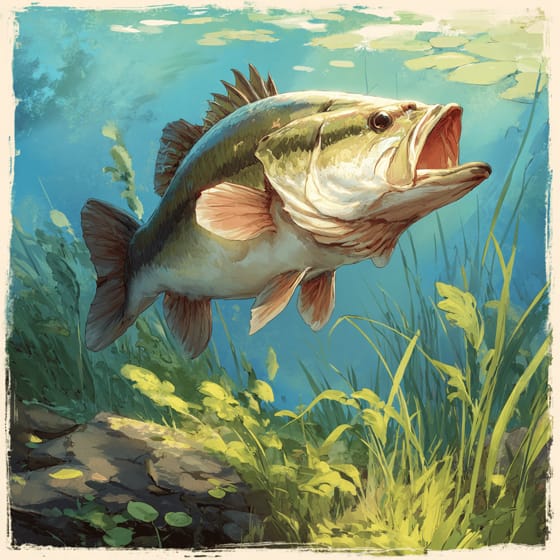
Micropterus salmoides
Common prey for larger predatory fish.
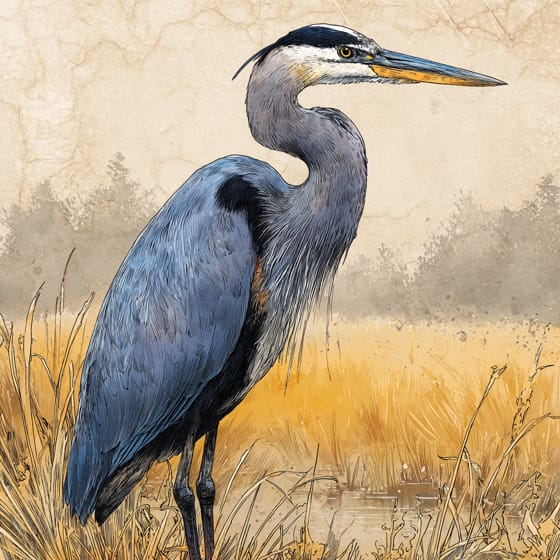
Ardea herodias
Hunted by wading birds in shallow areas.
Orconectes virilis
Preys on smaller crustaceans like crayfish.
Chironomus plumosus
Feeds on insect larvae found in sediment.
Social animals live in organized groups, cooperating for survival benefits such as foraging, defense, and raising offspring.
Colorful describes organisms or objects displaying a wide range of bright and distinct colors.
This trait identifies organisms whose diet consists entirely or primarily of animal tissue.
Diurnal animals are primarily active during daylight hours, typically resting or sleeping at night.

Aquatic habitats encompass environments where organisms live predominantly in water, including oceans, rivers, lakes, and wetlands.
Danger
0/5 · No known danger
No special safety notes yet.
The easiest way to identify Green Sunfish is to use the Snappit nature identifier app.
10-20 cm
0.1-0.3 kg
5-8 years
Eats lots of different small critters, from insects to tiny fish, staying healthy!
5 km/h
Freshwater lakes, ponds, and rivers
Ambush and Foraging
Zoom in to split clusters and explore where this object has been snapped.

Connecticut, US
You might spot Striped Wintergreen and Common Eastern Bumble Bee.
View guide →

Connecticut, US
You might spot Striped Wintergreen and Common Eastern Bumble Bee.
View guide →
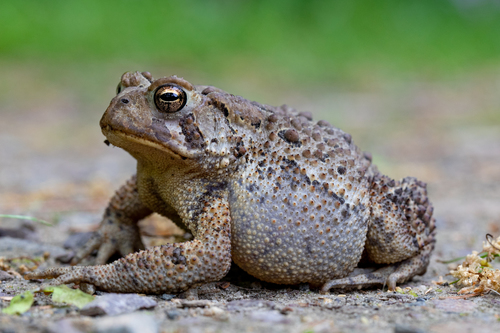
Virginia, US
You might spot American Toad and Lesser Celandine.
View guide →
Virginia, US
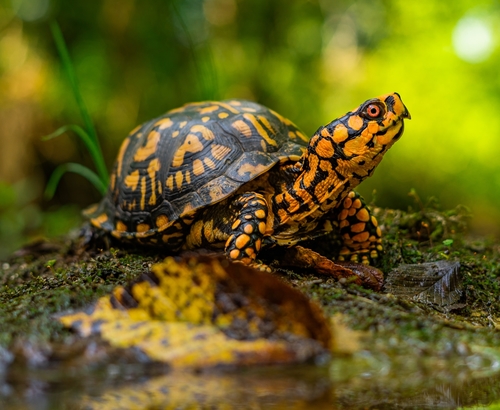
You might spot Eastern Box Turtle and Redbreast Sunfish.
View guide →

New Mexico, US
You might spot Vermilion Flycatcher, Turkey, and American Rubyspot.
View guide →

Virginia, US
You might spot Osage-Orange, Purple Finch, and Turkey.
View guide →
Take the discovery with you
Snap it with Snappit to identify it, learn what makes it special, and add the discovery to your collection.