.jpg&width=800)





Green-winged Teal
Anas crecca
The Green-winged Teal is a small duck with beautiful green feathers on its wings. It loves to swim and can often be seen in ponds and wetlands, quacking happily with its friends.
Habitat: Wetlands
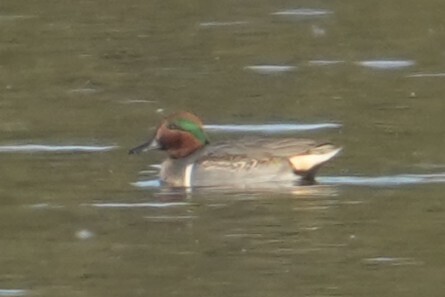
The Green-winged Teal is a small dabbling duck with a prominent iridescent green speculum (wing patch). Males have a striking chestnut head marked with an iridescent green stripe extending from the eye to the nape, and a vertical white bar on their flank.
Category
BirdsRarity
Common
Danger
1/5 · Very low
Snaps
9
It's the smallest dabbling duck found in North America!
Male Green-winged Teals make a unique high-pitched whistling sound.
Their wings beat so fast, they often make a blur in the air!
These tiny ducks can travel thousands of kilometers during migration!
Green-winged Teals can spring vertically from the water because of powerful leg muscles, helping them escape predators quickly.
Green-winged Teals have strong, pointed wings that help them achieve fast, erratic flight patterns for evasive maneuvers.
Green-winged Teals can feed on the water's surface by tipping upside down, reaching food without fully submerging.
These ducks feast on tiny seeds, aquatic plants, and small invertebrates found in shallow waters.
Feathered describes animals, primarily birds, possessing a covering of feathers.
Characterized by having toes connected by a membrane, typically aiding in swimming.
Social animals live in organized groups, cooperating for survival benefits such as foraging, defense, and raising offspring.
Colorful describes organisms or objects displaying a wide range of bright and distinct colors.

This trait characterizes organisms whose diet consists entirely or primarily of plant material.

This habitat trait identifies species found in wetlands, which are areas of land saturated with water, either permanently or seasonally, including marshes, swamps, and bogs.

Freshwater habitats include non-saline aquatic environments such as rivers, lakes, ponds, and wetlands, vital for numerous species.

This trait identifies organisms that exhibit exceptional swiftness in movement for hunting, escape, or travel.

Migratory animals undertake seasonal movements from one region to another, typically in response to changes in climate or food availability.
No aliases listed yet.
Danger
1/5 · Very low
Always watch ducks from a distance and don't feed them bread.
The easiest way to identify Green-winged Teal is to use the Snappit nature identifier app.
32-40 cm
53-60 cm
0.14-0.5 kg
5-10 years
72 km/h
These ducks feast on tiny seeds, aquatic plants, and small invertebrates found in shallow waters.
Wetlands
Zoom in to split clusters and explore where this object has been snapped.
Dec 9, 2025
Crowley Historic DistrictPhoto attribution
(c) Brandon Johnson, some rights reserved (CC BY)
License: CC BY 4.0 ↗
Image may be shown cropped inside the card frame.
Virginia, US
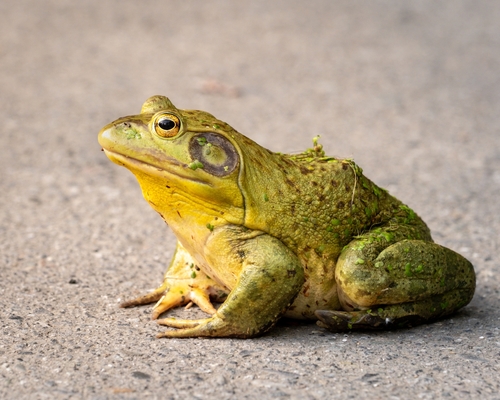
You might spot American Bullfrog, Snapping Turtle, and Great Blue Heron.
View guide →

Alaska, US
You might spot Sandhill Crane, Fireweed, and Prickly Wild Rose.
View guide →
Virginia, US
You might spot American Bullfrog, Snapping Turtle, and Great Blue Heron.
View guide →

Texas, US
You might spot Silverleaf Nightshade and Green Comet Milkweed.
View guide →

California, US
You might spot American Avocet, Northern Shoveler, and Black-Necked Stilt.
View guide →
Virginia, US
You might spot American Bullfrog, Great Blue Heron, and Snapping Turtle.
View guide →
Take the discovery with you
Snap it with Snappit to identify it, learn what makes it special, and add the discovery to your collection.







.jpg&width=800)







