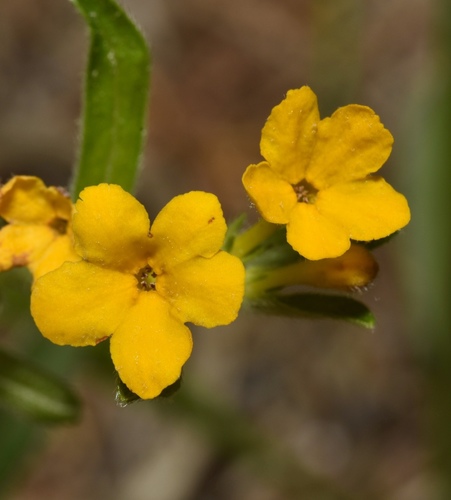


Hoary Puccoon
lithospermum canescens
Hoary Puccoon (Lithospermum canescens) is a striking perennial wildflower that signals the arrival of spring across the prairies and open woodlands of North America. Renowned for its brilliant, tubular clusters of yellow-orange blooms, this plant brings a much-needed splash of color to early-season landscapes. Its common name, "hoary," refers to the fine, white hairs that densely coat its stems and leaves, giving the plant a soft, frosted appearance that also helps it conserve water in dry environments. Historically significant, Native American tribes highly valued the plant's deep taproots, which yield a vibrant red dye used for traditional crafts and body paint. Today, the Hoary Puccoon remains a cherished component of native tallgrass prairies and oak savannas, playing a crucial role in supporting early-emerging pollinators.
Habitat: Found in dry prairies and open savannas, often thriving in well-drained sandy or rocky soils.
The Hoary Puccoon is a relatively short, unbranched or sparsely branched herbaceous plant, typically standing 15 to 40 centimeters tall. Its most identifying feature is the dense covering of fine, white, appressed hairs along its stem and narrow, oblong-lanceolate leaves, giving the foliage a grayish-green, "hoary" texture. In mid-to-late spring, the plant produces dense, coiled terminal clusters (cymes) of vibrant, five-lobed, trumpet-shaped flowers that range from bright yellow to golden-orange. After blooming, it produces incredibly hard, smooth, pearl-like white seeds (nutlets) tucked into the calyx.
Category
PlantsRarity
Common
Danger
1/5 · Very low
Snaps
2
Because it relies heavily on specific soil conditions and fungal associations, Hoary Puccoon is notoriously difficult to transplant or grow from seed, making it a strong indicator species of high-quality, undisturbed remnant prairies.
The scientific genus name Lithospermum translates to 'stone seed' in Greek, describing the exceptionally hard, pearl-like seeds the plant leaves behind.
The word 'puccoon' comes from the Powhatan word 'poughkone,' which broadly refers to plants used to make dyes.
The dense coat of fine white hairs on its leaves and stem reduces airflow across the leaf surface, minimizing water loss and allowing it to thrive in dry, sandy soils.
Its thick, woody taproot synthesizes strong red and purple pigments, historically harvested by Indigenous peoples for dyeing garments and creating ceremonial paints.
It produces uniquely hard, heavily calcified nutlets (seeds) that resist decomposition and predation, allowing them to remain viable in the soil seed bank for extended periods.
As a photosynthetic plant, Hoary Puccoon produces its own energy by converting sunlight, water, and atmospheric carbon dioxide into carbohydrates.
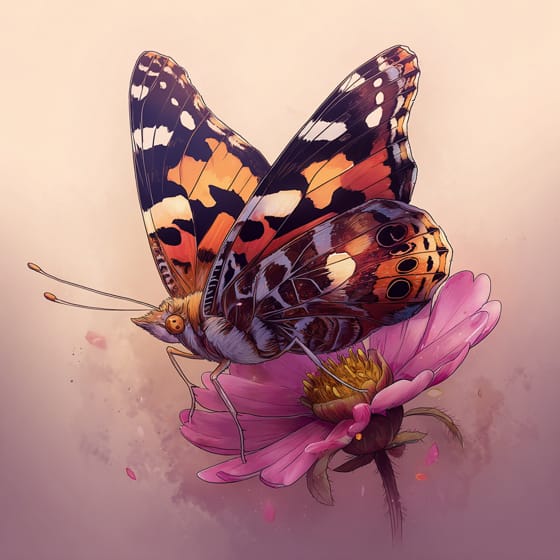
Vanessa cardui
Pollinated by the Painted Lady butterfly, which feeds on its early spring nectar.

Bombus bimaculatus
Long-tongued bees collect pollen and nectar from the tubular flowers.
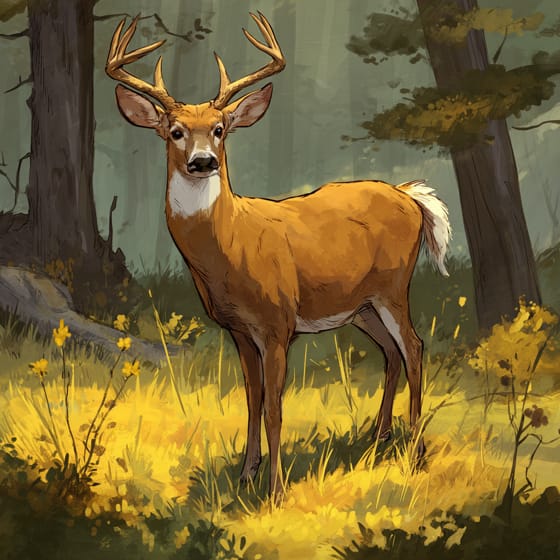
Odocoileus virginianus
Occasionally browsed by deer, though the hairy texture is generally unpalatable to them.
No trait badges are assigned for this object yet.
No aliases listed yet.
Collections for this object will appear here as more themes are added.
Danger
1/5 · Very low
No special safety notes yet.
The easiest way to identify Hoary Puccoon is to use the Snappit nature identifier app.
15-40 cm
3-15 years
As a photosynthetic plant, Hoary Puccoon produces its own energy by converting sunlight, water, and atmospheric carbon dioxide into carbohydrates.
Found in dry prairies and open savannas, often thriving in well-drained sandy or rocky soils.
Zoom in to split clusters and explore where this object has been snapped.

Illinois, US
You might spot Viceroy, Common Wood-Nymph, and Acadian Hairstreak.
View guide →

Wisconsin, US
You might spot Eastern Redcedar, Rock Polypody, and Vulture.
View guide →

Wisconsin, US
You might spot Green Comet Milkweed, Wood Lily, and Flowering Spurge.
View guide →

Alabama, US
You might spot Red Buckeye, Gray Ratsnake, and Sycamore Tussock Moth.
View guide →

Arkansas, US
You might spot Rose Vervain, Ozark Leatherwood, and Trelease's Larkspur.
View guide →

Missouri, US
You might spot Rose Vervain, Three-Toed Box Turtle, and Christmas Fern.
View guide →
Take the discovery with you
Snap it with Snappit to identify it, learn what makes it special, and add the discovery to your collection.











.jpg&width=800)



_001.jpg&width=800)




