





Honeysuckle
Lonicera
Honeysuckles are sweet-smelling flowers that grow on vines. They attract butterflies and hummingbirds with their nectar. Some honeysuckles have berries that birds like to eat.
Habitat: Forests, Gardens
The Honeysuckle is a delightful plant, often a climbing vine or dense shrub, known for its showy, tubular flowers. These blossoms typically appear in clusters, showcasing colors from creamy white and yellow to vibrant pinks and oranges, often fading as they age. Its unique trumpet-like shape and sometimes contrasting colored berries make it visually distinct.
Category
PlantsRarity
Common
Danger
2/5 · Low
Snaps
Be the first to snap!
Its amazing scent can travel far, filling entire gardens with its sweet perfume!
Many kinds of birds love to build their cozy nests hidden in honeysuckle vines.
Some honeysuckles can climb as high as a two-story building!
The sweet nectar inside honeysuckle flowers tastes just like honey!
Honeysuckle can twine its stems tightly around other plants or structures, helping it climb high to reach sunlight.
Honeysuckle has super fragrant, trumpet-shaped flowers that release a sweet scent, guiding bees and hummingbirds to its yummy nectar.
Honeysuckle produces bright red or black berries that, while not for humans, provide a vital food source for many birds.
Apis mellifera
collects nectar and pollen from flowers

Bombus bimaculatus
forages for nectar and pollen
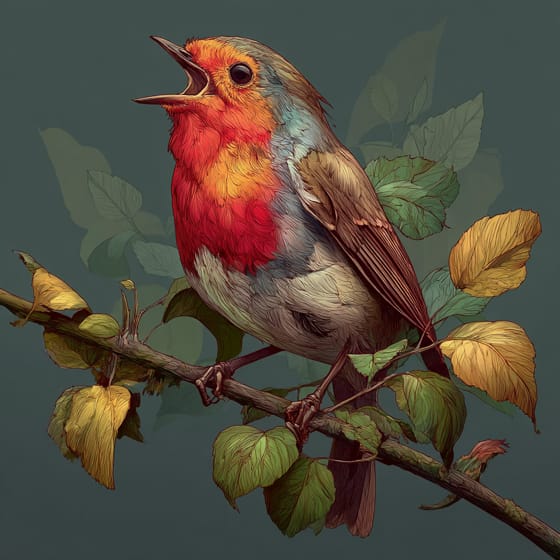
Turdus migratorius
consumes the plant's berries

Archilochus colubris
drinks nectar from tubular flowers
Climbing or vine plants are characterized by a growth habit that allows them to ascend upwards by twining, tendrils, or adhesive roots.
Aromatic plants produce and emit fragrant volatile organic compounds, often for defense or to attract pollinators.
Shade tolerant plants are adapted to grow and thrive in areas with low light levels, requiring less direct sunlight.
A shrub is a woody plant smaller than a tree, typically with multiple stems branching from or near the ground.

Spring blooming plants produce their flowers during the spring season, often signifying the end of winter and the start of new growth.

A tube flower has petals fused together at the base, forming a distinct tubular structure that typically holds nectar deep within.

Fragrant flowers emit a pleasant aroma, often to attract pollinators or for defense.

Fruit-bearing plants produce fruits, which are the mature ovaries of flowering plants containing seeds.

Medicinal plants possess chemical compounds that can be used for therapeutic purposes to treat illnesses or maintain health.

This trait signifies organisms belonging to a very old evolutionary group with ancestors dating back millions of years.

Forest habitats are terrestrial environments dominated by dense tree cover, supporting a high diversity of plant and animal life.
Danger
2/5 · Low
Enjoy the beauty of honeysuckles from a safe distance and avoid eating any part of the plant.
The easiest way to identify Honeysuckle is to use the Snappit nature identifier app.
100-900 cm
50-500 cm
2-5 cm
Late spring to mid-summer
No
Mild
Perennial
Zoom in to split clusters and explore where this object has been snapped.
Recent snaps will appear here as new observations are added.
Take the discovery with you
Snap it with Snappit to identify it, learn what makes it special, and add the discovery to your collection.









.jpg&width=800)


_001.jpg&width=800)



