

'Iliahi
santalum haleakalae
The 'Iliahi, or Haleakalā sandalwood (Santalum haleakalae), is a legendary and culturally significant tree endemic to the high-elevation volcanic slopes of Maui, Hawaii. Residing in the harsh subalpine zones, this resilient plant has adapted to intense solar radiation, extreme temperature swings, and dry conditions. It is famous for its highly aromatic heartwood, which historically fueled a lucrative and devastating sandalwood trade in the early 19th century that nearly drove Hawaii's sandalwood species to extinction. Today, 'Iliahi stands as a protected treasure of the Hawaiian highlands. What makes the 'Iliahi truly fascinating is its lifestyle as a hemiparasite. While it possesses green leaves to photosynthesize, its root system actively seeks out and penetrates the roots of neighboring plants to siphon off water and key nutrients. This complex ecological relationship makes the tree incredibly difficult to cultivate outside its natural habitat, emphasizing the critical importance of conserving its native subalpine ecosystem.
Habitat: Found in dry to mesic subalpine shrublands and forests on the volcanic slopes of Haleakalā, Maui, at elevations between 1,800 and 2,700 meters.
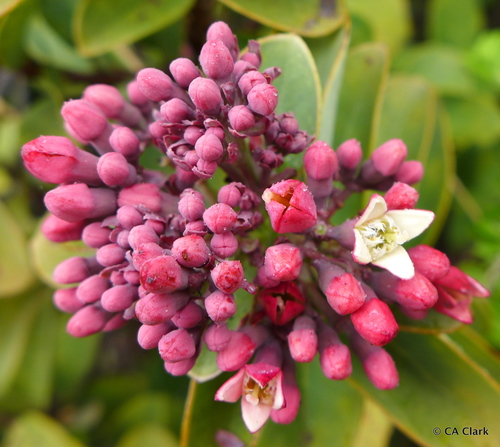
A multi-branched, slow-growing evergreen shrub or small tree reaching heights of 200 to 600 centimeters. It features thick, leathery, and succulent-like oval leaves that are olive-green with a distinct pale or reddish margin. Its most striking feature is the dense clusters of small, star-shaped flowers that bloom in vibrant shades of bright red, orange-red, or deep pink. Following fertilization, it produces small, egg-shaped drupes that turn a dark purplish-black when ripe.
Category
PlantsRarity
Common
Danger
1/5 · Very low
Snaps
4
During the early 1900s, the intense royal monopoly and trade of Hawaiian sandalwood led to the near-total clearance of these mature trees across the islands.
The flowers of the 'Iliahi undergo a dramatic color change as they mature, shifting from a subtle greenish-yellow to a brilliant deep crimson.
Though 'Iliahi can photosynthesize on its own, it would struggle to survive without stealing water and minerals from the roots of its neighbors.
Forms specialized root structures called haustoria that tap into neighboring host plants to extract water and nutrients.
Features thick, leathery, waxy leaves that minimize water loss and protect the plant from freezing temperatures and intense UV radiation.
Synthesizes highly fragrant, dense sesquiterpene oils in its wood that act as a natural defense against decay and boring insects.
As a hemiparasite, 'Iliahi generates its own energy through photosynthesis but relies on extracting water, nitrogen, and inorganic nutrients from the root systems of host plants.
Age differences: Initially relies on seed reserves as a seedling before developing the parasitic haustoria needed to attach to a host plant.
Sophora chrysophylla
Santalum haleakalae parasitizes the root system of Sophora chrysophylla to absorb water and vital minerals in dry soils.
Leptecophylla tameiameiae
Santalum haleakalae utilizes Leptecophylla tameiameiae as a key host plant to sustain its water needs in subalpine shrublands.
Apis mellifera
Introduced honeybees visit the bright red flowers of 'Iliahi to gather nectar, assisting in the pollination of the tree.
No trait badges are assigned for this object yet.
No aliases listed yet.
Collections for this object will appear here as more themes are added.
Danger
1/5 · Very low
No special safety notes yet.
The easiest way to identify 'Iliahi is to use the Snappit nature identifier app.
200-600 cm
50-150 years
As a hemiparasite, 'Iliahi generates its own energy through photosynthesis but relies on extracting water, nitrogen, and inorganic nutrients from the root systems of host plants.
Found in dry to mesic subalpine shrublands and forests on the volcanic slopes of Haleakalā, Maui, at elevations between 1,800 and 2,700 meters.
Root Parasitism
Zoom in to split clusters and explore where this object has been snapped.

Hawaii, US
You might spot Gold Dust Day Gecko, Yellow Tang, and Saffron Finch.
View guide →

Hawaii, US
You might spot ʻōhiʻa Lehua and Stinking Passionflower.
View guide →

Hawaii, US
You might spot 'āhinahina, Jackson's Chameleon, and Hawaiʻi ʻamakihi.
View guide →
Take the discovery with you
Snap it with Snappit to identify it, learn what makes it special, and add the discovery to your collection.











.jpg&width=800)



_001.jpg&width=800)




