





Jacob's ladder
Polemonium reptans
Jacob's ladder is a lovely flower that grows in shady places. Its pretty blue flowers bloom in spring and can make any garden look magical!
Habitat: Forests
The Jacob's ladder has delicate, bell-shaped flowers that hang in clusters, usually in shades of blue or lavender. Its most distinctive feature is its pinnately compound leaves, arranged like rungs on a ladder.
Category
PlantsRarity
Common
Danger
1/5 · Very low
Snaps
9
Did you know its biblical name refers to a dream about a ladder reaching heaven?
Its tiny flowers are like magnets for fuzzy bumblebees and graceful butterflies!
This plant is a great "early bird," often one of the first wildflowers to bloom in spring!
You can sometimes find it growing right next to bubbling streams in the woods!
Jacob's ladder can spread via underground rhizomes, allowing it to form patches and quickly colonize new areas.
Jacob's ladder produces sweet nectar to attract bees and butterflies, ensuring its flowers are pollinated.
Jacob's ladder has compound leaves with many leaflets, efficiently capturing sunlight in its shady woodland home.
Bombus impatiens
visits flowers for nectar
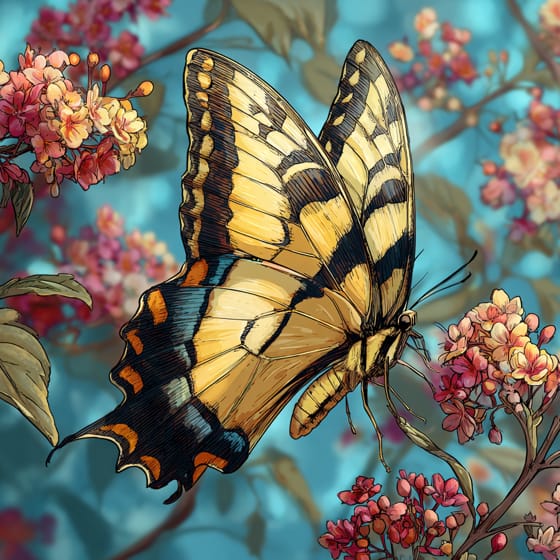
Papilio glaucus
feeds on flower nectar
Apis mellifera
gathers nectar and pollen
Bell-shaped flowers possess petals fused or arranged to form a cup-like or campanulate structure resembling a bell.
Flowering plants are any plants that produce flowers as part of their reproductive cycle.
Shade tolerant plants are adapted to grow and thrive in areas with low light levels, requiring less direct sunlight.
Spring blooming plants produce their flowers during the spring season, often signifying the end of winter and the start of new growth.

Fragrant flowers emit a pleasant aroma, often to attract pollinators or for defense.

Describes plants that are particularly attractive and beneficial to a wide range of pollinating organisms.

Forest habitats are terrestrial environments dominated by dense tree cover, supporting a high diversity of plant and animal life.
No aliases listed yet.
Danger
1/5 · Very low
Always look but don't touch flowers without asking an adult.
The easiest way to identify Jacob's ladder is to use the Snappit nature identifier app.
30-90 cm
30-60 cm
1-2 cm
Late spring to early summer
No
None
Perennial
Zoom in to split clusters and explore where this object has been snapped.

Wisconsin, US
You might spot Turkey, White-Tailed Deer, and Dame's Rocket.
View guide →

Pennsylvania, US
You might spot Canada Goose, American Robin, and Red-Winged Blackbird.
View guide →

Iowa, US
You might spot False Rue Anemone, Sharp-Lobed Hepatica, and Common Shiner.
View guide →
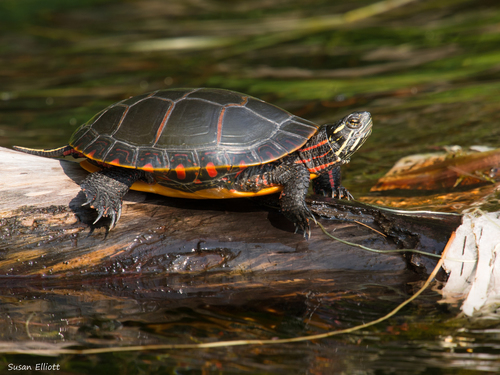
Massachusetts, US
You might spot Painted Turtle, White Turtlehead, and Ragged-Robin.
View guide →

Illinois, US
You might spot Large White Trillium and Virginia Bluebells.
View guide →
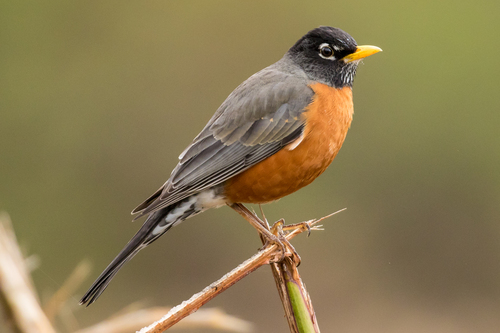
Tennessee, US
You might spot American Robin and Prairie Trillium.
View guide →
Take the discovery with you
Snap it with Snappit to identify it, learn what makes it special, and add the discovery to your collection.







.jpg&width=800)


_001.jpg&width=800)



