





Japanese creeper
Parthenocissus tricuspidata
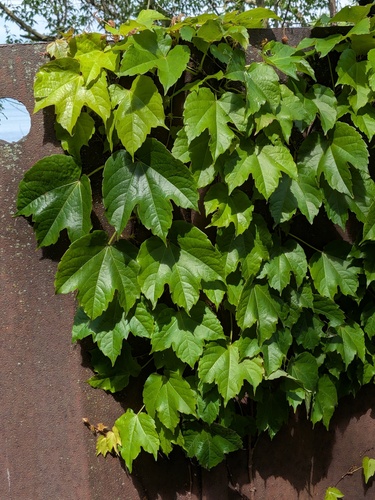
The Japanese creeper is a climbing plant that loves to grow on walls and fences. Its beautiful green leaves turn bright red in autumn, making it a lovely sight!
Habitat: Urban areas
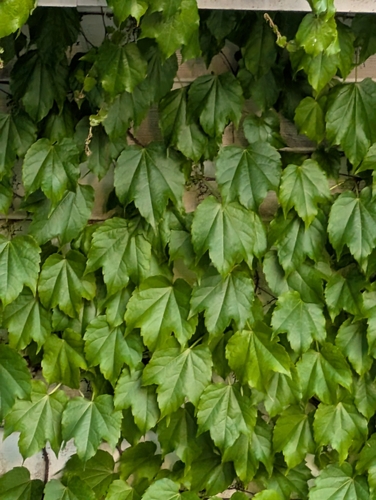
The Japanese creeper has glossy, dark green leaves, usually three-lobed, sometimes five-lobed when young. In autumn, these leaves turn brilliant crimson and deep purple. Its unique tendrils feature adhesive pads, allowing it to cling seamlessly to various surfaces.
Category
PlantsRarity
Common
Danger
1/5 · Very low
Snaps
14
Even though it's called "Japanese," it's also native to Korea and China!
Its small, dark blue berries are a favorite snack for many hungry birds!
Its tiny suction cups are so strong, they can climb smooth glass!
Some older creeper plants have been known to live for over 100 years!
Japanese creeper can cling to smooth surfaces like glass using tiny, powerful adhesive discs on its tendrils.
Japanese creeper has leaves that change from green to stunning red and purple, attracting attention and signaling autumn.
Japanese creeper can grow incredibly fast, quickly covering large walls or ground areas with its dense foliage.
Apis mellifera
Its tiny flowers provide nectar for bees.
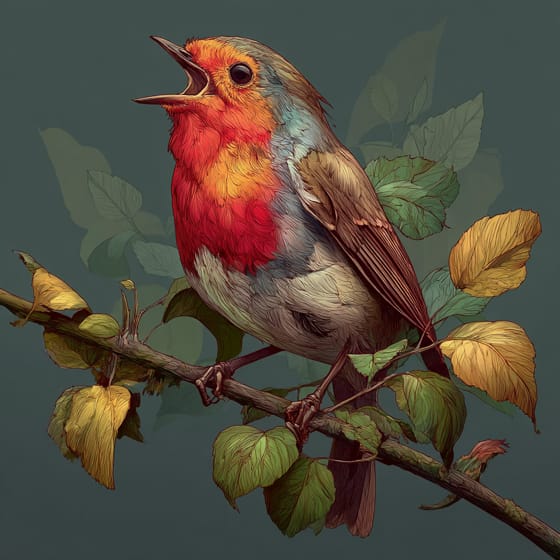
Turdus migratorius
Birds feast on its small, dark blue berries.
%2C_Parc_de_Woluw%C3%A9%2C_Brussels_(13042792905).jpg&width=800)
Parus major
Dense vines offer excellent nesting and hiding places.
Climbing or vine plants are characterized by a growth habit that allows them to ascend upwards by twining, tendrils, or adhesive roots.
Deciduous plants periodically shed all their leaves, typically during autumn or dry seasons.
Ornamental plants are cultivated primarily for their aesthetic appeal, enhancing landscapes and gardens with their attractive foliage, flowers, or form.
Shade tolerant plants are adapted to grow and thrive in areas with low light levels, requiring less direct sunlight.

Colorful describes organisms or objects displaying a wide range of bright and distinct colors.

Fall color refers to the seasonal change in foliage pigmentation, primarily in deciduous plants, displaying vibrant hues.

Rapid growing plants exhibit accelerated growth rates, quickly increasing in size and biomass within a short period.

This habitat trait indicates species that can coexist with humans in urban and suburban environments, utilizing man-made structures and green spaces.
No aliases listed yet.
Danger
1/5 · Very low
Always be careful around climbing plants and don't touch if you see sharp edges.
The easiest way to identify Japanese creeper is to use the Snappit nature identifier app.
1000-3000 cm
500-1500 cm
0.3-0.5 cm
Summer
No
Mild
Perennial
Zoom in to split clusters and explore where this object has been snapped.
Jun 5, 2026
Archwood Avenue Historic DistrictPhoto attribution
(c) Gustav JK Golden, some rights reserved (CC BY)
License: CC BY 4.0 ↗
Image may be shown cropped inside the card frame.
May 23, 2026
Cleveland Botanical GardenPhoto attribution
(c) Michael and Antoni Hinczewski, some rights reserved (CC BY)
License: CC BY 4.0 ↗
Image may be shown cropped inside the card frame.

Illinois, US
You might spot Carolina Mantis and Goldenrod Soldier Beetle.
View guide →

New York, US
You might spot Common Eastern Bumble Bee and Ground-Ivy.
View guide →

Ohio, US
You might spot Spotted Lanternfly and Eastern Fox Squirrel.
View guide →
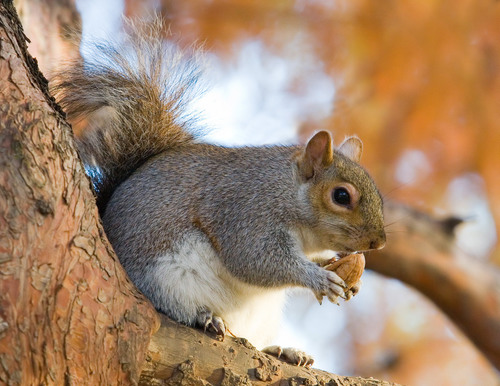
Illinois, US
You might spot Eastern Gray Squirrel, American Robin, and Duck.
View guide →
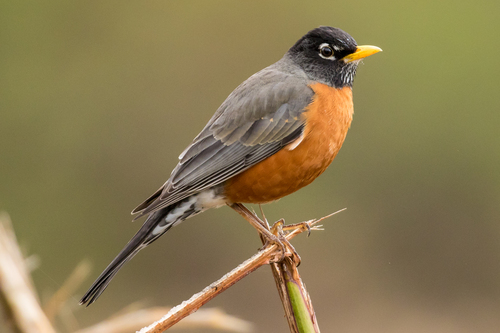
Illinois, US
You might spot American Robin, Eastern Gray Squirrel, and Canada Goose.
View guide →

Ohio, US
You might spot Sand Tiger Shark, Nurse Shark, and Cow.
View guide →
Take the discovery with you
Snap it with Snappit to identify it, learn what makes it special, and add the discovery to your collection.








.jpg&width=800)



_001.jpg&width=800)



