





Johnson Grass
sorghum halepense
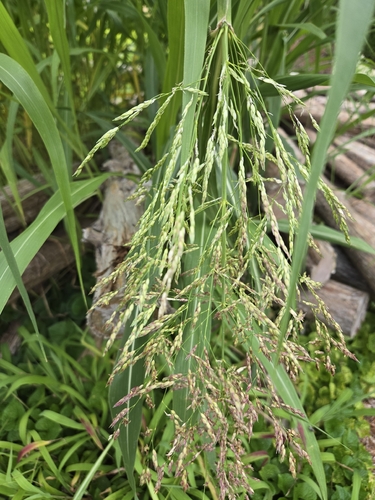
Johnson Grass is a tall and bushy grass that can grow as high as a person! It has broad green leaves and fluffy seed heads that dance in the wind.
Habitat: Johnson Grass typically grows in warm areas, often found in fields, roadsides, and disturbed lands.
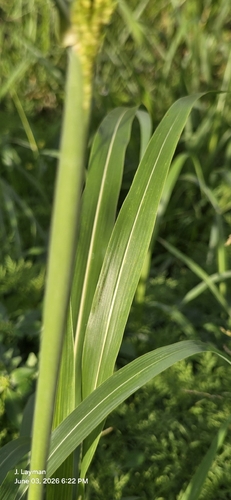
The Johnson Grass has sturdy, upright stems that can reach impressive heights, often topped with a large, airy, purplish-green seed head called a panicle. Its broad, lance-shaped leaves are green with a prominent white midrib, distinguishing it from many other grasses.
Category
PlantsRarity
Common
Danger
0/5 · No known danger
Snaps
11
It's considered one of the world's worst weeds, spreading super fast!
Its seeds can stay buried and sprout successfully for over 10 years!
This grass arrived in the USA from the Mediterranean region in the 1800s!
Under stress, it can produce a poison dangerous to grazing animals!
Johnson Grass can regrow easily even after being cut because it has strong underground stems called rhizomes that store energy.
Johnson Grass has seeds that can stay alive in the soil for over a decade, helping it sprout new plants year after year.
Johnson Grass can grow incredibly fast, quickly outcompeting other plants for sunlight and nutrients in an area.

Bos taurus
Provides forage, but can be toxic under certain conditions.
Zea mays
Strongly competes with this crop for essential resources.
Spodoptera frugiperda
Larvae are a common pest feeding on its leaves and stems.
Colorful describes organisms or objects displaying a wide range of bright and distinct colors.
Grassland habitats are terrestrial biomes dominated by grasses and herbaceous plants, supporting a variety of grazing animals.
This trait characterizes organisms whose diet consists entirely or primarily of plant material.
Danger
0/5 · No known danger
No special safety notes yet.
The easiest way to identify Johnson Grass is to use the Snappit nature identifier app.
50-250 cm
30-100 cm
0.1-0.3 cm
Summer to fall
No
Moderate
Perennial
Zoom in to split clusters and explore where this object has been snapped.
Jun 18, 2026
Missouri Botanical GardenPhoto attribution
no rights reserved
License: CC0 1.0 ↗
Image may be shown cropped inside the card frame.
Jun 3, 2026
SeaWorld San AntonioPhoto attribution
(c) Jason Layman, some rights reserved (CC BY-SA)
License: CC BY-SA 4.0 ↗
Image may be shown cropped inside the card frame.

Jun 6, 2026

Texas, US
You might spot Texas Hedgehog Cactus, Ornate Tree Lizard, and Cactus Wren.
View guide →

Ohio, US
You might spot Brown-Belted Bumble Bee and Eastern Carpenter Bee.
View guide →

Missouri, US
You might spot Eastern Carpenter Bee, Duck, and American Robin.
View guide →

Oklahoma, US
You might spot Monarch, American Bumble Bee, and Gulf Fritillary.
View guide →

Texas, US
You might spot Question Mark, Buttonbush, and Pomegranate.
View guide →

Ohio, US
You might spot Brown-Belted Bumble Bee and Eastern Carpenter Bee.
View guide →
Take the discovery with you
Snap it with Snappit to identify it, learn what makes it special, and add the discovery to your collection.








.jpg&width=800)



_001.jpg&width=800)




