





Lacy phacelia
Phacelia tanacetifolia
Lacy phacelia is a beautiful flower with delicate, fern-like leaves and lovely purple blooms. It attracts bees and butterflies, making gardens colorful and lively!
Habitat: Grasslands
The Lacy phacelia has fern-like, deeply cut green leaves on hairy stems. Its vibrant purple-blue flowers unfurl in a distinctive, curled cluster that resembles a fiddlehead or a scorpion's tail, creating a visually striking display.
Category
PlantsRarity
Common
Danger
1/5 · Very low
Snaps
11
Farmers often plant it to naturally "recharge" soil and make future crops grow stronger!
If you visit a field of lacy phacelia, you'll hear a buzzing symphony of happy bees!
Its flower stalk unfurls slowly, looking just like the coiled head of a violin!
This amazing plant helps prevent dirt from washing away in the rain or wind!
Lacy phacelia has incredibly nectar-rich flowers that help it attract a huge variety of buzzing bees and other beneficial insects.
Lacy phacelia has deep roots that help it loosen soil, prevent erosion, and add organic matter to make the ground healthier.
Lacy phacelia can absorb excess nitrogen from the soil, preventing it from washing away and keeping the environment cleaner.
Apis mellifera
Collects abundant nectar and pollen.
Bombus vosnesenskii
Important native pollinator for flowers.

Odocoileus hemionus
Young plants are sometimes browsed by deer.
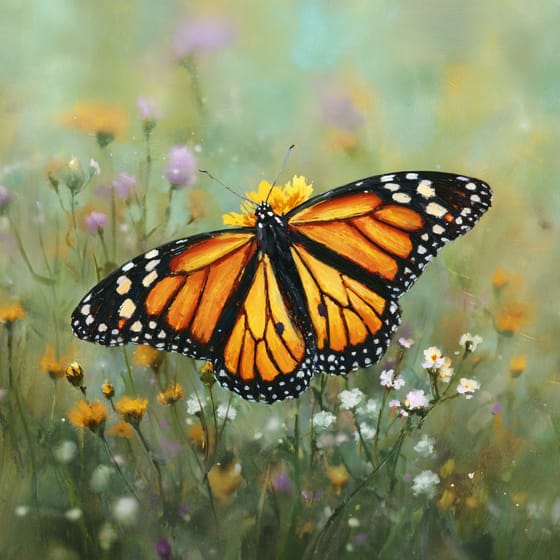
Danaus plexippus
Nectars from flowers during migration.
Flowering plants are any plants that produce flowers as part of their reproductive cycle.
Biennial plants complete their life cycle over two growing seasons, typically forming foliage in the first year and flowering/seeding in the second.
Spring blooming plants produce their flowers during the spring season, often signifying the end of winter and the start of new growth.
Summer blooming plants produce their flowers during the summer season, often providing vibrant color when many other plants have finished.

Fragrant flowers emit a pleasant aroma, often to attract pollinators or for defense.

Colorful describes organisms or objects displaying a wide range of bright and distinct colors.

Grassland habitats are terrestrial biomes dominated by grasses and herbaceous plants, supporting a variety of grazing animals.

Describes plants that are particularly attractive and beneficial to a wide range of pollinating organisms.

Describes a species whose presence and role have a disproportionately large effect on its environment.
No aliases listed yet.
Danger
1/5 · Very low
Always look but don't pick flowers unless an adult says it's okay.
The easiest way to identify Lacy phacelia is to use the Snappit nature identifier app.
20-100 cm
15-30 cm
0.5-1 cm
Spring-early_summer
No
None
Annual
Zoom in to split clusters and explore where this object has been snapped.

California, US
You might spot California Poppy and Common Side-Blotched Lizard.
View guide →

Massachusetts, US
You might spot Eastern Cottontail and American Robin.
View guide →

Tennessee, US
You might spot Black Bear, Yellow Wakerobin, and Pipevine Swallowtail.
View guide →

California, US
You might spot Desert Holly, Western Joshua Tree, and Creosote Bush.
View guide →

California, US
You might spot Frémont's Phacelia and Devil's Spineflower.
View guide →

California, US
You might spot Western Gull, Sea Lion, and Great Blue Heron.
View guide →
Take the discovery with you
Snap it with Snappit to identify it, learn what makes it special, and add the discovery to your collection.








.jpg&width=800)


_001.jpg&width=800)




