




Laughing Gull
Leucophaeus atricilla
The Laughing Gull is a playful bird known for its cheerful calls that sound like laughter! These birds love to hang out near beaches and are often seen flying over the waves.
Habitat: Coastal areas
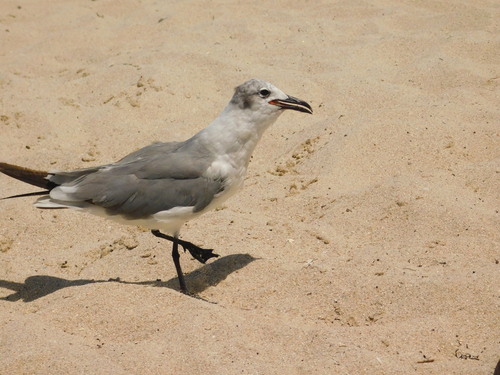
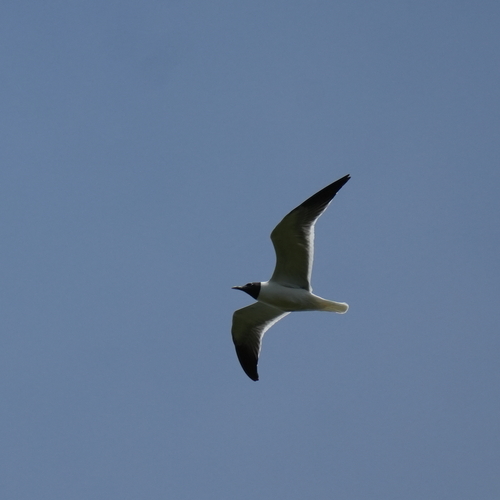
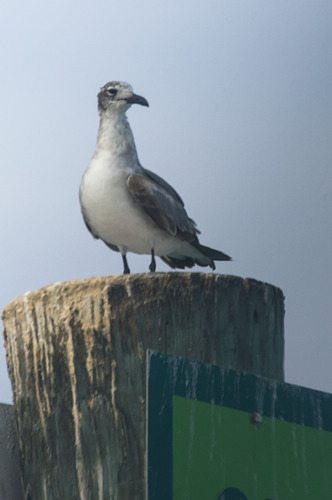
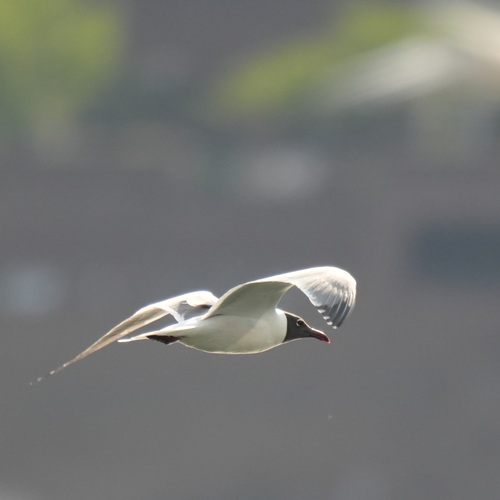
The Laughing Gull has a distinctive black head during summer, which turns white with dusky markings in winter. Its dark gray back and wings contrast sharply with a clean white belly. It also features a noticeable red bill and legs.
Category
BirdsRarity
Common
Danger
1/5 · Very low
Snaps
61
A flock of gulls on the water can be called a 'flotilla' – how cool!
Laughing Gulls take three years to grow their full adult feathers and colors!
Their camouflaged eggs blend perfectly into sandy nests, hiding from predators.
They sometimes steal food right from other birds or even humans!
Laughing Gulls can pluck food from the water's surface or catch insects in mid-air because of their agile flight.
Laughing Gulls have special glands near their eyes that help them remove excess salt, allowing them to drink seawater.
Laughing Gulls have a versatile diet that helps them survive by eating a wide variety of foods, even human scraps.
Laughing Gulls are clever, opportunistic eaters that munch on almost anything they can find, from crabs to discarded snacks!
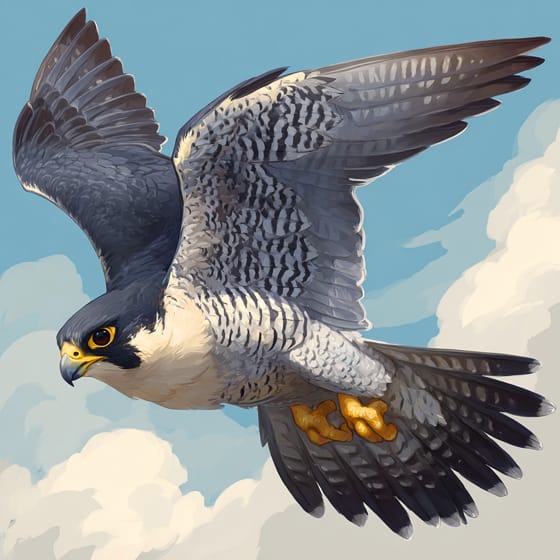
Falco peregrinus
Peregrine Falcons sometimes prey on adult gulls during migration.
Uca pugilator
Laughing Gulls frequently eat small crabs found along the shoreline.
Homo sapiens
They often scavenge for discarded food left behind by people.
.jpg&width=800)
Sterna antillarum
Laughing Gulls sometimes steal fish from smaller seabirds like terns.
Feathered describes animals, primarily birds, possessing a covering of feathers.
Social animals live in organized groups, cooperating for survival benefits such as foraging, defense, and raising offspring.
Scavengers consume dead organic matter, helping to decompose carcasses and other waste in the ecosystem.
Colorful describes organisms or objects displaying a wide range of bright and distinct colors.

Coastal habitats are dynamic environments located along the interface between land and sea, influenced by tides, waves, and saltwater.

This trait identifies organisms whose diet consists entirely or primarily of animal tissue.

Diurnal animals are primarily active during daylight hours, typically resting or sleeping at night.

Marine habitats encompass all saltwater environments of the Earth's oceans, supporting an immense diversity of aquatic life.

Migratory animals undertake seasonal movements from one region to another, typically in response to changes in climate or food availability.
No aliases listed yet.
Danger
1/5 · Very low
Enjoy watching birds from a distance and don't feed them human food.
The easiest way to identify Laughing Gull is to use the Snappit nature identifier app.
36-41 cm
98-110 cm
0.2-0.35 kg
10-20 years
50 km/h
Laughing Gulls are clever, opportunistic eaters that munch on almost anything they can find, from crabs to discarded snacks!
Coastal areas
Zoom in to split clusters and explore where this object has been snapped.
Jun 19, 2026
Miami Beach Botanical GardenPhoto attribution
(c) David Garza, some rights reserved (CC BY)
License: CC BY 4.0 ↗
Image may be shown cropped inside the card frame.
May 31, 2026
Albemarle-Kenmore Terraces Historic DistrictPhoto attribution
(c) foxsu, some rights reserved (CC BY)
License: CC BY 4.0 ↗
Image may be shown cropped inside the card frame.
May 16, 2026
Gasparilla Inn Historic DistrictPhoto attribution
no rights reserved
License: CC0 1.0 ↗
Image may be shown cropped inside the card frame.
May 8, 2026
Hunters PointPhoto attribution
(c) foxsu, some rights reserved (CC BY)
License: CC BY 4.0 ↗
Image may be shown cropped inside the card frame.

Georgia, US
You might spot Brown Anole, Anole, and Gulf Fritillary.
View guide →

New Jersey, US
You might spot Brant, Laughing Gull, and Great Black-Backed Gull.
View guide →

US
You might spot Firewheel, Domestic Horse, and Atlantic Horseshoe Crab.
View guide →

South Carolina, US
You might spot Brown Pelican, Boat-Tailed Grackle, and Great Egret.
View guide →

Virginia, US
You might spot Eastern Gray Squirrel, Duck, and Northern Mockingbird.
View guide →

US
You might spot Brown Pelican, Boat-Tailed Grackle, and Great Egret.
View guide →
Take the discovery with you
Snap it with Snappit to identify it, learn what makes it special, and add the discovery to your collection.




.jpg&width=800)






