.jpg&width=800)





Least Tern
Sternula antillarum
The Least Tern is a small, graceful bird that loves to live near the ocean. It has a sweet, high-pitched call and is known for its quick dives to catch fish in the water.
Habitat: Coastal areas
The Least Tern is the smallest tern, featuring a distinctive black cap, white forehead patch, and a slender yellow bill with a black tip. Its back is pale gray, contrasting with a white belly and forked tail. These markings help it blend into sandy coastal environments.
Category
BirdsRarity
Common
Danger
1/5 · Very low
Snaps
14
A Least Tern chick can walk and hide just hours after hatching from its egg!
Both mom and dad Least Terns share the job of incubating eggs and feeding their babies!
Least Terns make simple nests called scrapes directly on sandy beaches or gravel.
They often nest in colonies, with many other terns nearby for safety in numbers!
Least Terns can dive headfirst into shallow water to catch small fish, using their keen eyesight to spot prey.
Least Terns have speckled eggs and chicks that perfectly camouflage with sandy shores, hiding them from predators.
Least Terns possess long, pointed wings that allow for efficient, rapid flight across vast migratory distances.
These tiny birds mainly eat small fish and shrimp they catch by diving!
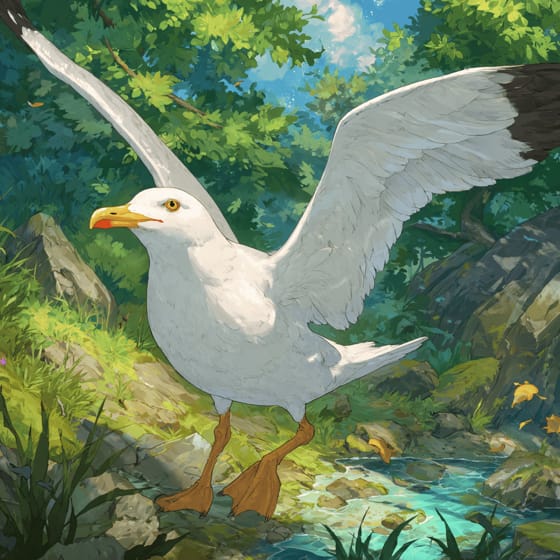
Larus argentatus
Gulls often prey on eggs, chicks, and sometimes adults.

Procyon lotor
Raccoons frequently raid nests, eating eggs and chicks.

Fundulus heteroclitus
Least Terns dive to catch this small estuarine fish.
Anchoa mitchilli
A common prey fish in coastal waters.
Feathered describes animals, primarily birds, possessing a covering of feathers.
Social animals live in organized groups, cooperating for survival benefits such as foraging, defense, and raising offspring.
Piscivorous organisms are animals that primarily subsist on a diet of fish.
Coastal habitats are dynamic environments located along the interface between land and sea, influenced by tides, waves, and saltwater.

Diurnal animals are primarily active during daylight hours, typically resting or sleeping at night.

This trait identifies organisms that exhibit exceptional swiftness in movement for hunting, escape, or travel.

Migratory animals undertake seasonal movements from one region to another, typically in response to changes in climate or food availability.

Endangered status indicates a species is at a very high risk of extinction in the wild in the near future.
No aliases listed yet.
Danger
1/5 · Very low
If you see a Least Tern, watch quietly from a distance so you don't scare it away.
The easiest way to identify Least Tern is to use the Snappit nature identifier app.
21-24 cm
48-53 cm
0.035-0.055 kg
5-15 years
60 km/h
These tiny birds mainly eat small fish and shrimp they catch by diving!
Coastal areas
Zoom in to split clusters and explore where this object has been snapped.

New Jersey, US
You might spot Brant, Laughing Gull, and Great Black-Backed Gull.
View guide →

US
You might spot Pond Slider, Black-Bellied Whistling-Duck, and Brown Anole.
View guide →

Connecticut, US
You might spot Osprey, Monarch, and Common Reed.
View guide →

Georgia, US
You might spot Anole, Pond Slider, and Spanish Moss.
View guide →

New York, US
You might spot African Penguin, Sea Otter, and Harbor Seal.
View guide →

New York, US
You might spot Pitch Pine, Great Egret, and Monarch.
View guide →
Take the discovery with you
Snap it with Snappit to identify it, learn what makes it special, and add the discovery to your collection.




.jpg&width=800)








