





Long-eared Owl
Asio otus
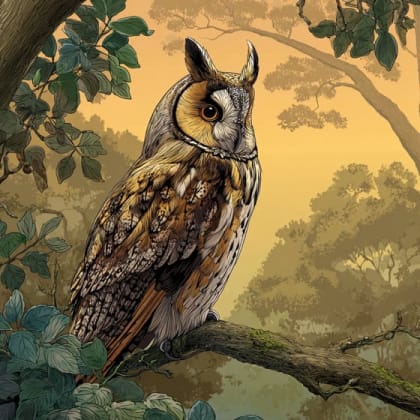
The Long-eared Owl has long tufts of feathers on its head that look like ears! This owl is very good at hiding in trees during the day.
Habitat: Woodlands and parks
The Long-eared Owl has prominent, dark ear tufts that resemble ears but are just feathers. Its slender body is covered in streaky brown and gray-buff plumage. It features piercing orange-yellow eyes set in a pale facial disc, making it distinct.
Category
BirdsRarity
Common
Danger
2/5 · Low
Snaps
7
Baby Long-eared Owls hiss like snakes to scare away intruders from their nest.
Their 'ears' are just feathers; their real ears are hidden under them!
These owls can spin their heads almost all the way around to spot prey!
They often use old nests built by other birds, especially crows or magpies.
Long-eared Owls have asymmetrical ear openings that help them pinpoint prey sounds in total darkness.
Long-eared Owls have specialized feathers with serrated edges that help them fly almost silently.
Long-eared Owls can stretch their bodies thin and sway to look like a broken branch, confusing predators.
They primarily hunt small mammals like voles and mice with amazing precision.
Microtus pennsylvanicus
Primary food source in many habitats.
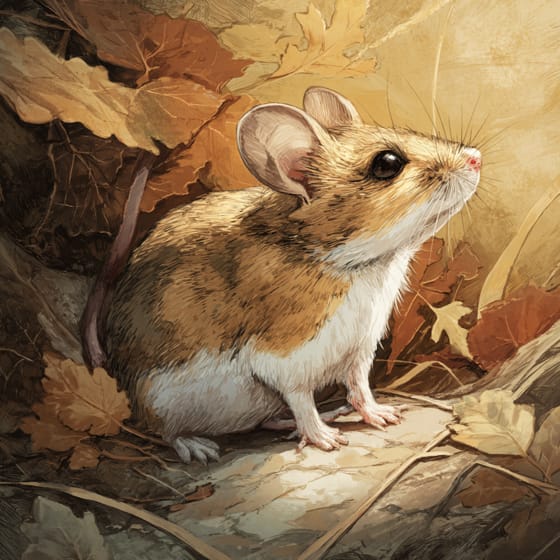
Peromyscus maniculatus
Another key prey, especially in woodland areas.

Bubo virginianus
Can sometimes prey on juvenile Long-eared Owls.
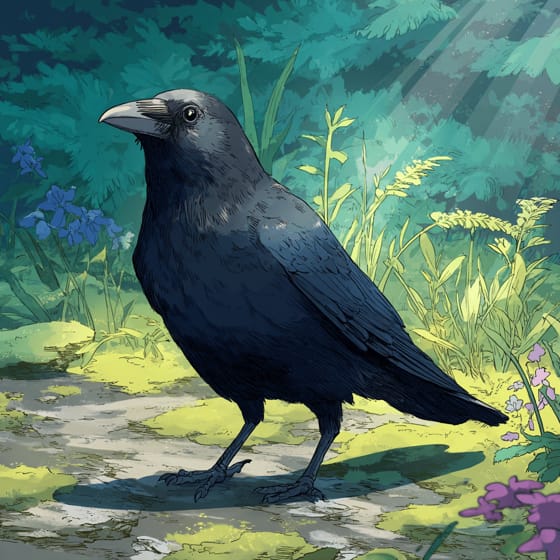
Corvus brachyrhynchos
Often uses abandoned nests of crows for breeding.
Wildlife encompasses all undomesticated animal and plant life existing in their natural habitats.
Feathered describes animals, primarily birds, possessing a covering of feathers.
Social animals live in organized groups, cooperating for survival benefits such as foraging, defense, and raising offspring.
Arboreal animals live primarily in trees, utilizing them for shelter, food, and protection from predators.

Forest habitats are terrestrial environments dominated by dense tree cover, supporting a high diversity of plant and animal life.

This trait identifies organisms whose diet consists entirely or primarily of animal tissue.

Describes a species whose presence and role have a disproportionately large effect on its environment.

Nocturnal animals are primarily active during the nighttime hours, typically resting or sleeping during the day.
Danger
2/5 · Low
Watch quietly from a distance and never try to feed or chase wild animals.
The easiest way to identify Long-eared Owl is to use the Snappit nature identifier app.
31-40 cm
90-100 cm
0.22-0.37 kg
4-8 years
45 km/h
They primarily hunt small mammals like voles and mice with amazing precision.
Woodlands and parks
Zoom in to split clusters and explore where this object has been snapped.

New Mexico, US
You might spot Pronghorn, Great-Tailed Grackle, and Redstem Stork's-Bill.
View guide →

Nouvelle-Aquitaine, FR
You might spot Greater Flamingo, Giraffes, and Red Panda.
View guide →

Vienna, AT
You might spot Giant Panda, Polar Bear, and African Elephant.
View guide →

Bremen, DE
You might spot Polar Bear, Humboldt Penguin, and Harbor Seal.
View guide →

Liberec Region, CZ
You might spot Red Deer, Fallow Deer, and Wild Boar.
View guide →

New York, US
You might spot Common Mugwort, Snow Goose × Brant, and Spotted Lanternfly.
View guide →
Take the discovery with you
Snap it with Snappit to identify it, learn what makes it special, and add the discovery to your collection.




.jpg&width=800)







