





meadow hawkweed
Pilosella caespitosa
Meadow hawkweed is a bright yellow flower that grows in fields and meadows. Its cheerful blooms can be seen in the summer, making the landscape look sunny and happy!
Habitat: Grasslands
The meadow hawkweed has bright yellow, dandelion-like flowers clustered atop slender, hairy stems. Its narrow, slightly hairy leaves form a flat rosette close to the ground, often with reddish tints, distinguishing it from common dandelions.
Category
PlantsRarity
Common
Danger
1/5 · Very low
Snaps
4
Break a stem, and milky white sap will ooze out, just like a dandelion!
Its tiny seeds have fluffy parachutes to fly on the wind like mini hot-air balloons!
People sometimes call it "Fox-and-Cubs" because its flower clusters resemble playful animal families.
This plant is a master at growing in tough, poor soils where many other plants struggle!
Meadow hawkweed can quickly spread by sending out runners that form new plants, helping it colonize open areas fast.
Meadow hawkweed can produce seeds without needing pollination, creating perfect genetic copies of itself to spread easily.
Meadow hawkweed has tiny hairs on its leaves and stems that help protect it from thirsty grazers and conserve precious water.
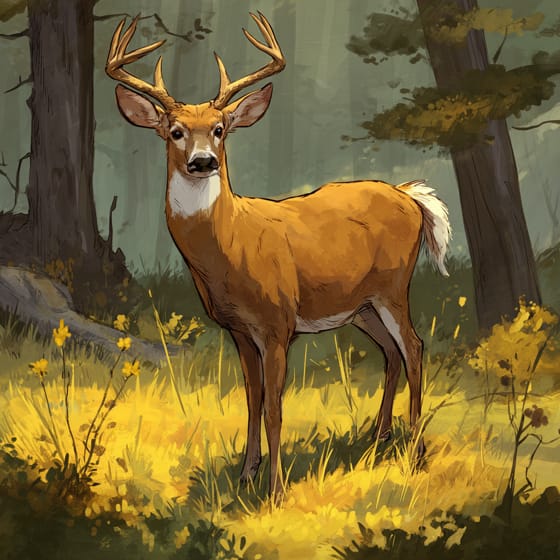
Odocoileus virginianus
provides forage for deer
.JPG&width=800)
Sylvilagus floridanus
a food source for rabbits
Apis mellifera
provides nectar and pollen for bees
Bombus impatiens
important nectar source for bumblebees
Flowering plants are any plants that produce flowers as part of their reproductive cycle.
Summer blooming plants produce their flowers during the summer season, often providing vibrant color when many other plants have finished.
Fragrant flowers emit a pleasant aroma, often to attract pollinators or for defense.
Grassland habitats are terrestrial biomes dominated by grasses and herbaceous plants, supporting a variety of grazing animals.

Describes plants that are particularly attractive and beneficial to a wide range of pollinating organisms.
No aliases listed yet.
Danger
1/5 · Very low
Always look but don't pick flowers, so they can keep growing for everyone to enjoy.
The easiest way to identify meadow hawkweed is to use the Snappit nature identifier app.
15-60 cm
10-30 cm
1.5-2.5 cm
Late Spring to Late Summer
Yes
None
Perennial
Zoom in to split clusters and explore where this object has been snapped.

Maryland, US
You might spot American Cancer-Root and Rue Anemone.
View guide →
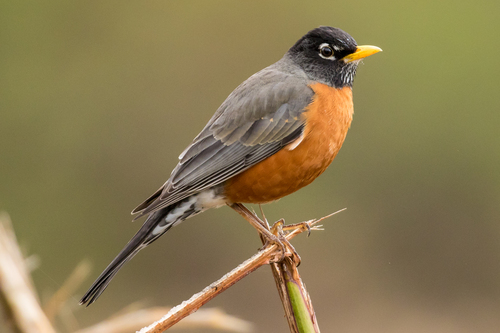
New Jersey, US
You might spot American Robin, Spotted Lanternfly, and Monarch.
View guide →

Massachusetts, US
You might spot Painted Turtle and Eastern White Pine.
View guide →

Massachusetts, US
You might spot Eastern Newt and Eastern Red-Backed Salamander.
View guide →

Maryland, US
You might spot American Cancer-Root and Rue Anemone.
View guide →

New Jersey, US
You might spot Monarch, American Robin, and Spotted Lanternfly.
View guide →
Take the discovery with you
Snap it with Snappit to identify it, learn what makes it special, and add the discovery to your collection.








.jpg&width=800)


_001.jpg&width=800)




