





Mountain Chickadee
Poecile gambeli
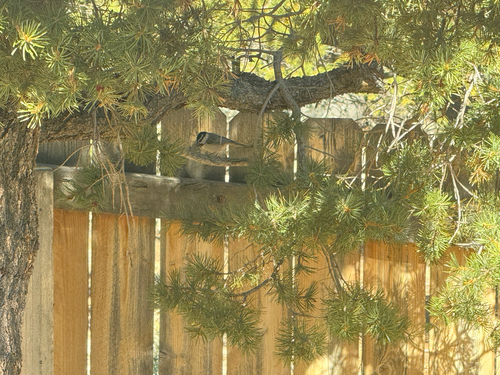
The Mountain Chickadee is a small, cheerful bird with a black cap and white cheeks. They love to flit around trees and are known for their sweet, whistling calls that sound like 'chick-a-dee-dee-dee'.
Habitat: Mountain regions
The Mountain Chickadee has a distinctive black cap and bib, contrasted by a prominent white eyebrow stripe. Its back and wings are grey, while its underside is mostly white with buffy flanks. This small, agile bird stands out with its bold head markings.
Category
BirdsRarity
Common
Danger
1/5 · Very low
Snaps
9
Mountain Chickadees can lower their body temperature at night to save precious energy.
Their 'chick-a-dee-dee-dee' call changes meaning based on the number of 'dees'.
They excavate their own nest cavities in rotten wood or natural tree holes!
They often join mixed-species bird flocks in winter for safety and easier foraging.
Mountain Chickadee can puff up its feathers to trap insulating air, helping them stay warm in freezing mountain temperatures.
Mountain Chickadee has strong, agile feet that help it hang upside down to find hidden insects and seeds on branches.
Mountain Chickadee has an amazing memory that helps it recall where it has hidden thousands of seeds for winter meals.
A tiny bird that loves munching on insects and spiders, but also enjoys tasty seeds and berries!

Accipiter striatus
Hunted by this agile, speedy forest hawk.

Glaucidium gnoma
A small owl that preys on chickadees.
Pinus ponderosa
Relies on its seeds and tree cavities for nesting.
Choristoneura occidentalis
Consumes larvae of this common forest insect.
Feathered describes animals, primarily birds, possessing a covering of feathers.
Social animals live in organized groups, cooperating for survival benefits such as foraging, defense, and raising offspring.
Singing animals produce complex vocalizations, often for purposes of attracting mates, defending territory, or communicating within their species.
Arboreal animals live primarily in trees, utilizing them for shelter, food, and protection from predators.

This trait identifies organisms whose diet primarily consists of insects and other small invertebrates.

This habitat trait identifies species found in mountainous regions, characterized by high elevation, steep slopes, and varying climate zones.

Diurnal animals are primarily active during daylight hours, typically resting or sleeping at night.
No aliases listed yet.
Danger
1/5 · Very low
Enjoy watching birds from a distance, and don't try to touch them.
The easiest way to identify Mountain Chickadee is to use the Snappit nature identifier app.
13-15 cm
19-22 cm
0.01-0.014 kg
2-6 years
48 km/h
A tiny bird that loves munching on insects and spiders, but also enjoys tasty seeds and berries!
Mountain regions
Zoom in to split clusters and explore where this object has been snapped.
May 21, 2026
Great Sand Dunes National Park and PreservePhoto attribution
(c) Coryn Fox Corvus, some rights reserved (CC BY)
License: CC BY 4.0 ↗
Image may be shown cropped inside the card frame.

New Mexico, US
You might spot Tree Cholla, Colorado Pinyon, and House Finch.
View guide →
Nevada, US
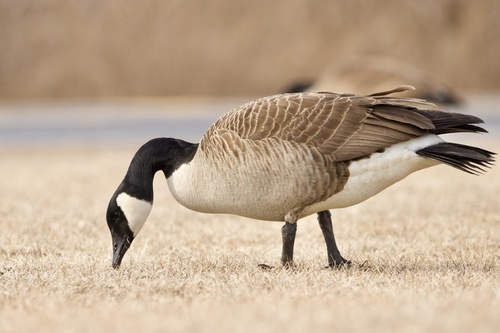
You might spot Canada Goose, Antelope Bitterbrush, and Steller's Jay.
View guide →

Colorado, US
You might spot Great Basin Bristlecone Pine and Mule Deer.
View guide →

Montana, US
You might spot Field Crescent, Thimbleberry, and Baker's Mariposa Lily.
View guide →

Colorado, US
You might spot Great Basin Bristlecone Pine and Mule Deer.
View guide →

Colorado, US
You might spot Rocky Mountain Beeplant and Plains Pricklypear.
View guide →
Take the discovery with you
Snap it with Snappit to identify it, learn what makes it special, and add the discovery to your collection.




.jpg&width=800)









