.jpg&width=800)





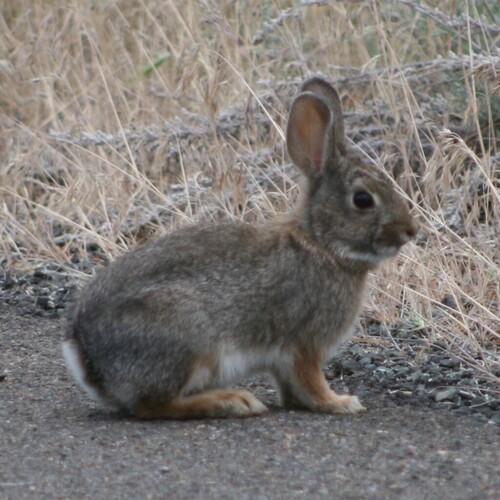
Mountain Cottontail
Sylvilagus nuttallii
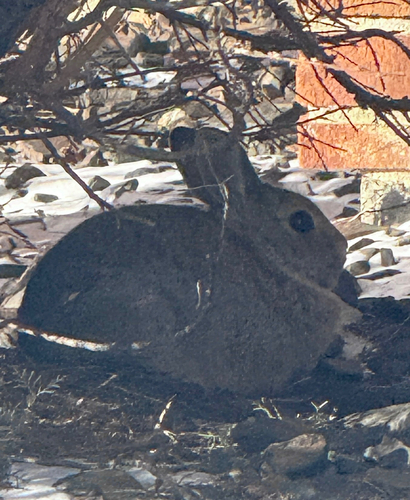
The Mountain Cottontail is a small, fluffy rabbit that loves to hop around in the wild. With its big ears and soft fur, it's a delightful sight in the mountains and meadows.
Habitat: Mountain regions
The Mountain Cottontail has grizzled grayish-brown fur on its back and sides, blending to a bright white belly. Its most distinctive feature is its fluffy white tail, visible when it runs, and it possesses relatively shorter ears compared to many other rabbit species.
Category
MammalsRarity
Common
Danger
1/5 · Very low
Snaps
5
A cottontail can communicate danger by thumping its powerful hind feet loudly on the ground.
Baby cottontails are born blind and helpless, relying completely on their mother for weeks!
Mountain Cottontails sometimes eat their own soft droppings to get extra nutrients from plants.
These rabbits often use abandoned burrows of marmots or badgers instead of digging their own.
Mountain Cottontail has a grayish-brown fur coat that helps them blend perfectly into rocky, scrubby habitats, making them hard to spot.
Mountain Cottontail can run in an unpredictable zig-zag pattern because of its strong hind legs, helping it evade predators quickly.
Mountain Cottontail can find food and detect danger because of its excellent sense of smell, vital for its survival in the wild.
Mountain Cottontail has large ears that can rotate, helping them pinpoint the exact location of quiet sounds, like a predator approaching.
These plant-eaters munch on many types of vegetation found in their mountain homes.
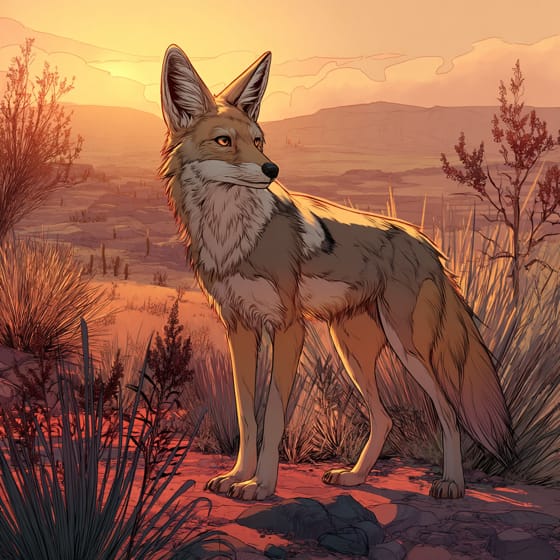
Canis latrans
A common predator in its range.
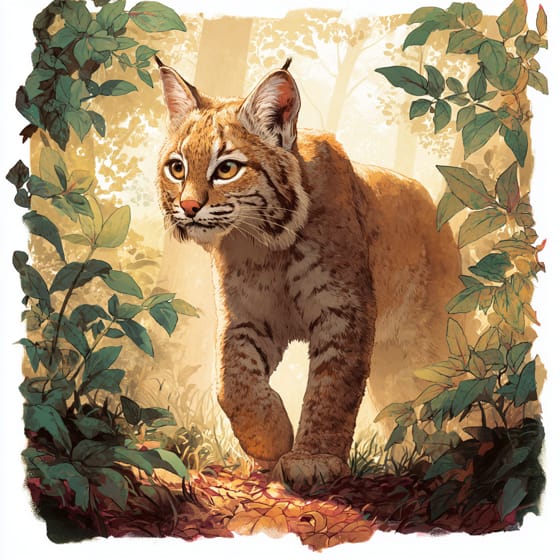
Lynx rufus
Preys on rabbits and small mammals.

Aquila chrysaetos
Hunts from the sky, a swift threat.
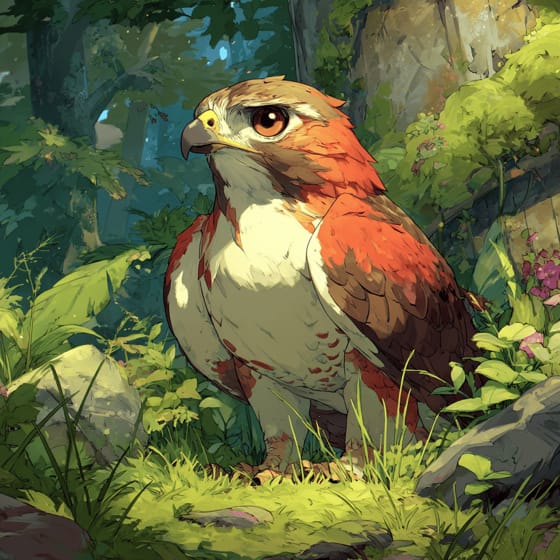
Buteo jamaicensis
Another aerial predator, common in habitat.

Artemisia tridentata
A key food source, especially in winter.
Furry describes animals possessing a dense covering of soft hair or fur.
Social animals live in organized groups, cooperating for survival benefits such as foraging, defense, and raising offspring.
Camouflaged describes organisms that possess coloring or patterns that allow them to blend into their environment.
This trait characterizes organisms whose diet consists entirely or primarily of plant material.

This habitat trait identifies species found in mountainous regions, characterized by high elevation, steep slopes, and varying climate zones.

Diurnal animals are primarily active during daylight hours, typically resting or sleeping at night.

This trait identifies organisms that exhibit exceptional swiftness in movement for hunting, escape, or travel.
No aliases listed yet.
Danger
1/5 · Very low
If you see a rabbit, watch quietly from a distance so you don't scare it.
The easiest way to identify Mountain Cottontail is to use the Snappit nature identifier app.
35-39 cm
0.7-1.2 kg
1-5 years
35 km/h
These plant-eaters munch on many types of vegetation found in their mountain homes.
Mountain regions
Foraging
Zoom in to split clusters and explore where this object has been snapped.
May 29, 2026
James Cant RanchPhoto attribution
(c) John Clonce, some rights reserved (CC BY)
License: CC BY 4.0 ↗
Image may be shown cropped inside the card frame.
Jan 17, 2026
Reptile GardensPhoto attribution
(c) Jane Weeden, some rights reserved (CC BY)
License: CC BY 4.0 ↗
Image may be shown cropped inside the card frame.

Colorado, US
You might spot Fireweed, Scentless Mayweed, and Quaking Aspen.
View guide →

Colorado, US
You might spot Elk, Mule Deer, and Black-Billed Magpie.
View guide →

Wyoming, US
You might spot Killdeer, American Kestrel, and Northern Flicker.
View guide →

Oregon, US
You might spot Balkan Toadflax, Big Sagebrush, and Western Juniper.
View guide →

Colorado, US
You might spot Elk, Mule Deer, and Black-Billed Magpie.
View guide →

Colorado, US
You might spot Elk, Mule Deer, and Black-Billed Magpie.
View guide →
Take the discovery with you
Snap it with Snappit to identify it, learn what makes it special, and add the discovery to your collection.




.jpg&width=800)

.JPG&width=800)


.jpg&width=800)
