





Musk Ox
Ovibos moschatus
The musk ox is a strong and furry animal that lives in cold places like the Arctic. It has long, curved horns and a thick coat to keep it warm in the snow.
Habitat: Tundra
The Musk Ox has a massive, shaggy body covered in a thick, dark brown to black coat that almost reaches the ground. Its short legs and broad hooves support a stocky frame, topped with a distinctive helmet-like set of horns that curve outward and down.
Category
MammalsRarity
Common
Danger
2/5 · Low
Snaps
Be the first to snap!
Musk oxen are more closely related to goats and sheep than to true oxen!
Musk oxen communicate with deep rumbling sounds that travel far in the cold Arctic air!
Their amazing soft underfur, qiviut, is eight times warmer than sheep's wool!
They can locate buried food under deep snow using their excellent sense of smell!
Musk Ox has a thick, shaggy coat and dense underwool called qiviut that helps them survive extreme Arctic temperatures below -40°C.
Musk Ox can use their massive, curved horns and thick skulls to defend against predators, forming a strong, unyielding defense line.
Musk Ox can form a protective circle with adults facing outwards, which helps them guard calves and vulnerable members from danger.
These herbivores graze on tough Arctic plants, finding food even under deep snow.
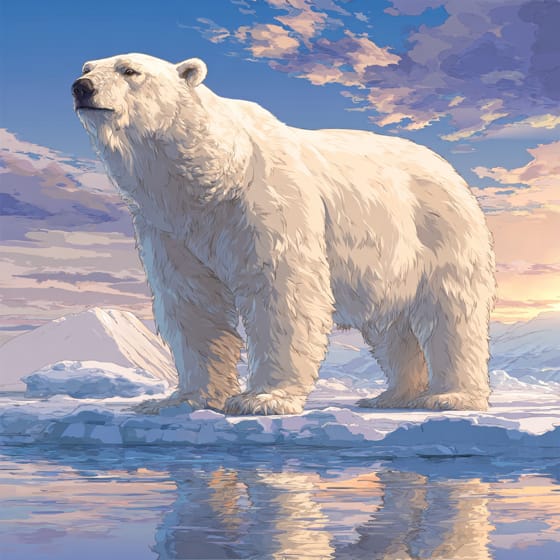
Ursus maritimus
occasionally preys on musk oxen.
Salix arctica
browses on leaves and stems.
Carex aquatilis
grazes on these tough grass-like plants.

Cetraria islandica
a key winter food source.
Wildlife encompasses all undomesticated animal and plant life existing in their natural habitats.
Furry describes animals possessing a dense covering of soft hair or fur.
Social animals live in organized groups, cooperating for survival benefits such as foraging, defense, and raising offspring.
Characterized by having one or more hard, permanent, pointed projections on the head.

This trait characterizes organisms whose diet consists entirely or primarily of plant material.

This habitat trait refers to species inhabiting tundras, which are treeless biomes characterized by permafrost, cold temperatures, and low-growing vegetation.
Danger
2/5 · Low
Keep a safe distance from musk oxen in the wild and never approach them.
The easiest way to identify Musk Ox is to use the Snappit nature identifier app.
190-250 cm
150-400 kg
12-20 years
60 km/h
These herbivores graze on tough Arctic plants, finding food even under deep snow.
Tundra
Grazing
Zoom in to split clusters and explore where this object has been snapped.
Recent snaps will appear here as new observations are added.
Alaska, US
You might spot Polar Bear, Brown Bear, and Tiger.
View guide →
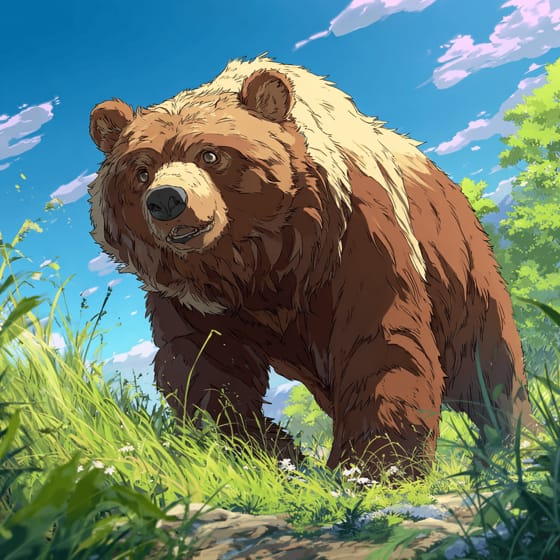
Alaska, US
You might spot Brown Bear, Black Bear, and Moose.
View guide →

Lapland, FI
You might spot Polar Bear, Brown Bear, and Wolverine.
View guide →

Central Denmark Region, DK
You might spot Polar Bear, Brown Bear, and Pea.
View guide →
Take the discovery with you
Snap it with Snappit to identify it, learn what makes it special, and add the discovery to your collection.




.jpg&width=800)



.JPG&width=800)


.jpg&width=800)
