





Narcissus Bulb Fly
Merodon equestris
The Narcissus Bulb Fly is a special fly that loves to lay its eggs in daffodil bulbs. It helps flowers grow by making sure they are healthy and strong!
Habitat: Gardens
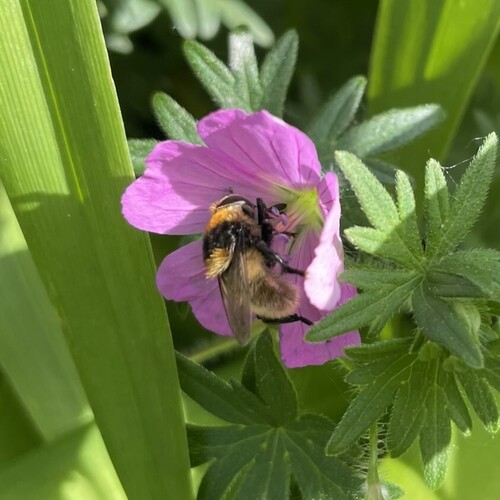
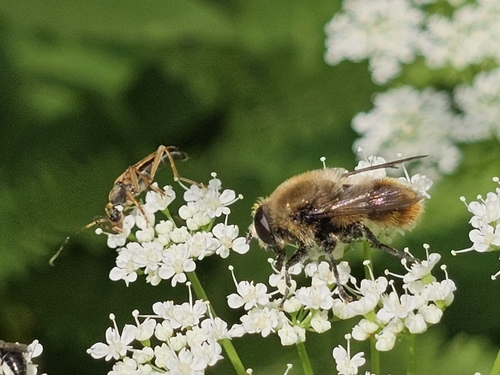
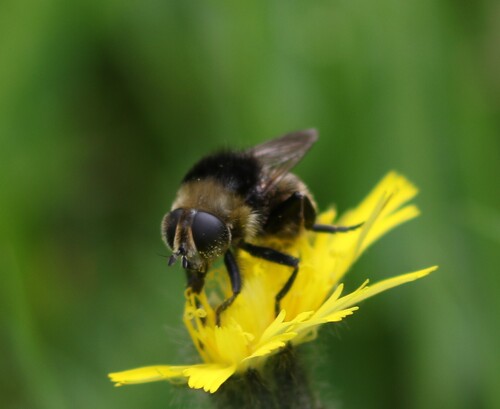
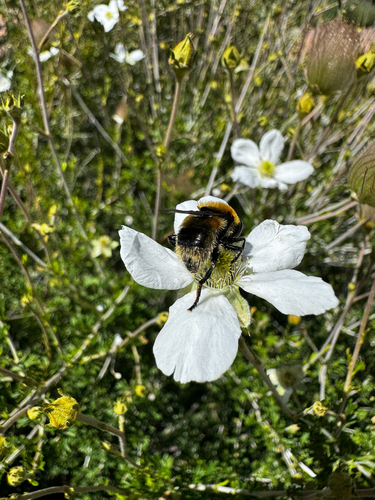
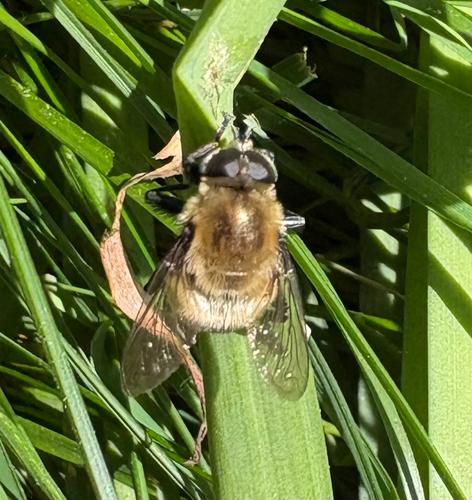
The Narcissus Bulb Fly is a fuzzy, stout-bodied insect that strongly resembles a bumblebee, with black and yellow or orange bands across its abdomen. It has a large head with small antennae and clear wings, which helps distinguish it from true bees.
Category
InsectsRarity
Common
Danger
1/5 · Very low
Snaps
53
A single female Narcissus Bulb Fly can lay over one hundred eggs in her short adult life!
Their babies are tiny grubs that can spend almost a year secretly eating inside flower bulbs!
They are amazing flyers, able to hover perfectly still or even fly backwards and sideways!
They mimic bumblebees to trick hungry birds, even though they can't sting at all!
Narcissus Bulb Fly has black and yellow patterns that make it look like a bumblebee, which helps them avoid predators.
Narcissus Bulb Fly larvae can tunnel into plant bulbs, allowing them to feed and grow safely underground.
Narcissus Bulb Fly can hover in place or dart swiftly, allowing them to easily access nectar and evade threats.
Adults sip nectar from flowers, while their larvae eat the insides of plant bulbs.
Age differences: Larvae consume plant bulbs; adults feed on nectar.
Narcissus pseudonarcissus
Larvae tunnel into and consume bulbs, causing decay.
Tulipa gesneriana
Larvae can also feed on tulip bulbs, destroying them.
Hyacinthus orientalis
Larvae sometimes target hyacinth bulbs.
%2C_Parc_de_Woluw%C3%A9%2C_Brussels_(13042792905).jpg&width=800)
Parus major
Birds are known predators of adult flies.
Social animals live in organized groups, cooperating for survival benefits such as foraging, defense, and raising offspring.
Colorful describes organisms or objects displaying a wide range of bright and distinct colors.
This trait characterizes organisms whose diet consists entirely or primarily of plant material.
Describes plants that are particularly attractive and beneficial to a wide range of pollinating organisms.

Diurnal animals are primarily active during daylight hours, typically resting or sleeping at night.

Describes a species whose presence and role have a disproportionately large effect on its environment.

This habitat trait indicates species that can coexist with humans in urban and suburban environments, utilizing man-made structures and green spaces.

Describes organisms that transfer pollen, enabling the fertilization and reproduction of plants.
No aliases listed yet.
Danger
1/5 · Very low
These flies are harmless, so you can watch them without worry!
The easiest way to identify Narcissus Bulb Fly is to use the Snappit nature identifier app.
18-30 mm
9-16 mm
7-14 days
15 km/h
Adults sip nectar from flowers, while their larvae eat the insides of plant bulbs.
Gardens
Foraging
Zoom in to split clusters and explore where this object has been snapped.
Jun 13, 2026
Parc Jean-DrapeauPhoto attribution
no rights reserved
License: CC0 1.0 ↗
Image may be shown cropped inside the card frame.
Jun 10, 2026
Rockdale Common Housing DistrictPhoto attribution
(c) Betsy Lambert, some rights reserved (CC BY)
License: CC BY 4.0 ↗
Image may be shown cropped inside the card frame.
Jun 6, 2026
Sheepscot Historic DistrictPhoto attribution
no rights reserved
License: CC0 1.0 ↗
Image may be shown cropped inside the card frame.
Jun 5, 2026
Red Butte Garden and ArboretumPhoto attribution
(c) Parker James Lloyd, some rights reserved (CC BY)
License: CC BY 4.0 ↗
Image may be shown cropped inside the card frame.
Jun 4, 2026
Bedford Village Historic DistrictPhoto attribution
(c) eml23, some rights reserved (CC BY)
License: CC BY 4.0 ↗
Image may be shown cropped inside the card frame.

Ohio, US
You might spot Eastern Fox Squirrel and Spotted Lanternfly.
View guide →

Oregon, US
You might spot Duck, Pacific Trillium, and Wood Duck.
View guide →

Massachusetts, US
You might spot Common Eastern Bumble Bee and Asian Lady Beetle.
View guide →

Colorado, US
You might spot Eastern Fox Squirrel, Bee, and Duck.
View guide →

Ohio, US
You might spot Spotted Lanternfly and Eastern Fox Squirrel.
View guide →

North Carolina, US
You might spot American Robin and Eastern Gray Squirrel.
View guide →
Take the discovery with you
Snap it with Snappit to identify it, learn what makes it special, and add the discovery to your collection.







.jpg&width=800)


