.jpg&width=800)





Northern Cricket Frog
Acris crepitans
The Northern Cricket Frog is a small, lively frog that loves to hop around. It has a unique sound that sounds like a cricket, which is how it got its name!
Habitat: Wetlands
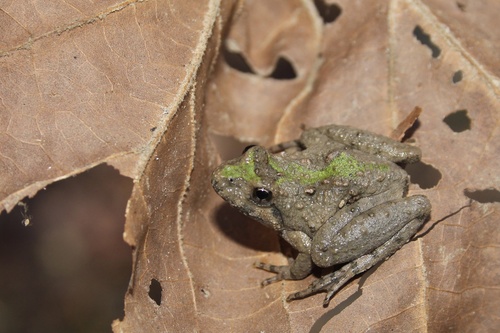
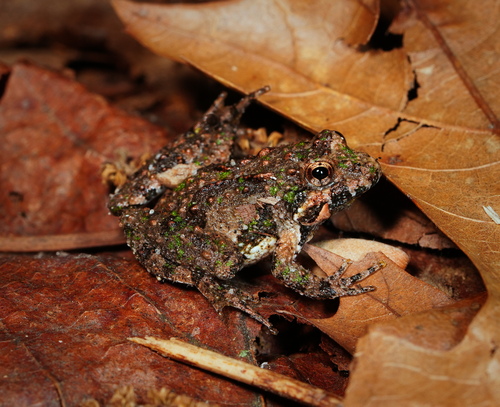
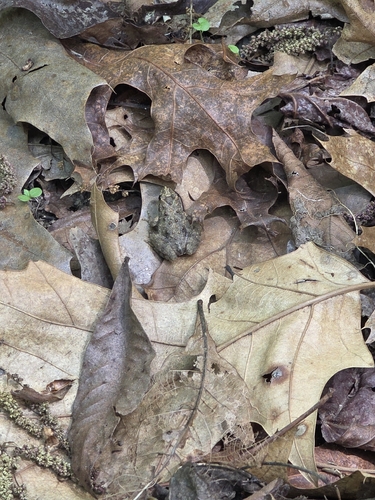
The Northern Cricket Frog is a small amphibian, typically gray, brown, or green, often with a dark triangle between its eyes. It has a warty skin texture and a pointed snout, which helps it blend into its marshy environment.
Category
AmphibiansRarity
Common
Danger
1/5 · Very low
Snaps
11
Did you know a group of frogs is actually called an "army"?
It is one of the smallest frogs in all of North America!
Their loud calls can be heard over a mile away, even from tiny frogs!
These frogs lay their tiny eggs one by one on underwater plants.
Northern Cricket Frog has special skin cells that allow it to subtly change color, helping it perfectly disappear into its environment.
Northern Cricket Frog can make a clicking call that sounds like crickets, which helps male frogs attract a mate from far away.
Northern Cricket Frog has a long, sticky tongue that helps it quickly snatch flying insects right out of the air.
These tiny frogs are expert hunters, feasting on small insects and other invertebrates they catch.
Age differences: Tadpoles eat algae; adults switch to insects.
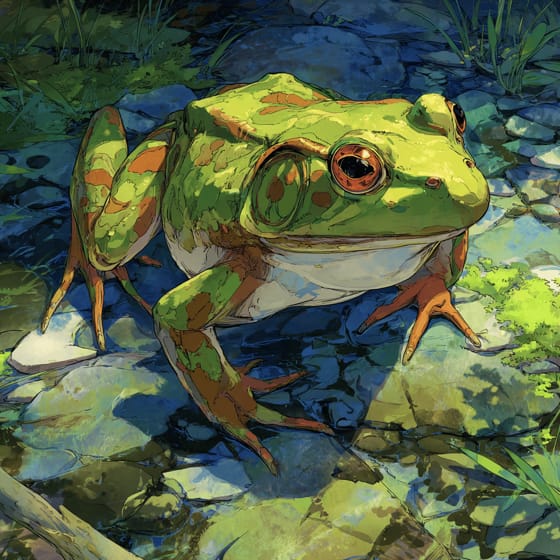
Lithobates catesbeianus
A larger frog predator in its habitat.
Thamnophis sirtalis
Often hunts near water bodies where frogs live.
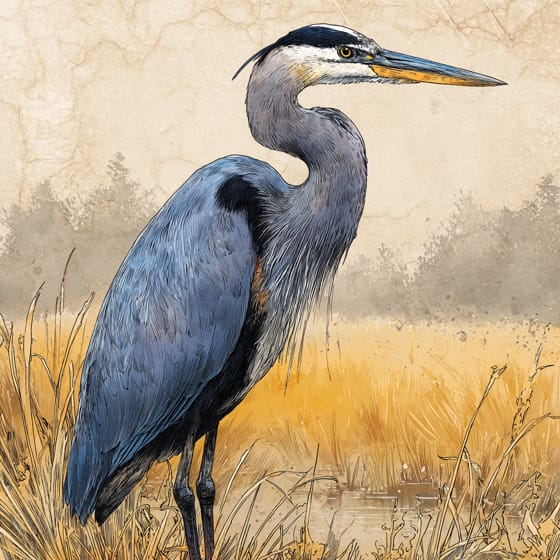
Ardea herodias
Wades in shallow water, preying on small aquatic life.
Culex pipiens
A common flying insect, part of its main diet.
Solitary animals live alone for most of their lives, only interacting with others for mating or parental care.
Singing animals produce complex vocalizations, often for purposes of attracting mates, defending territory, or communicating within their species.
Camouflaged describes organisms that possess coloring or patterns that allow them to blend into their environment.
This trait identifies organisms whose diet primarily consists of insects and other small invertebrates.

This habitat trait identifies species found in wetlands, which are areas of land saturated with water, either permanently or seasonally, including marshes, swamps, and bogs.

Diurnal animals are primarily active during daylight hours, typically resting or sleeping at night.

Freshwater habitats include non-saline aquatic environments such as rivers, lakes, ponds, and wetlands, vital for numerous species.

This trait identifies organisms that exhibit exceptional swiftness in movement for hunting, escape, or travel.
No aliases listed yet.
Danger
1/5 · Very low
Always watch where you step near water to keep frogs safe!
The easiest way to identify Northern Cricket Frog is to use the Snappit nature identifier app.
1.5-3.8 cm
0.001-0.005 kg
1-4 years
5 km/h
These tiny frogs are expert hunters, feasting on small insects and other invertebrates they catch.
Wetlands
Ambush
Zoom in to split clusters and explore where this object has been snapped.
May 29, 2026
Blackbird State ForestPhoto attribution
no rights reserved
License: CC0 1.0 ↗
Image may be shown cropped inside the card frame.
May 17, 2026
Blackbird State ForestPhoto attribution
(c) inbetweenbays, some rights reserved (CC BY)
License: CC BY 4.0 ↗
Image may be shown cropped inside the card frame.
Delaware, US
You might spot Northern Cricket Frog, Fan Clubmoss, and Fowler's Toad.
View guide →
Maryland, US
You might spot Northern Cricket Frog and Common Whitetail.
View guide →

Virginia, US
You might spot Spotted Lanternfly and Northern Cardinal.
View guide →

Maryland, US
You might spot Common Pawpaw, Zebra Swallowtail, and Bald Eagle.
View guide →

Virginia, US
You might spot White-Tailed Deer and Spotted Salamander.
View guide →

Virginia, US
You might spot Eastern Box Turtle and Northern Cricket Frog.
View guide →
Take the discovery with you
Snap it with Snappit to identify it, learn what makes it special, and add the discovery to your collection.








.JPG&width=800)



.jpg&width=800)

