





Northern Yellow Warbler
Setophaga aestiva
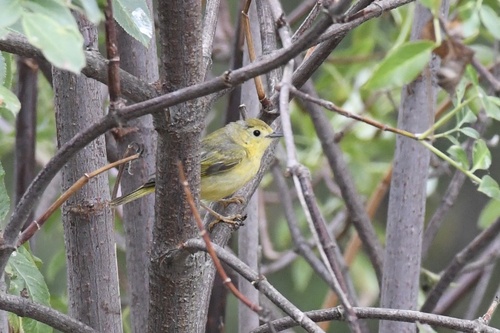
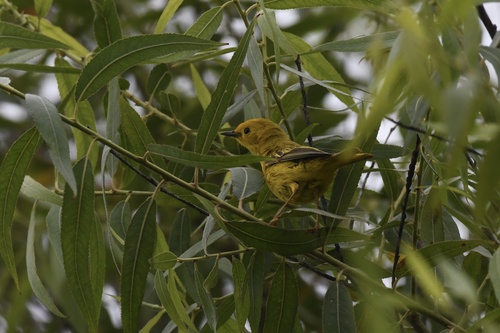
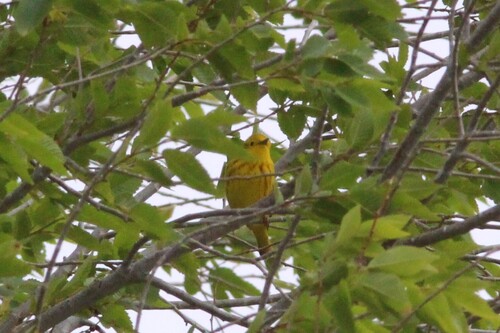
The Northern Yellow Warbler is a small, bright yellow bird that loves to sing. It flits around trees and bushes, making its cheerful song heard in the spring and summer.
Habitat: Forests
The Northern Yellow Warbler is a small, vibrant yellow bird, often with distinctive reddish-brown streaks on its breast, especially in males. Its bright plumage makes it stand out among foliage, distinguishing it from other duller warblers.
Category
BirdsRarity
Common
Danger
1/5 · Very low
Snaps
67
Its tightly woven nests can hold water like a tiny cup!
Males sing a "sweet, sweet, sweet, I'm so sweet" song!
Some warblers build new nest floors to bury unwelcome eggs!
These tiny birds migrate thousands of kilometers every year!
Northern Yellow Warblers can build incredibly strong, cup-shaped nests because they tightly weave plant fibers, making them durable.
Northern Yellow Warblers can recognize and sometimes reject foreign eggs, even building new nest layers to bury unwanted ones.
Northern Yellow Warblers can perform swift, agile maneuvers in flight because of their small size, helping them catch insects mid-air.
This tiny bird mostly eats insects, keeping many garden pests in check.
.jpg&width=800)
Molothrus ater
Lays eggs in warbler nests.

Accipiter striatus
Predator of adult warblers.
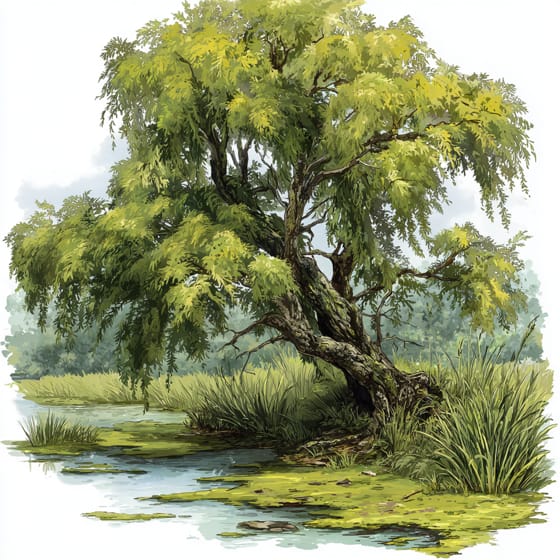
Salix nigra
Often nests in willow thickets.
Malacosoma disstria
Feeds heavily on these caterpillars.
Feathered describes animals, primarily birds, possessing a covering of feathers.
Social animals live in organized groups, cooperating for survival benefits such as foraging, defense, and raising offspring.
Singing animals produce complex vocalizations, often for purposes of attracting mates, defending territory, or communicating within their species.
Colorful describes organisms or objects displaying a wide range of bright and distinct colors.

This trait identifies organisms whose diet primarily consists of insects and other small invertebrates.

Forest habitats are terrestrial environments dominated by dense tree cover, supporting a high diversity of plant and animal life.

Diurnal animals are primarily active during daylight hours, typically resting or sleeping at night.

Migratory animals undertake seasonal movements from one region to another, typically in response to changes in climate or food availability.
No aliases listed yet.
Danger
1/5 · Very low
Enjoy watching birds from a distance and don't disturb their nests.
The easiest way to identify Northern Yellow Warbler is to use the Snappit nature identifier app.
10-13 cm
16-20 cm
0.007-0.012 kg
2-10 years
40 km/h
This tiny bird mostly eats insects, keeping many garden pests in check.
Forests
Zoom in to split clusters and explore where this object has been snapped.
Jun 6, 2026
Mount EcclesiaPhoto attribution
(c) zr217, some rights reserved (CC BY)
License: CC BY 4.0 ↗
Image may be shown cropped inside the card frame.
Jun 6, 2026
Mount EcclesiaPhoto attribution
(c) zr217, some rights reserved (CC BY)
License: CC BY 4.0 ↗
Image may be shown cropped inside the card frame.
May 4, 2026
Gallup Commercial Historic DistrictPhoto attribution
(c) William Harmon, some rights reserved (CC BY)
License: CC BY 4.0 ↗
Image may be shown cropped inside the card frame.

Washington, US
You might spot Pacific Banana Slug and Oregon Forestsnail.
View guide →

Oregon, US
You might spot Oregon Oak, Pacific Poison Oak, and American Bullfrog.
View guide →

Kansas, US
You might spot American Robin, Monarch, and Italian Wall Lizard.
View guide →

Pennsylvania, US
You might spot Tree-Of-Heaven, Spotted Lanternfly, and American Tuliptree.
View guide →

New York, US
You might spot White Snakeroot, Common Mugwort, and Eastern Gray Squirrel.
View guide →

Michigan, US
You might spot Eastern Box Turtle, Autumn Olive, and Common Watersnake.
View guide →
Take the discovery with you
Snap it with Snappit to identify it, learn what makes it special, and add the discovery to your collection.




.jpg&width=800)






