





Ohio spiderwort
Tradescantia ohiensis
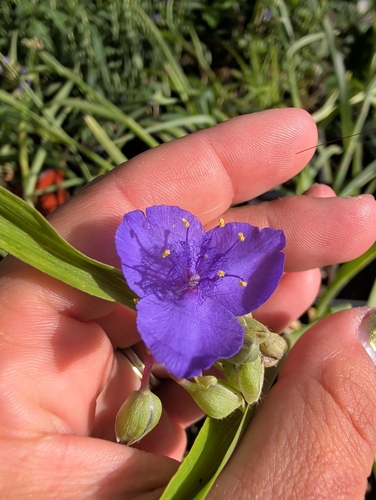
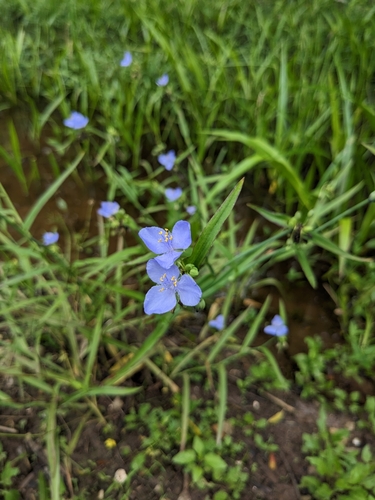
Ohio spiderwort is a beautiful flower with long, green leaves and bright blue-purple blooms. It grows in clumps and can be found in gardens and fields, adding color to the landscape.
Habitat: Grasslands
The Ohio spiderwort has striking three-petaled flowers, typically vibrant blue-violet to purple, that bloom atop tall, grass-like green stems. Its distinctive slender leaves and robust clumping growth distinguish it from many other wildflowers.
Category
PlantsRarity
Common
Danger
1/5 · Very low
Snaps
31
If you cut its stem, the sticky sap looks like tiny spiderwebs!
Its sap turns pink when exposed to certain radiation, acting like a natural pollution detector!
Native Americans once used its juice to dye fabrics purple.
The fresh flowers are edible and taste a little like sweet garden peas.
Ohio spiderwort flowers close in the afternoon to protect pollen and conserve moisture, helping it survive sunny days.
Ohio spiderwort has a gooey sap that can soothe skin irritations and seal minor plant wounds, aiding its recovery.
Ohio spiderwort can thrive in many different soil types, from sandy to clay, helping it grow in diverse environments.
Apis mellifera
Gathers nectar and pollen
Bombus impatiens
Visits flowers for nectar
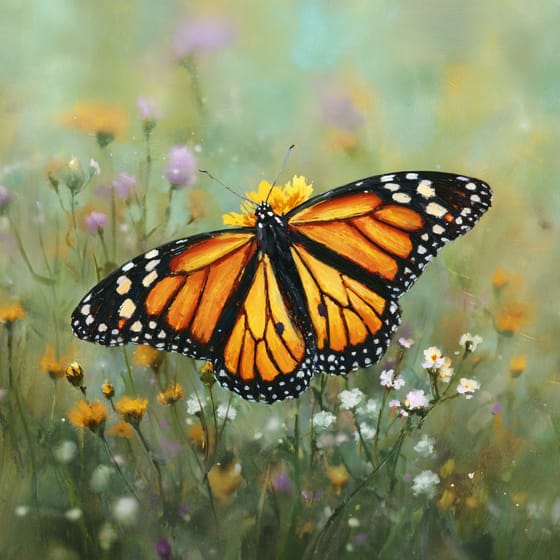
Danaus plexippus
Feeds on flower nectar
Flowering plants are any plants that produce flowers as part of their reproductive cycle.
Ornamental plants are cultivated primarily for their aesthetic appeal, enhancing landscapes and gardens with their attractive foliage, flowers, or form.
Grass-like plants are herbaceous plants that visually resemble true grasses, typically having long, narrow leaves.
Spring blooming plants produce their flowers during the spring season, often signifying the end of winter and the start of new growth.

Colorful describes organisms or objects displaying a wide range of bright and distinct colors.

Grassland habitats are terrestrial biomes dominated by grasses and herbaceous plants, supporting a variety of grazing animals.

Describes plants that are particularly attractive and beneficial to a wide range of pollinating organisms.

Rapid growing plants exhibit accelerated growth rates, quickly increasing in size and biomass within a short period.
No aliases listed yet.
Danger
1/5 · Very low
Always look but don't touch plants without asking an adult first.
The easiest way to identify Ohio spiderwort is to use the Snappit nature identifier app.
60-100 cm
30-60 cm
2-3 cm
Late spring to mid-summer
Yes
None
Perennial
Zoom in to split clusters and explore where this object has been snapped.
May 30, 2026
Heckscher ParkPhoto attribution
no rights reserved
License: CC0 1.0 ↗
Image may be shown cropped inside the card frame.
May 11, 2023
Pomme de Terre Wildlife Management AreaPhoto attribution
(c) Jacob Saucier, some rights reserved (CC BY)
License: CC BY 4.0 ↗
Image may be shown cropped inside the card frame.

Michigan, US
You might spot Monarch, Canada Goose, and Eastern Gray Squirrel.
View guide →

Michigan, US
You might spot Monarch, Canada Goose, and Eastern Gray Squirrel.
View guide →

Minnesota, US
You might spot Common Eastern Bumble Bee and Turkey.
View guide →

Georgia, US
You might spot American Beautyberry, Muscadine, and Virginia Creeper.
View guide →

Tennessee, US
You might spot Eastern Gray Squirrel and American Robin.
View guide →

Minnesota, US
You might spot Rue Anemone, Bloodroot, and White-Tailed Deer.
View guide →
Take the discovery with you
Snap it with Snappit to identify it, learn what makes it special, and add the discovery to your collection.








.jpg&width=800)



_001.jpg&width=800)




