





Ornate Box Turtle
Terrapene ornata
The Ornate Box Turtle has a beautiful shell with bright yellow and black patterns. They are shy and like to hide in their shells when they feel scared. These turtles are gentle and love to munch on plants and insects.
Habitat: Grasslands
The Ornate Box Turtle has a high-domed, dark brown to black shell strikingly patterned with bright yellow lines radiating across each scute. Its head and limbs often feature similar yellow markings. These vibrant patterns make it easily distinguishable.
Category
ReptilesRarity
Common
Danger
1/5 · Very low
Snaps
6
An Ornate Box Turtle can eat mushrooms, even some poisonous to humans!
Its colorful shell patterns are totally unique, like a fingerprint!
They spend winter sleeping snug deep underground to stay warm!
This turtle can live longer than many grandmas and grandpas!
Ornate Box Turtle can completely seal its shell shut because its bottom shell has a special hinge, protecting it from predators.
Ornate Box Turtle can dig shallow burrows to escape extreme heat or cold, creating a safe underground hideaway.
Ornate Box Turtle has an excellent sense of smell that helps it find yummy insects, berries, and fungi hidden in the grass.
Ornate Box Turtle has a shell pattern that helps it blend perfectly with the dry grasses and leaves of its habitat.
A scavenger and hunter, it snacks on insects, worms, plants, and tasty berries.
Age differences: Young turtles eat more meat, while adults enjoy a mix of plants and insects.

Procyon lotor
They raid nests for eggs or prey on young turtles.
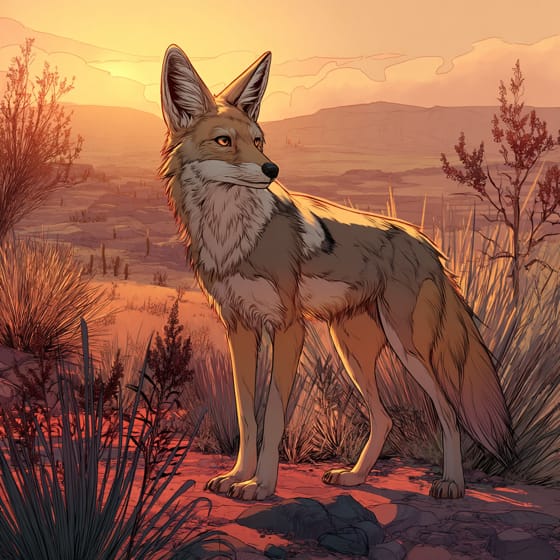
Canis latrans
Coyotes are opportunistic predators of adult and young turtles.

Melanoplus differentialis
A favorite protein source found in its grassland home.
Fragaria virginiana
These sweet berries are a tasty plant snack.
Solitary animals live alone for most of their lives, only interacting with others for mating or parental care.
Colorful describes organisms or objects displaying a wide range of bright and distinct colors.
Grassland habitats are terrestrial biomes dominated by grasses and herbaceous plants, supporting a variety of grazing animals.
This trait characterizes organisms whose diet consists entirely or primarily of plant material.

This trait characterizes organisms with an exceptionally long lifespan compared to others of their kind.

Armored describes animals protected by a hard, external covering or shell for defense.

Diurnal animals are primarily active during daylight hours, typically resting or sleeping at night.
No aliases listed yet.
Danger
1/5 · Very low
If you see a turtle, watch it from a distance and don't touch it. They need their space!
The easiest way to identify Ornate Box Turtle is to use the Snappit nature identifier app.
10-14 cm
0.2-0.5 kg
30-50 years
0.5 km/h
A scavenger and hunter, it snacks on insects, worms, plants, and tasty berries.
Grasslands
Foraging
Zoom in to split clusters and explore where this object has been snapped.

Illinois, US
You might spot Painted Turtle, Ornate Box Turtle, and Pond Slider.
View guide →

Nebraska, US
You might spot House Finch, Woodhouse's Toad, and Mourning Dove.
View guide →

Illinois, US
You might spot Olympia Marble and American Field Pansy.
View guide →

Illinois, US
You might spot Snapping Turtle, Cardinal Flower, and American Bullfrog.
View guide →

Texas, US
You might spot Field Bindweed and Purple Groundcherry.
View guide →

New Mexico, US
You might spot Creosote Bush, Devilshead, and Lace-Spine Nipple Cactus.
View guide →
Take the discovery with you
Snap it with Snappit to identify it, learn what makes it special, and add the discovery to your collection.













