





Porcelain Gray
protoboarmia porcelaria
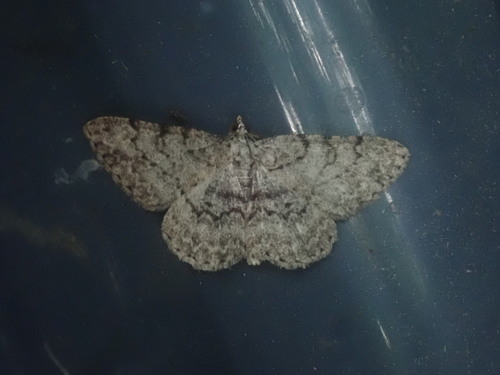
The Porcelain Gray is a tiny, delicate insect that flutters gracefully among the flowers. Its beautiful gray wings look like fine porcelain, making it a special sight in gardens!
Habitat: Porcelain Grays live in gardens, meadows, and open fields where flowers bloom.
The Porcelain Gray is a small moth, typically pale to dark gray with subtle wavy lines across its wings. Its name comes from the smooth, almost porcelain-like texture, helping it blend perfectly with tree bark. This cryptic coloration makes it hard to spot.
Category
InsectsRarity
Common
Danger
0/5 · No known danger
Snaps
8
Adult Porcelain Grays can only sip liquids like nectar, they can't chew solid food!
Its caterpillars are called inchworms because they loop their bodies to walk, like measuring!
Some close relatives of this moth have bright green wings, not gray at all!
This moth can fly and be spotted even on chilly nights, unlike many other insects!
Porcelain Gray can disappear against tree bark because its mottled gray wings perfectly mimic lichen, helping them hide from predators.
Porcelain Gray larvae can pretend to be a twig by stiffening their bodies and standing upright, making them nearly invisible to hungry birds.
Porcelain Gray can find mates in the dark using powerful scent receptors on its feathery antennae, guiding it through the night.
Adult moths drink flower nectar, while their caterpillar young munch on tree leaves.
Age differences: Yes, caterpillars eat leaves, but adult moths only sip nectar.
Social animals live in organized groups, cooperating for survival benefits such as foraging, defense, and raising offspring.
Colorful describes organisms or objects displaying a wide range of bright and distinct colors.
This trait characterizes organisms whose diet consists entirely or primarily of plant material.
Diurnal animals are primarily active during daylight hours, typically resting or sleeping at night.

Describes organisms that transfer pollen, enabling the fertilization and reproduction of plants.
Danger
0/5 · No known danger
No special safety notes yet.
The easiest way to identify Porcelain Gray is to use the Snappit nature identifier app.
25-35 mm
10-15 mm
7-14 days
5-10 km/h
Adult moths drink flower nectar, while their caterpillar young munch on tree leaves.
Porcelain Grays live in gardens, meadows, and open fields where flowers bloom.
Foraging
Zoom in to split clusters and explore where this object has been snapped.
Jul 21, 2023
Doane's FallsPhoto attribution
no rights reserved
License: CC0 1.0 ↗
Image may be shown cropped inside the card frame.

Ohio, US
You might spot Spotted Lanternfly and Eastern Fox Squirrel.
View guide →
Ohio, US
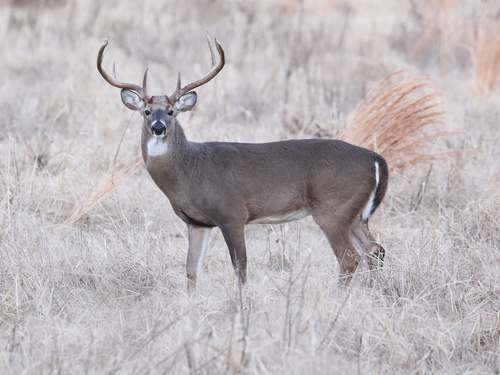
You might spot White-Tailed Deer, Mayapple, and American Beech.
View guide →

Tennessee, US
You might spot Monarch and Eastern Tiger Swallowtail.
View guide →

Connecticut, US
You might spot Asian Lady Beetle and Baltimore Snout.
View guide →

Massachusetts, US
You might spot Rosy Maple Moth, Solomon's Plume, and Marginal Wood Fern.
View guide →

New York, US
You might spot American Herring Gull, Brant, and Great Black-Backed Gull.
View guide →
Take the discovery with you
Snap it with Snappit to identify it, learn what makes it special, and add the discovery to your collection.








.jpg&width=800)



