





prairie blazing star
Liatris pycnostachya
The prairie blazing star is a beautiful flower that grows tall and has bright purple spikes. It loves sunny places and attracts butterflies and bees, making it a happy spot in the prairie!
Habitat: Grasslands
The prairie blazing star is a tall, upright perennial with dense spikes of fuzzy, bright purple-pink flowers. Its distinctive blooms appear from the top down, creating a vibrant column that stands out in grasslands.
Category
PlantsRarity
Common
Danger
1/5 · Very low
Snaps
1
Indigenous peoples once chewed its root to help with tummy aches!
Its tall flower spikes bloom upside-down, starting at the very top!
Many types of butterflies and bees race to sip its sweet nectar!
Underground, it grows a special round root that stores water like a living canteen!
This plant can attract a wide variety of butterflies and bees with its vibrant flowers and abundant nectar.
Prairie blazing star can resprout from its robust root system after a prairie fire, helping it thrive in its natural habitat.
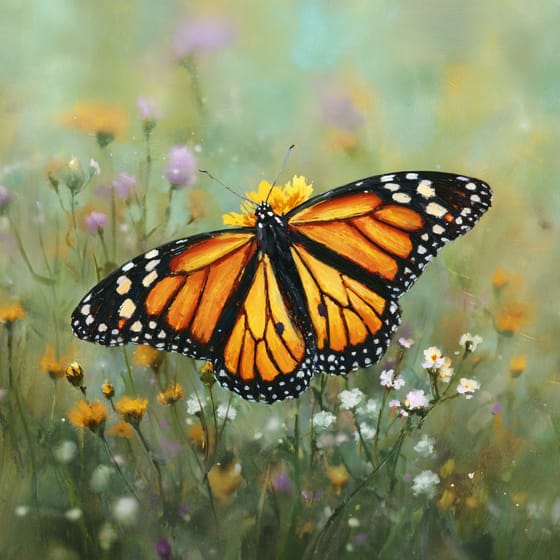
Danaus plexippus
nectar fuels its epic migration
Apis mellifera
collects pollen and nectar
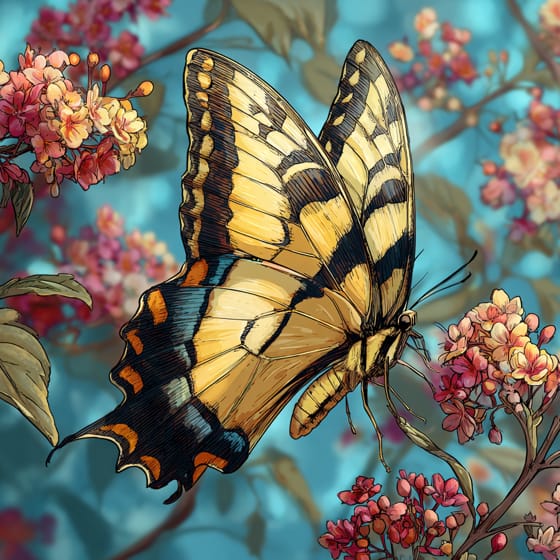
Papilio glaucus
visits flowers for sweet nectar

Spermophilus tridecemlineatus
sometimes digs up and eats corms
Flowering plants are any plants that produce flowers as part of their reproductive cycle.
Summer blooming plants produce their flowers during the summer season, often providing vibrant color when many other plants have finished.
Fragrant flowers emit a pleasant aroma, often to attract pollinators or for defense.
Colorful describes organisms or objects displaying a wide range of bright and distinct colors.

Grassland habitats are terrestrial biomes dominated by grasses and herbaceous plants, supporting a variety of grazing animals.

Describes plants that are particularly attractive and beneficial to a wide range of pollinating organisms.

Describes a species whose presence and role have a disproportionately large effect on its environment.
No aliases listed yet.
Danger
1/5 · Very low
Always look but don't pick flowers, so they can keep growing for everyone to enjoy!
The easiest way to identify prairie blazing star is to use the Snappit nature identifier app.
90-180 cm
30-60 cm
1-2 cm
Late summer to fall
Yes
None
Perennial
Zoom in to split clusters and explore where this object has been snapped.

Iowa, US
You might spot Common Milkweed, Amur Honeysuckle, and Canada Anemone.
View guide →

Wisconsin, US
You might spot Eastern Forktail and Brown-Belted Bumble Bee.
View guide →

Wisconsin, US
You might spot Sundial Lupine, Canadian Lousewort, and Cream Wild-Indigo.
View guide →

Illinois, US
You might spot Butterfly Milkweed and Prairie Blazing Star.
View guide →

Iowa, US
You might spot White-Tailed Deer, American Bullfrog, and Cup Plant.
View guide →
Take the discovery with you
Snap it with Snappit to identify it, learn what makes it special, and add the discovery to your collection.








.jpg&width=800)


_001.jpg&width=800)




