





Prairie Junegrass
Koeleria macrantha
Prairie Junegrass is a lovely grass that grows in open fields. It has thin, green blades and can sway gently in the wind, making the prairie look beautiful.
Habitat: Grasslands
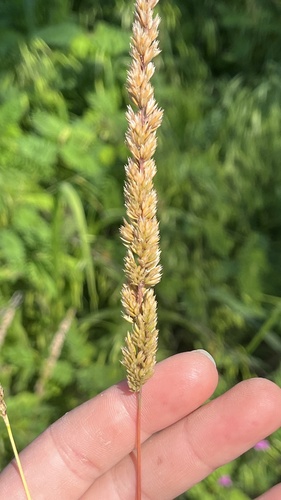
The Prairie Junegrass has slender, upright stems topped with a distinctive, spike-like flower head that shimmers with a silvery-green to purplish hue. Its narrow, grayish-green leaves grow in compact clumps, making it look like a neat tuft of hair in the landscape.
Category
PlantsRarity
Common
Danger
1/5 · Very low
Snaps
2
Even though it's a grass, its shimmering flower head sometimes looks like tiny twinkling lights!
Its scientific name, Koeleria macrantha, honors German botanist Georg Ludwig Koeler!
Prairie Junegrass is called a 'bunchgrass' because it grows in neat, tight clumps, not spreading out.
This grass is often one of the first native grasses to bloom on the prairie each year!
Prairie Junegrass can bounce back quickly after prairie fires because its growing points are safely tucked underground, helping ecosystems recover.
Prairie Junegrass has deep, fibrous roots that help it find water far below the surface, allowing it to survive long dry spells.
Prairie Junegrass grows in dense clumps with strong roots that hold soil together, preventing erosion and keeping the ground healthy.

Bison bison
A key food source for grazing bison on prairies.
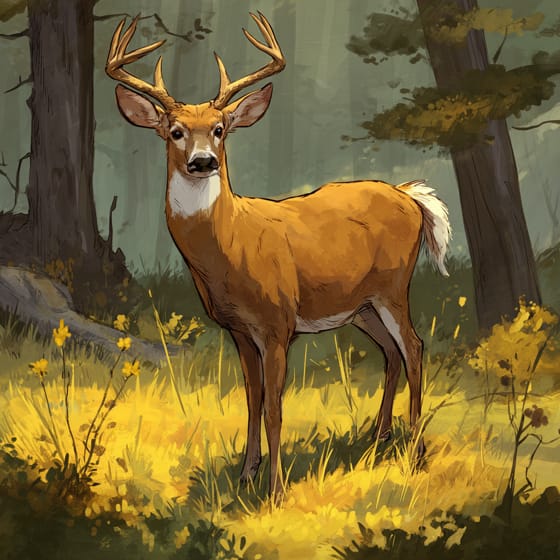
Odocoileus virginianus
Browsed by deer, especially when other forage is scarce.
Microtus pennsylvanicus
Provides food and protective cover for small mammals.

Eremophila alpestris
Nests among its clumps, using it for protection.
Grass-like plants are herbaceous plants that visually resemble true grasses, typically having long, narrow leaves.
Edible plants are those parts of a plant that are considered safe for human consumption.
Grassland habitats are terrestrial biomes dominated by grasses and herbaceous plants, supporting a variety of grazing animals.
Describes plants that are particularly attractive and beneficial to a wide range of pollinating organisms.

Rapid growing plants exhibit accelerated growth rates, quickly increasing in size and biomass within a short period.
No aliases listed yet.
Danger
1/5 · Very low
Always stay on paths when exploring grasslands to protect plants and animals.
The easiest way to identify Prairie Junegrass is to use the Snappit nature identifier app.
10-60 cm
Late spring to early summer
No
None
Perennial
Wind
Grasslands
Zoom in to split clusters and explore where this object has been snapped.
Jun 3, 2026
Shaw Nature ReservePhoto attribution
(c) diana schwartz, some rights reserved (CC BY)
License: CC BY 4.0 ↗
Image may be shown cropped inside the card frame.
Take the discovery with you
Snap it with Snappit to identify it, learn what makes it special, and add the discovery to your collection.










.jpg&width=800)



_001.jpg&width=800)



