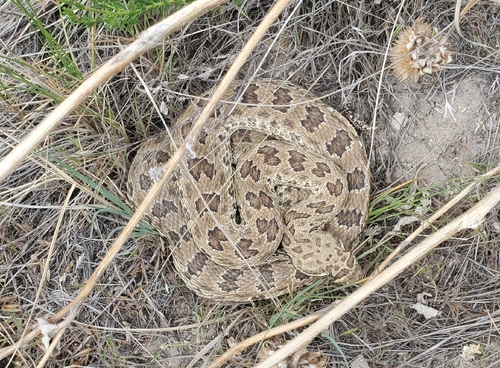




Prairie Rattlesnake
Crotalus viridis
The Prairie Rattlesnake is a cool snake that has a special rattle on its tail! It uses this rattle to warn others when it feels scared. These snakes are usually green or brown and can blend in with the grass.
Habitat: Grasslands
The Prairie Rattlesnake has a pale greenish-gray to yellowish base color, covered in dark, often diamond-shaped blotches outlined in white. Its distinct triangular head and the iconic segmented rattle at its tail-tip easily distinguish it from other snakes.
Category
ReptilesRarity
Common
Danger
4/5 · High
Snaps
12
Baby rattlesnakes are born alive and completely ready to hunt on their own!
Each time a rattlesnake sheds its skin, it usually adds a new rattle segment!
Prairie Rattlesnakes can survive months without food, especially during cold hibernation!
They use their forked tongues to 'smell' by picking up scents in the air.
Prairie Rattlesnakes can shake their tail quickly, creating a loud buzz to warn off threats.
Prairie Rattlesnakes have special heat-sensing pits that help them 'see' warm-blooded prey in total darkness.
Prairie Rattlesnakes have mottled scales that help them blend perfectly into dry grasslands and rocky terrain.
Prairie Rattlesnakes possess powerful venom delivered through fangs to quickly immobilize their prey.
Prairie Rattlesnakes are carnivores that ambush small mammals and birds using their venomous bite.
Age differences: Young snakes eat more lizards and insects before switching to mammals.
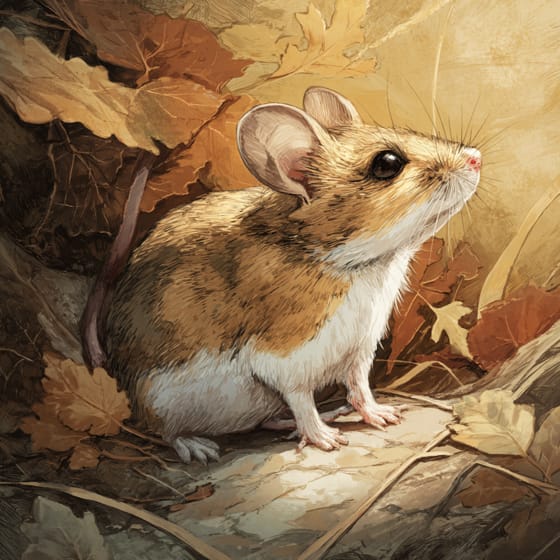
Peromyscus maniculatus
A primary food source in its grassland habitat.
Microtus pennsylvanicus
Another common small mammal it preys upon.
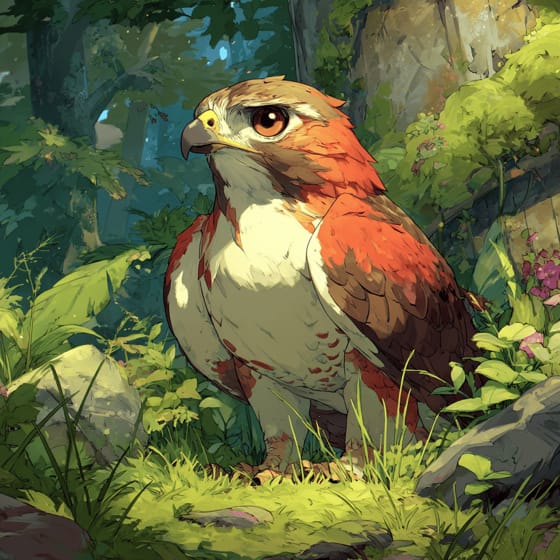
Buteo jamaicensis
Large raptors occasionally prey on younger snakes.

Taxidea taxus
Badgers sometimes dig them out of dens to eat.
Marked with spots or patches of a different color.
Solitary animals live alone for most of their lives, only interacting with others for mating or parental care.
Camouflaged describes organisms that possess coloring or patterns that allow them to blend into their environment.
Grassland habitats are terrestrial biomes dominated by grasses and herbaceous plants, supporting a variety of grazing animals.

An ambush predator hunts by patiently waiting and concealing itself, then launching a sudden attack when unsuspecting prey comes within range.

This trait identifies organisms whose diet consists entirely or primarily of animal tissue.

Diurnal animals are primarily active during daylight hours, typically resting or sleeping at night.

Venomous organisms produce toxins that are injected into another animal, typically through a bite or sting.
No aliases listed yet.
Danger
4/5 · High
If you see a rattlesnake, stay calm and walk away slowly. It's best to admire them from a distance!
The easiest way to identify Prairie Rattlesnake is to use the Snappit nature identifier app.
89-152 cm
0.5-2.5 kg
10-20 years
5 km/h
Prairie Rattlesnakes are carnivores that ambush small mammals and birds using their venomous bite.
Grasslands
Ambush
Zoom in to split clusters and explore where this object has been snapped.
May 14, 2026
Toadstool Geologic ParkPhoto attribution
(c) hr_dragonfly, some rights reserved (CC BY)
License: CC BY 4.0 ↗
Image may be shown cropped inside the card frame.

Colorado, US
You might spot Common Starlily and Wholeleaf Paintbrush.
View guide →

Kansas, US
You might spot Cliff Swallow and Desert Prince's Plume.
View guide →

Nebraska, US
You might spot Lark Sparrow, Rock Wren, and Scarlet Globemallow.
View guide →

Montana, US
You might spot Bighorn Sheep and Curlleaf Mountain Mahogany.
View guide →

Nebraska, US
You might spot Purple Martin, Prairie Rattlesnake, and Lesser Scaup.
View guide →

Colorado, US
You might spot Mule Deer, Rubber Rabbitbrush, and Plateau Fence Lizard.
View guide →
Take the discovery with you
Snap it with Snappit to identify it, learn what makes it special, and add the discovery to your collection.