





Purple Martin
Progne subis
The Purple Martin is a beautiful bird with shiny purple feathers. They love to eat insects and can often be seen flying high in the sky. These birds are friendly and enjoy living near people.
Habitat: Urban areas
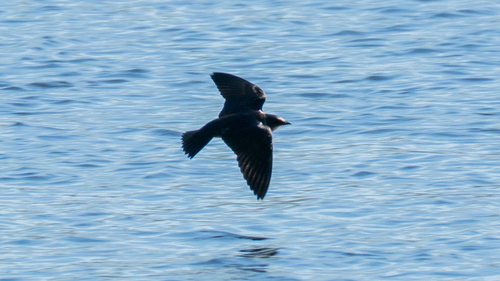
The Purple Martin is a large, sleek swallow with pointed wings and a forked tail. Males are entirely glossy, iridescent deep blue-purple, appearing black in dim light. Females and young birds have duller, greyish-white undersides, making them distinct from other swallows.
Category
BirdsRarity
Common
Danger
1/5 · Very low
Snaps
47
Purple Martins eat up to 2,000 flying insects every single day!
Some martins travel over 10,000 miles each year during migration!
These birds can drink water mid-flight by skimming the surface of lakes!
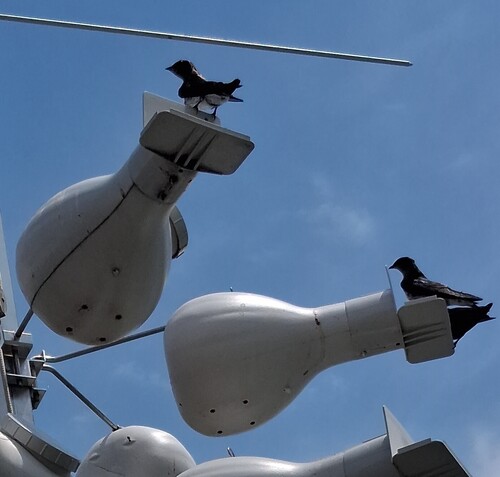
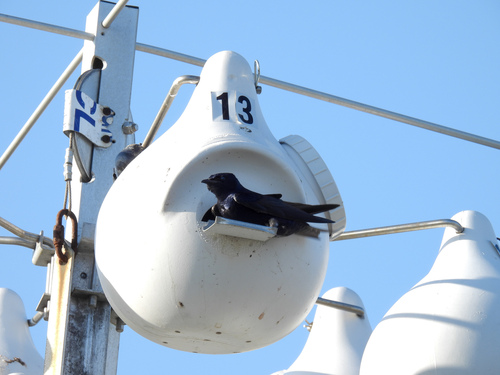
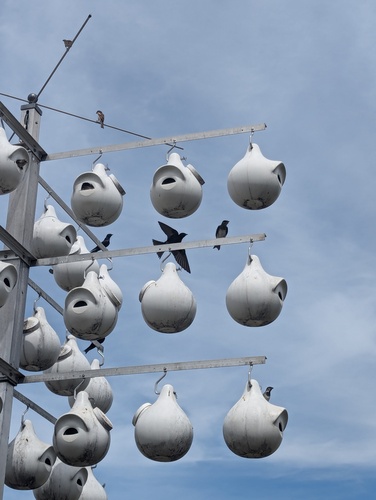
They are the only North American bird that relies almost entirely on human-provided homes!
Purple Martins can catch flying insects mid-air because of their agile flight and wide gape, helping them get food.
Purple Martins have a strong social instinct that helps them live together in large groups, often in human-made birdhouses.
Purple Martins can fly thousands of kilometers between continents because of their strong wings and endurance, avoiding cold winters.
These birds are expert aerial hunters, catching flying insects like dragonflies and wasps mid-air.
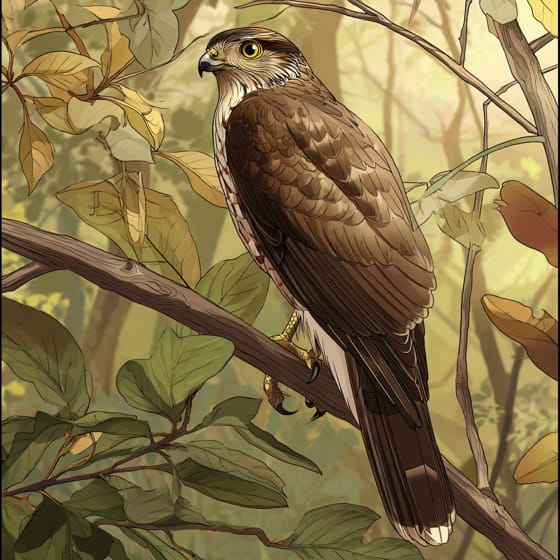
Accipiter cooperii
Juvenile martins are sometimes prey for these swift raptors.
Anax junius
Purple Martins actively pursue and catch these large dragonflies.
Oeciacus vicarius
These parasitic bugs feed on the blood of martins, especially nestlings.

Homo sapiens
Eastern populations rely almost entirely on human-provided housing.
Feathered describes animals, primarily birds, possessing a covering of feathers.
Social animals live in organized groups, cooperating for survival benefits such as foraging, defense, and raising offspring.
This trait identifies organisms whose diet primarily consists of insects and other small invertebrates.
Diurnal animals are primarily active during daylight hours, typically resting or sleeping at night.

This trait identifies organisms that exhibit exceptional swiftness in movement for hunting, escape, or travel.

Migratory animals undertake seasonal movements from one region to another, typically in response to changes in climate or food availability.

This habitat trait indicates species that can coexist with humans in urban and suburban environments, utilizing man-made structures and green spaces.
Danger
1/5 · Very low
Watch these birds from a distance and don't disturb their nests.
The easiest way to identify Purple Martin is to use the Snappit nature identifier app.
17-20 cm
39-41 cm
0.045-0.06 kg
5-7 years
64 km/h
These birds are expert aerial hunters, catching flying insects like dragonflies and wasps mid-air.
Urban areas
Zoom in to split clusters and explore where this object has been snapped.
Jun 2, 2026
Cape Arundel Summer Colony Historic DistrictPhoto attribution
no rights reserved
License: CC0 1.0 ↗
Image may be shown cropped inside the card frame.
May 31, 2026
Hickory Hill ParkPhoto attribution
(c) eeyipes, some rights reserved (CC BY)
License: CC BY 4.0 ↗
Image may be shown cropped inside the card frame.
May 20, 2026
Salisbury Beach State ReservationPhoto attribution
no rights reserved
License: CC0 1.0 ↗
Image may be shown cropped inside the card frame.
Apr 12, 2024
Caverns of SonoraPhoto attribution
no rights reserved
License: CC0 1.0 ↗
Image may be shown cropped inside the card frame.

US
You might spot Monarch, Ipsilon Dart Moth, and Canada Goose.
View guide →

Iowa, US
You might spot House Sparrow and Common Eastern Bumble Bee.
View guide →

Iowa, US
You might spot Common Milkweed, Amur Honeysuckle, and Canada Anemone.
View guide →

Louisiana, US
You might spot Trumpeter Swan, Lesser Scaup, and Canada Goose.
View guide →

Maine, US
You might spot Rugosa Rose and European Green Crab.
View guide →
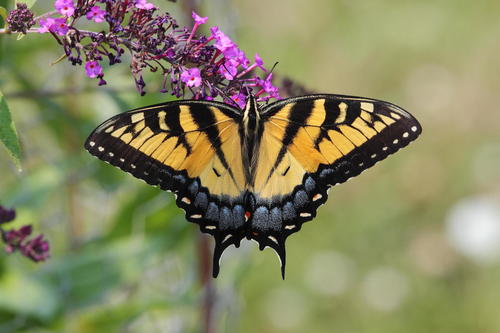
Pennsylvania, US
You might spot Eastern Tiger Swallowtail, Eastern Bluebird, and Monarch.
View guide →
Take the discovery with you
Snap it with Snappit to identify it, learn what makes it special, and add the discovery to your collection.




.jpg&width=800)








