





Red-crowned Amazon
Amazona viridigenalis
The Red-crowned Amazon is a colorful parrot with a bright green body and a red crown on its head. These playful birds love to chatter and can even mimic sounds they hear!
Habitat: Forests
The Red-crowned Amazon is a vibrant green parrot with a striking red forehead and crown, bordered by a blue patch behind the eyes. Its wings display hints of red and blue, adding to its colorful appearance.
Category
BirdsRarity
Common
Danger
1/5 · Very low
Snaps
13
Red-crowned Amazons often form huge flocks of hundreds of birds!
Their scientific name means 'green-cheeked' even with their red crown!
These parrots build their nests safely inside hollow tree trunks.
They can hang upside down like acrobats to reach tasty fruits!
Red-crowned Amazon has a powerful, hooked beak that helps them crack open tough nuts and seeds with ease.
Red-crowned Amazon can use its strong zygodactyl feet to grip branches and climb trees agilely while foraging.
Red-crowned Amazon can produce loud squawks and screeches that help them communicate across dense forest canopies.
These colorful parrots mainly enjoy a feast of fruits, seeds, nuts, and flowers.
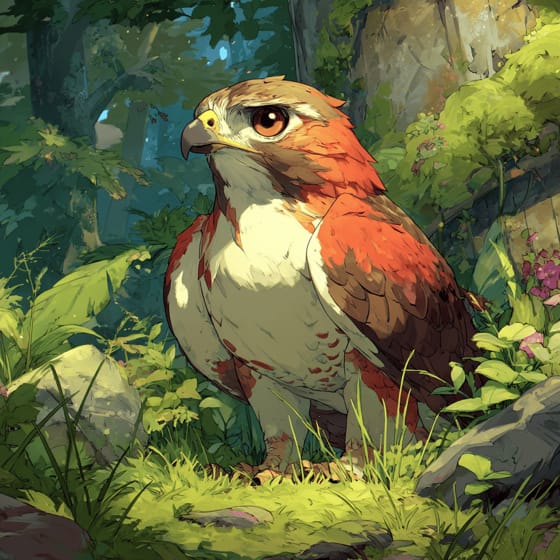
Buteo jamaicensis
A common bird of prey that can hunt these parrots.
Ficus insipida
They forage on the fruits of various fig species.
Cedrela odorata
Their diet includes seeds from this native tree species.
Quercus oleoides
They often nest in natural cavities within old oak trees.
Feathered describes animals, primarily birds, possessing a covering of feathers.
Social animals live in organized groups, cooperating for survival benefits such as foraging, defense, and raising offspring.
Colorful describes organisms or objects displaying a wide range of bright and distinct colors.
This trait characterizes organisms whose diet consists entirely or primarily of plant material.

This trait describes organisms that manipulate external objects to achieve a specific goal.

Forest habitats are terrestrial environments dominated by dense tree cover, supporting a high diversity of plant and animal life.

This trait characterizes organisms with an exceptionally long lifespan compared to others of their kind.

Diurnal animals are primarily active during daylight hours, typically resting or sleeping at night.

Endangered status indicates a species is at a very high risk of extinction in the wild in the near future.
Danger
1/5 · Very low
Always watch birds from a distance and don't try to touch them in the wild.
The easiest way to identify Red-crowned Amazon is to use the Snappit nature identifier app.
30-33 cm
50-60 cm
0.27-0.35 kg
20-50 years
55 km/h
These colorful parrots mainly enjoy a feast of fruits, seeds, nuts, and flowers.
Forests
Zoom in to split clusters and explore where this object has been snapped.

California, US
You might spot Western Fence Lizard and Eastern Fox Squirrel.
View guide →

US
You might spot Pond Slider, Black-Bellied Whistling-Duck, and Brown Anole.
View guide →
California, US
You might spot Giraffes, African Lion, and Tiger.
View guide →

California, US
You might spot Eastern Fox Squirrel, Bee, and House Sparrow.
View guide →

California, US
You might spot Western Fence Lizard and California Buckwheat.
View guide →

California, US
You might spot Western Fence Lizard and Eastern Fox Squirrel.
View guide →
Take the discovery with you
Snap it with Snappit to identify it, learn what makes it special, and add the discovery to your collection.




.jpg&width=800)






