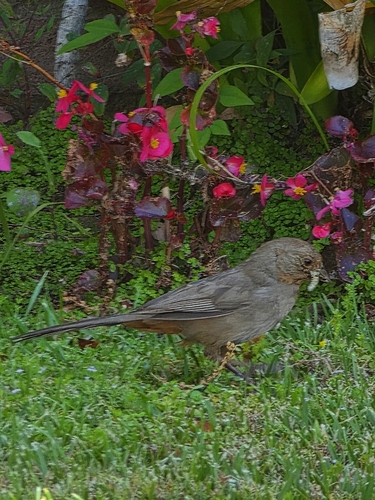
Western Fence Lizard

The Huntington Desert Garden is a captivating landscape showcasing one of the world's largest and oldest collections of cacti and other succulents.
The Huntington Desert Garden is a captivating landscape showcasing one of the world's largest and oldest collections of cacti and other succulents. Spanning 10 acres, this extraordinary garden transports visitors to arid regions across the globe, revealing the remarkable diversity and resilience of xerophytic plants. It's a place where dramatic shapes, vibrant colors, and unique adaptations come together in an unforgettable display.
Wander through 60 landscaped beds featuring over 2,000 species, from the iconic Golden Barrel Cacti and towering Mexican Tree Yuccas to the sprawling Aloe collection, which bursts into magnificent floral displays, especially in winter. The garden also houses ancient specimens like the Dragon Tree, one of the oldest in the collection, and the oldest plant in the Desert Garden Conservatory, a Pachypodium horombense from Madagascar. You'll encounter fascinating terrestrial bromeliads like Puya, unique caudiciform plants, and the striking formations of Creeping Devils, each plant telling a story of survival in extreme environments.
A visit to the Huntington Desert Garden offers a profound appreciation for the beauty and ingenuity of desert flora. It's a sensory journey through a "photographer's fantasy land," where strong shapes and textures abound, making every turn a new discovery. The garden not only delights with its visual spectacle but also serves as a critical conservation hub, preserving rare and endangered species and contributing to botanical research. Don't forget to bring the Snappit nature identification app along to scan local species.
The Huntington Desert Garden began in 1907 when Henry E. Huntington's superintendent of grounds, William Hertrich, started acquiring desert specimens. Initially, Huntington was not enthusiastic about cacti, having had unpleasant encounters with prickly pears during his railroad construction days. However, Hertrich persisted and began planting a trial desert garden on a sunny, south-facing slope. By the 1920s, the garden had grown to roughly its current 10-acre size, with Hertrich undertaking collection trips to the Southwest and Mexico to gather plants. His dedication, combined with Huntington's resources, including a railway spur built to bring in rocks, soil, and plants, established the Desert Garden as a preeminent collection. Today, it remains one of the finest in the world, housing over 5,000 species and holding significant research collections of agave, yucca, and cacti.
Explore the winding pathways through various sections representing different arid regions. Observe the incredible adaptations of plants to drought, such as their protective spines and water-storing tissues. Photography is highly recommended, especially of the striking forms and blooming plants.
Winter is ideal for viewing blooming aloes. Summer showcases vibrant desert plants, but temperatures can be high, so morning visits are recommended.
Most gardens at The Huntington are accessible. Wheelchairs are available for loan on a first-come, first-served basis, and visitors can bring their own motorized scooters or wheelchairs. An accessible shuttle runs in a loop, making eight stops around the grounds every 30 minutes, and these vehicles can accommodate wheelchairs. A color-coded map showing steep areas is available. Recent renovations specifically aim to expand access with wider, smoother, and gentler pathways in the Desert Garden. Assistive listening devices, sign language, and live captioning can be requested with advance notice.
Don't miss the impressive collection of Golden Barrel Cacti, the majestic Mexican Tree Yuccas, and the diverse Aloes and Agaves. The Desert Garden Conservatory houses sensitive and rare specimens, including the ancient Pachypodium horombense. Look for unique caudiciforms and the fascinating Living Stones. Recent renovations have also created a new, more prominent and accessible entrance.
Each card links to a full Explore page with photos, traits, and fun facts.
Start with the big picture, then zoom in to explore individual wildlife observations around this place.
Wear comfortable walking shoes, as the garden is extensive.
Bring water, especially during warmer months, as the desert climate can be intense.
Consider visiting in the morning to enjoy cooler temperatures and potentially fewer crowds.
Pick up a map at the entrance to help navigate the various sections and identify key plants.
Don't forget your camera; the unique forms and textures of the plants offer incredible photographic opportunities.
Explore the Desert Garden Conservatory for a closer look at more sensitive and rare specimens.
Jun 6, 2026
Photo attribution
(c) Cristhian Mace, some rights reserved (CC BY)
License: CC BY 4.0 ↗
Image may be shown cropped inside the card frame.
Jun 6, 2026
Photo attribution
(c) Cristhian Mace, some rights reserved (CC BY)
License: CC BY 4.0 ↗
Image may be shown cropped inside the card frame.
Jun 7, 2026
Jun 7, 2026
Jun 7, 2026

Maryland, US
You might spot White-Tailed Deer and Eastern Gray Squirrel.
View guide →
.jpg)
District of Columbia, US
You might spot Eastern Gray Squirrel, Duck, and House Sparrow.
View guide →

Illinois, US
You might spot American Robin, Canada Goose, and House Sparrow.
View guide →

Virginia, US
You might spot Spotted Lanternfly and Northern Cardinal.
View guide →
Take the discovery with you
Identify the wildlife you spot, learn as you go, and keep a collection of the adventure.