





Redhead
Aythya americana
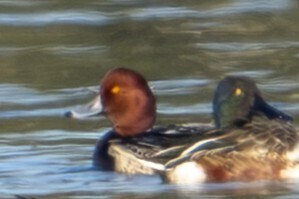
The Redhead is a beautiful duck with a striking reddish-brown head. They love to swim in lakes and ponds, diving underwater to find tasty plants and small fish.
Habitat: Wetlands
The Redhead is a medium-sized diving duck with a distinctive rounded head. Males boast a striking cinnamon-red head and neck, a black chest, and a gray body, with a blue-gray bill featuring a white ring. Females are duller, mostly brown with a dark crown.
Category
BirdsRarity
Common
Danger
1/5 · Very low
Snaps
8
Baby Redheads, called ducklings, can swim and find food on their own right after hatching!
During courtship, male Redheads perform elaborate head-tossing displays to impress females.
Redheads can migrate thousands of kilometers, flying vast distances without stopping!
Their eyes are bright golden-yellow, a stunning contrast to their head feathers!
Redhead can dive deep underwater for food because its dense bones and powerful legs help it propel through the water.
Redhead has the unique ability to lay eggs in other duck's nests, which helps them expand their brood without extra effort.
Redhead can gather in huge flocks, sometimes thousands strong, because it's a very social duck that helps them find safety and food.
This duck loves to eat underwater plants and sometimes small aquatic bugs and snails!

Haliaeetus leucocephalus
Large raptors like eagles often prey on ducks, especially during migration.

Canis latrans
Coyotes are opportunistic predators, targeting nests and sometimes adult ducks.
Vallisneria americana
A primary food source, especially vital on their wintering grounds.
Anas platyrhynchos
Redheads frequently lay their eggs in Mallard nests.

Aythya valisineria
Redheads also parasitize their close relative, the Canvasback, laying eggs in their nests.
Feathered describes animals, primarily birds, possessing a covering of feathers.
Characterized by having toes connected by a membrane, typically aiding in swimming.
Social animals live in organized groups, cooperating for survival benefits such as foraging, defense, and raising offspring.
Colorful describes organisms or objects displaying a wide range of bright and distinct colors.

Filter feeders obtain nutrients by straining suspended food particles and small organisms from water.

Piscivorous organisms are animals that primarily subsist on a diet of fish.

This habitat trait identifies species found in wetlands, which are areas of land saturated with water, either permanently or seasonally, including marshes, swamps, and bogs.

Freshwater habitats include non-saline aquatic environments such as rivers, lakes, ponds, and wetlands, vital for numerous species.

Aquatic habitats encompass environments where organisms live predominantly in water, including oceans, rivers, lakes, and wetlands.

Migratory animals undertake seasonal movements from one region to another, typically in response to changes in climate or food availability.
No aliases listed yet.
Danger
1/5 · Very low
Always watch ducks from a distance and do not feed them bread.
The easiest way to identify Redhead is to use the Snappit nature identifier app.
42-56 cm
76-89 cm
0.7-1.3 kg
12-22 years
80 km/h
This duck loves to eat underwater plants and sometimes small aquatic bugs and snails!
Wetlands
Zoom in to split clusters and explore where this object has been snapped.
Dec 9, 2025
Crowley Historic DistrictPhoto attribution
(c) Brandon Johnson, some rights reserved (CC BY)
License: CC BY 4.0 ↗
Image may be shown cropped inside the card frame.

California, US
You might spot Snowy Egret, Great Blue Heron, and Willet.
View guide →

New Jersey, US
You might spot Brant, Laughing Gull, and Great Black-Backed Gull.
View guide →

Michigan, US
You might spot Bald Eagle, American White Pelican, and Painted Turtle.
View guide →

Texas, US
You might spot Eastern Fox Squirrel, Duck, and American Robin.
View guide →

Nevada, US
You might spot Creosote Bush, Brittlebush, and Beavertail Pricklypear.
View guide →

Louisiana, US
You might spot Pectoral Sandpiper, Sprague's Pipit, and Anole.
View guide →
Take the discovery with you
Snap it with Snappit to identify it, learn what makes it special, and add the discovery to your collection.




.jpg&width=800)








