





river oats
Chasmanthium latifolium
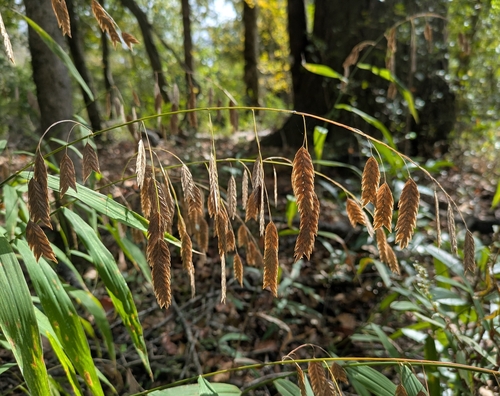
River oats are tall, graceful plants that grow near rivers and streams. They have beautiful, drooping seed heads that look like little oats swaying in the breeze.
Habitat: Wetlands
The river oats has striking flattened, pendulous seed heads resembling tiny oats, which emerge green and mature to a beautiful coppery-bronze. Its broad, bamboo-like leaves are a fresh green, forming an elegant, upright clump that adds grace to shady spots.
Category
PlantsRarity
Common
Danger
1/5 · Very low
Snaps
11
Its scientific name, Chasmanthium, means "gaping flower," referring to its open, flat seed heads!
The distinctive flat seed heads are a favorite for florists to use in dried autumn arrangements.
This plant produces seeds that look like tiny, flattened fish scales or flakes of corn.
Though called "oats," it's not a true oat, but a unique member of the grass family.
River oats can grow strong, fibrous roots that hold riverbanks and slopes together, preventing soil erosion.
River oats has broad leaves that are excellent at capturing the dim light found on shady woodland floors.
Its buoyant seeds can float on water, helping them travel and colonize new areas along rivers and streams.
Flowering plants are any plants that produce flowers as part of their reproductive cycle.
Describing a plant or anatomical structure that droops or hangs downwards.
Grass-like plants are herbaceous plants that visually resemble true grasses, typically having long, narrow leaves.
Edible plants are those parts of a plant that are considered safe for human consumption.

This habitat trait identifies species found in wetlands, which are areas of land saturated with water, either permanently or seasonally, including marshes, swamps, and bogs.

Freshwater habitats include non-saline aquatic environments such as rivers, lakes, ponds, and wetlands, vital for numerous species.
No aliases listed yet.
Danger
1/5 · Very low
Always stay on paths and be careful near water when exploring nature.
The easiest way to identify river oats is to use the Snappit nature identifier app.
60-150 cm
30-60 cm
1-3 cm
Summer
Yes
None
Perennial
Zoom in to split clusters and explore where this object has been snapped.
Nov 8, 2025
Locust Grove State Historic SitePhoto attribution
no rights reserved
License: CC0 1.0 ↗
Image may be shown cropped inside the card frame.

Alabama, US
You might spot American Beautyberry, White-Tailed Deer, and Peppervine.
View guide →

Louisiana, US
You might spot Mississippi River Wakerobin and Lyreleaf Sage.
View guide →

Missouri, US
You might spot Eastern Carpenter Bee, Duck, and American Robin.
View guide →

Georgia, US
You might spot Spanish Moss, Anole, and Resurrection Fern.
View guide →

Texas, US
You might spot Duck, Egyptian Goose, and Black-Bellied Whistling-Duck.
View guide →

New York, US
You might spot Eastern Carpenter Bee and Milkweed Tussock Moth.
View guide →
Take the discovery with you
Snap it with Snappit to identify it, learn what makes it special, and add the discovery to your collection.









.jpg&width=800)



_001.jpg&width=800)



