





Rock Squirrel
Otospermophilus variegatus
Rock squirrels are playful animals that love to dig and explore! They have fluffy tails and can be found in rocky areas where they make their homes.
Habitat: Mountain regions
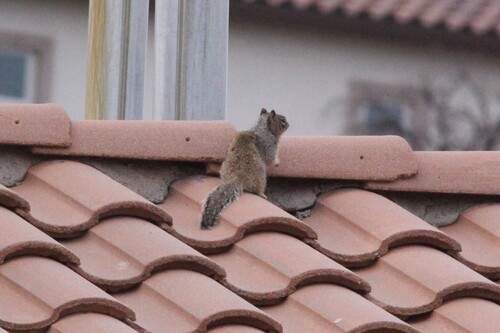
The Rock Squirrel has grayish-brown fur mottled with lighter specks, giving it a salt-and-pepper look. It possesses a notably long, bushy tail, often tipped with white. Its larger size helps distinguish it from other ground squirrels.
Category
MammalsRarity
Common
Danger
1/5 · Very low
Snaps
25
A group of squirrels is sometimes called a 'scurry' or a 'dray'—how fun!
Rock squirrels sometimes line their burrows with soft grass and fur for extra comfort!
These clever squirrels can store food in pouches inside their cheeks for later snacks!
They are excellent climbers and can often be seen scampering up trees as well as rocks!
Rock Squirrel can dig complex burrows that provide safe shelter and escape routes from predators.
Rock Squirrel has a unique ability to flatten its body on warm rocks to efficiently regulate its temperature.
Rock Squirrel can tolerate rattlesnake venom, which helps them survive bites during encounters.
These omnivores munch on seeds, fruits, insects, and even small reptiles they find!
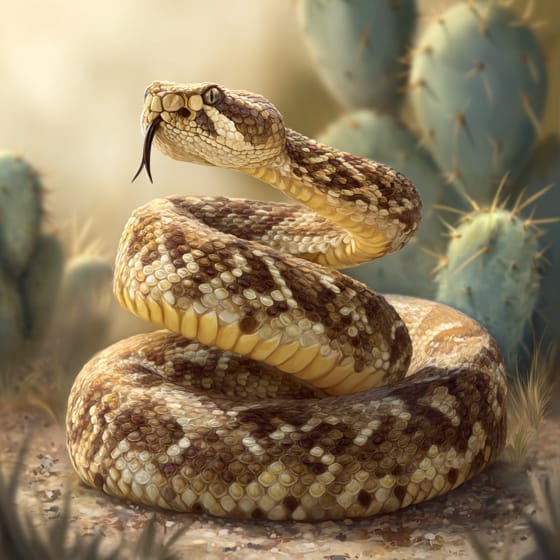
Crotalus atrox
A common predator

Aquila chrysaetos
An aerial predator
Opuntia engelmannii
Consumes fruits and pads
Pinus edulis
Feeds on seeds and nuts
Furry describes animals possessing a dense covering of soft hair or fur.
Social animals live in organized groups, cooperating for survival benefits such as foraging, defense, and raising offspring.
Burrowing animals dig tunnels and chambers in the ground, using these subterranean structures for shelter, hunting, or breeding.
This trait characterizes organisms whose diet consists entirely or primarily of plant material.

This habitat trait identifies species found in mountainous regions, characterized by high elevation, steep slopes, and varying climate zones.

Diurnal animals are primarily active during daylight hours, typically resting or sleeping at night.

This trait identifies organisms that exhibit exceptional swiftness in movement for hunting, escape, or travel.
No aliases listed yet.
Danger
1/5 · Very low
Watch from a distance and don't try to touch or feed wild squirrels.
The easiest way to identify Rock Squirrel is to use the Snappit nature identifier app.
43-53 cm
0.5-0.8 kg
2-5 years
20 km/h
These omnivores munch on seeds, fruits, insects, and even small reptiles they find!
Mountain regions
Foraging
Zoom in to split clusters and explore where this object has been snapped.
May 4, 2026
Gallup Commercial Historic DistrictPhoto attribution
(c) William Harmon, some rights reserved (CC BY)
License: CC BY 4.0 ↗
Image may be shown cropped inside the card frame.

New Mexico, US
You might spot Tree Cholla, Colorado Pinyon, and House Finch.
View guide →

Texas, US
You might spot Texas Hedgehog Cactus, Ornate Tree Lizard, and Cactus Wren.
View guide →

Arizona, US
You might spot Yarrow's Spiny Lizard and Mexican Jay.
View guide →

Nevada, US
You might spot Engelmann's Hedgehog Cactus.
View guide →

Arizona, US
You might spot Saguaro.
View guide →

Utah, US
You might spot Duck, Gambel Oak, and Box Elder.
View guide →
Take the discovery with you
Snap it with Snappit to identify it, learn what makes it special, and add the discovery to your collection.




.jpg&width=800)


.JPG&width=800)

.jpg&width=800)
