





Rose-breasted Grosbeak
Pheucticus ludovicianus
The Rose-breasted Grosbeak is a colorful bird with a bright pink chest and black wings. They love to sing beautiful songs and can often be seen in gardens and forests.
Habitat: Forests
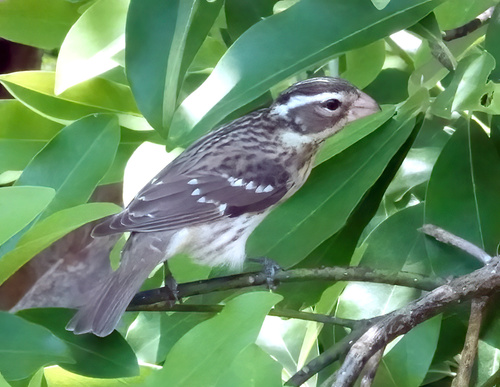
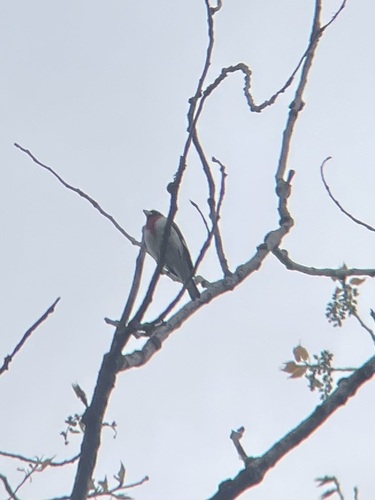
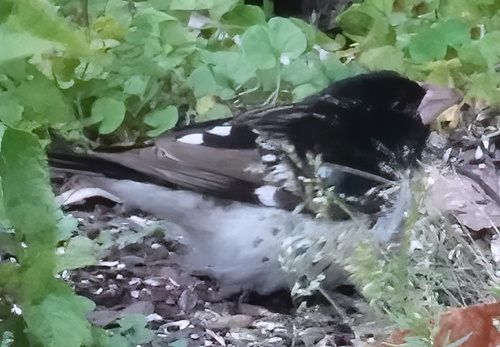
The Rose-breasted Grosbeak male has a striking black head and back, with a triangular rose-red patch on a white breast. Females and immatures are streaky brown with a strong supercilium, and both sexes show a flash of yellow under their wings in flight.
Category
BirdsRarity
Common
Danger
1/5 · Very low
Snaps
53
Females have a unique yellow flash under their wings when flying!
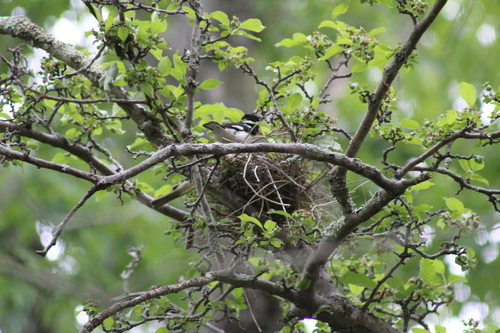
Males sing beautiful songs even while incubating eggs on the nest!
Their thick beak can crush cherry pits with surprising strength!
They fly thousands of kilometers between continents each year!
Rose-breasted Grosbeaks have a powerful, conical beak that helps them crack open tough seeds and fruit pits with ease.
Rose-breasted Grosbeaks can eat Monarch butterflies, which are toxic to many birds, because of special adaptations.
Rose-breasted Grosbeaks can migrate thousands of kilometers by flying mostly at night, using celestial cues to guide them.
These birds enjoy a varied diet of insects, seeds, and fruits, helping control garden pests.
Malacosoma americanum
Feeds on these common forest pests.
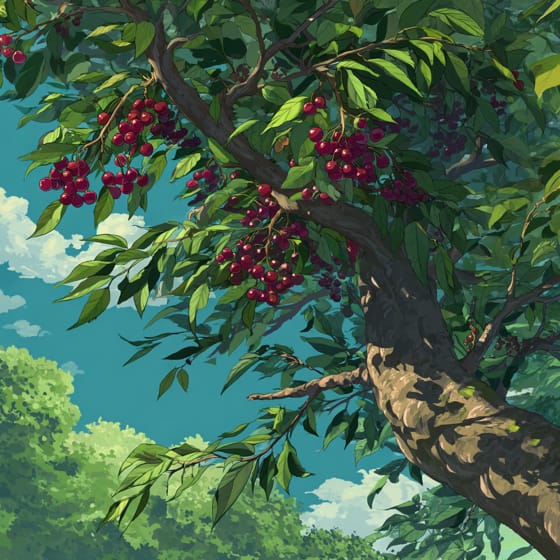
Prunus serotina
Crushes and consumes seeds and pulp from its fruits.
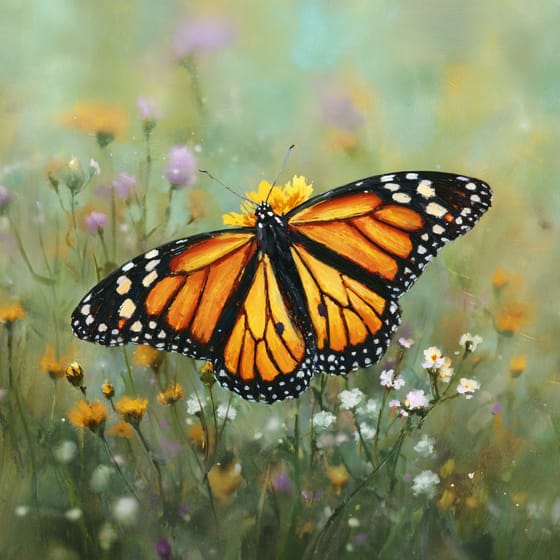
Danaus plexippus
One of few birds able to eat toxic Monarchs.
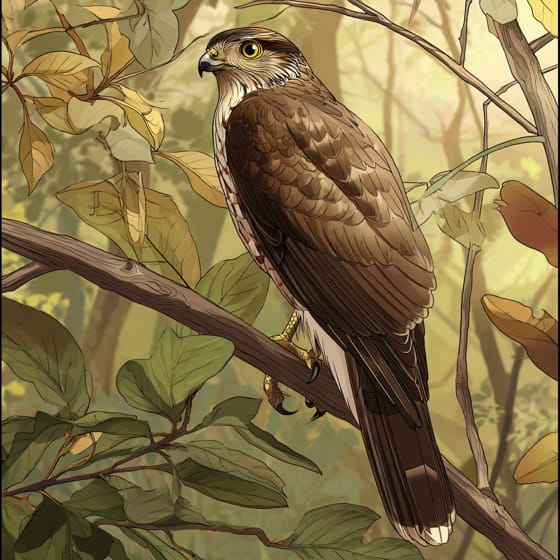
Accipiter cooperii
A common avian predator of smaller songbirds.
Feathered describes animals, primarily birds, possessing a covering of feathers.
Social animals live in organized groups, cooperating for survival benefits such as foraging, defense, and raising offspring.
This trait identifies organisms whose diet includes both plant and animal matter.
Singing animals produce complex vocalizations, often for purposes of attracting mates, defending territory, or communicating within their species.

Colorful describes organisms or objects displaying a wide range of bright and distinct colors.

Forest habitats are terrestrial environments dominated by dense tree cover, supporting a high diversity of plant and animal life.

Diurnal animals are primarily active during daylight hours, typically resting or sleeping at night.

Describes organisms that transfer pollen, enabling the fertilization and reproduction of plants.
Danger
1/5 · Very low
Enjoy watching birds from a distance and don't try to touch them.
The easiest way to identify Rose-breasted Grosbeak is to use the Snappit nature identifier app.
18-20 cm
29-33 cm
0.035-0.049 kg
3-10 years
50 km/h
These birds enjoy a varied diet of insects, seeds, and fruits, helping control garden pests.
Forests
Zoom in to split clusters and explore where this object has been snapped.
Jun 2, 2026
Bedford DepotPhoto attribution
(c) Lythronax246, some rights reserved (CC BY)
License: CC BY 4.0 ↗
Image may be shown cropped inside the card frame.
May 7, 2026
Matanzas State ForestPhoto attribution
(c) Pam Kleinsasser, some rights reserved (CC BY)
License: CC BY 4.0 ↗
Image may be shown cropped inside the card frame.
May 1, 2026
Nichols ArboretumPhoto attribution
(c) Jessica IJ, some rights reserved (CC BY)
License: CC BY 4.0 ↗
Image may be shown cropped inside the card frame.
Apr 27, 2026
Matanzas State ForestPhoto attribution
(c) Pam Kleinsasser, some rights reserved (CC BY)
License: CC BY 4.0 ↗
Image may be shown cropped inside the card frame.

Ohio, US
You might spot Eastern Fox Squirrel and Spotted Lanternfly.
View guide →

Rhode Island, US
You might spot Common Eastern Bumble Bee and Osprey.
View guide →

Vermont, US
You might spot Japanese Knotweed and Red-Bellied Woodpecker.
View guide →

Maryland, US
You might spot Osprey, Duck, and Spotted Lanternfly.
View guide →

Massachusetts, US
You might spot Striped Wintergreen, Painted Turtle, and Canada Goose.
View guide →

Alabama, US
You might spot Anole, Eastern Box Turtle, and Resurrection Fern.
View guide →
Take the discovery with you
Snap it with Snappit to identify it, learn what makes it special, and add the discovery to your collection.




.jpg&width=800)







