%2C_jard%C3%ADn_bot%C3%A1nico_alpino-%C3%A1rtico%2C_Troms%C3%B8%2C_Noruega%2C_2019-09-04%2C_DD_81.jpg&width=800)





rough horsetail
Equisetum hyemale
Rough horsetail is a tall, green plant that looks like a bunch of thin tubes. It grows in wet places and is very old, dating back millions of years!
Habitat: Wetlands
The rough horsetail has rigid, dark green, hollow stems with distinct black bands at each joint. Its unique segmented appearance and rough, sandpaper-like texture make it easily identifiable, lacking true leaves or showy flowers.
Category
PlantsRarity
Common
Danger
1/5 · Very low
Snaps
12
Its stems feel like sandpaper because they are packed with tiny glass-like crystals!
People once used these plants like scrubbing brushes to clean pots and pans!
Rough horsetail is an ancient plant, alive when dinosaurs roamed the Earth!
Water can easily flow through its hollow stems, helping it survive in damp places.
Rough horsetail has a special coating of silica in its stems that makes it tough and helps defend against hungry nibblers.
This plant has deep underground stems called rhizomes that help it spread widely and survive harsh conditions.
Instead of seeds, rough horsetail releases tiny spores that float on the wind to grow new plants far away.
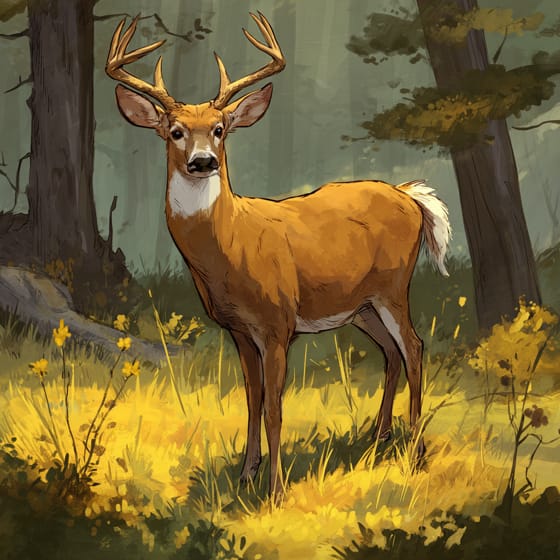
Odocoileus virginianus
Browses stems, especially new shoots.
Hyalopteroides humilis
Feeds on sap from its stems.
Puccinia equiseti
Grows on its stems, causing rust-like spots.
This trait characterizes plants lacking specialized vascular tissues (xylem and phloem) for transporting water and nutrients.
Grass-like plants are herbaceous plants that visually resemble true grasses, typically having long, narrow leaves.
This trait signifies organisms belonging to a very old evolutionary group with ancestors dating back millions of years.
Describes organisms that break down dead organic material, recycling nutrients back into the ecosystem.

This trait characterizes organisms with an exceptionally long lifespan compared to others of their kind.

This habitat trait identifies species found in wetlands, which are areas of land saturated with water, either permanently or seasonally, including marshes, swamps, and bogs.
No aliases listed yet.
Danger
1/5 · Very low
Always look but don't touch wild plants unless you have an adult with you.
The easiest way to identify rough horsetail is to use the Snappit nature identifier app.
30-150 cm
30-100 cm
No
Mild
Perennial
Wind
Wetlands
Zoom in to split clusters and explore where this object has been snapped.

Massachusetts, US
You might spot Common Eastern Bumble Bee and Eastern Skunk Cabbage.
View guide →

New York, US
You might spot Italian Wall Lizard, Black Swallowtail, and American Robin.
View guide →

Louisiana, US
You might spot Rough Horsetail, Northern Mockingbird, and Anole.
View guide →

New Mexico, US
You might spot Tree Cholla, Mule Deer, and Sacred Datura.
View guide →

Virginia, US
You might spot Clydesdale Horse, Highland Cattle, and Sheep.
View guide →

Virginia, US
You might spot Eastern Gray Squirrel and Northern Cardinal.
View guide →
Take the discovery with you
Snap it with Snappit to identify it, learn what makes it special, and add the discovery to your collection.









.jpg&width=800)



_001.jpg&width=800)



