





slimleaf pawpaw
Asimina angustifolia
The slimleaf pawpaw is a small tree with long, slender leaves. It produces tasty fruits that are often sweet and creamy, making it a special treat in nature!
Habitat: Forests
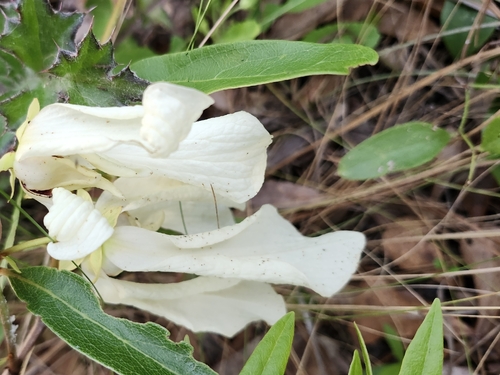
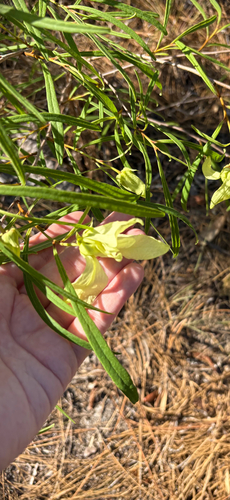
The slimleaf pawpaw is a slender shrub with distinctive long, narrow, dark green leaves. Its small, bell-shaped flowers range from creamy white to yellowish-brown or purplish, often appearing before the leaves. The fruits are small, oval, and green, turning yellow when ripe.
Category
PlantsRarity
Common
Danger
1/5 · Very low
Snaps
4
It can endure harsh, sandy environments where many other plants struggle to grow!
Its unusual-smelling flowers, sometimes like decaying meat, attract beetles for pollination!
The delicious fruit tastes like a tropical custard, a mix of banana, mango, and pineapple!
This amazing plant is a cousin to the largest edible fruit native to North America!
The slimleaf pawpaw has narrow leaves that reduce water loss, helping it thrive in dry, sandy soils.
It produces uniquely scented flowers that attract specific beetles and flies for pollination, ensuring its survival.
This plant can spread by sending up new shoots from its roots, forming colonies to expand its territory.
Deciduous plants periodically shed all their leaves, typically during autumn or dry seasons.
Shade tolerant plants are adapted to grow and thrive in areas with low light levels, requiring less direct sunlight.
Broadleaf trees are angiosperms characterized by flat, wide leaves that are typically shed annually in temperate climates.
Fruit-bearing plants produce fruits, which are the mature ovaries of flowering plants containing seeds.

A fruit tree is a perennial tree that produces fruit, which is edible to humans or animals.

Edible plants are those parts of a plant that are considered safe for human consumption.

Forest habitats are terrestrial environments dominated by dense tree cover, supporting a high diversity of plant and animal life.
No aliases listed yet.
Danger
1/5 · Very low
Always ask an adult before picking or tasting any fruit from trees.
The easiest way to identify slimleaf pawpaw is to use the Snappit nature identifier app.
100-300 cm
50-150 cm
1.5-3 cm
Spring
Yes
Mild
Perennial
Zoom in to split clusters and explore where this object has been snapped.
May 26, 2026
Morningside Nature CenterPhoto attribution
(c) Arturo Santos, some rights reserved (CC BY)
License: CC BY 4.0 ↗
Image may be shown cropped inside the card frame.
Apr 21, 2026
Morningside Nature CenterPhoto attribution
(c) Emily Geest, some rights reserved (CC BY)
License: CC BY 4.0 ↗
Image may be shown cropped inside the card frame.
Take the discovery with you
Snap it with Snappit to identify it, learn what makes it special, and add the discovery to your collection.









.jpg&width=800)


_001.jpg&width=800)


