





Sooty Grouse
Dendragapus fuliginosus
The Sooty Grouse is a large bird that loves to live in the forests of the western United States. They have beautiful dark feathers and are known for their unique calls that sound like a soft whistle.
Habitat: Forests
The Sooty Grouse is a robust, chicken-like bird with a short, stout beak. Males are mostly dark bluish-gray with a bright yellow comb over each eye and a purple-red air sac on their throat. Females are mottled brown and gray, providing excellent camouflage in their forest habitat.
Category
BirdsRarity
Common
Danger
1/5 · Very low
Snaps
3
Male Sooty Grouse puff out air sacs on their neck to make loud "hoots" during courtship!
Their diet changes so much that young grouse can't eat the same foods as their parents!
They can survive freezing winters by burrowing into the snow for warmth and shelter!
Unlike many birds, female Sooty Grouse often nest directly on the forest floor, well hidden.
Sooty Grouse can produce a deep, low-frequency hooting call using special throat sacs that carries far through dense forests.
Sooty Grouse has intricately patterned plumage that helps them blend perfectly into the forest floor or tree bark, avoiding predators.
Sooty Grouse can launch into a rapid, powerful flight from a standstill, quickly escaping danger by bursting through trees.
Sooty Grouse can digest tough conifer needles, a unique ability that allows them to find food even in harsh winter conditions.
Sooty Grouse mainly munch on conifer needles, buds, and berries, especially in winter!
Age differences: Young grouse eat insects and greens; adults switch almost entirely to conifer needles.
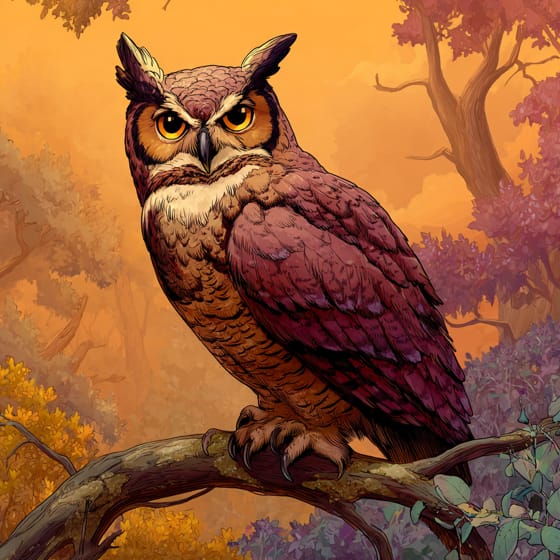
Bubo virginianus
Predator of eggs, chicks, and adult grouse.
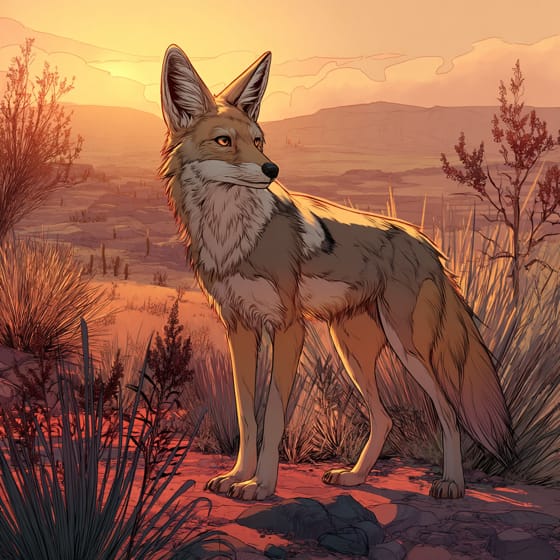
Canis latrans
Hunts grouse on the forest floor, especially nests.
Pseudotsuga menziesii
Needles are a primary winter food source for grouse.

Vaccinium parvifolium
Berries are an important summer and fall food for grouse.
Feathered describes animals, primarily birds, possessing a covering of feathers.
Social animals live in organized groups, cooperating for survival benefits such as foraging, defense, and raising offspring.
Singing animals produce complex vocalizations, often for purposes of attracting mates, defending territory, or communicating within their species.
Camouflaged describes organisms that possess coloring or patterns that allow them to blend into their environment.

This trait characterizes organisms whose diet consists entirely or primarily of plant material.

Forest habitats are terrestrial environments dominated by dense tree cover, supporting a high diversity of plant and animal life.

Diurnal animals are primarily active during daylight hours, typically resting or sleeping at night.
Danger
1/5 · Very low
Enjoy watching birds from a distance and don't try to catch them.
The easiest way to identify Sooty Grouse is to use the Snappit nature identifier app.
40-58 cm
65-75 cm
0.8-1.4 kg
3-8 years
80 km/h
Sooty Grouse mainly munch on conifer needles, buds, and berries, especially in winter!
Forests
Zoom in to split clusters and explore where this object has been snapped.

Washington, US
You might spot Cascade Oregon-Grape, Douglas Fir, and Salal.
View guide →
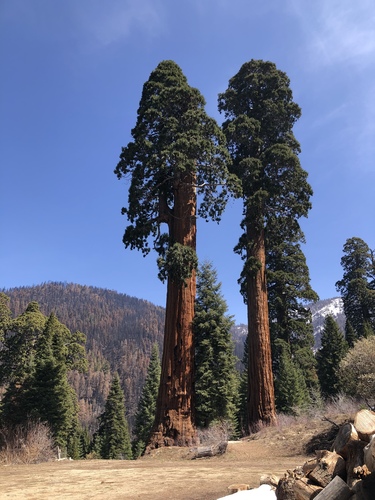
California, US
You might spot Sequoia, Mountain Misery, and Black Bear.
View guide →
California, US
You might spot Sequoia, Whiskerbrush, and Black Bear.
View guide →

California, US
You might spot Sequoia, Mule Deer, and Black Bear.
View guide →

California, US
You might spot Sequoia, Mule Deer, and Black Bear.
View guide →

California, US
You might spot Sequoia, Mule Deer, and Yellow-Bellied Marmot.
View guide →
Take the discovery with you
Snap it with Snappit to identify it, learn what makes it special, and add the discovery to your collection.




.jpg&width=800)







