





Southwestern Ponderosa Pine
Pinus brachyptera
The Southwestern Ponderosa Pine is a tall tree with long, green needles. It grows in warm, sunny places and provides homes for many animals. Its wood is strong and used for building.
Habitat: Mountain regions
The Southwestern Ponderosa Pine is a tall, straight evergreen tree with long needles, typically in bundles of three to five. Its deeply furrowed bark matures to a distinctive reddish-orange or cinnamon-brown color, often breaking into plates. Cones are ovoid, reddish-brown, and usually 5-10 cm long with prickles.
Category
PlantsRarity
Common
Danger
1/5 · Very low
Snaps
2
Its bark can smell like warm vanilla or butterscotch on a sunny day!
Many animals like deer and squirrels munch on its nutritious seeds from the cones.
Southwestern Ponderosa Pines can grow to be over 500 years old, witnessing centuries!
The scientific name *brachyptera* means 'short-winged,' referring to its cone scales.
Southwestern Ponderosa Pine has incredibly thick, scaly bark that helps it survive frequent, low-intensity forest fires.
This pine has a deep taproot that helps it find water far underground, allowing it to thrive in arid Southwestern climates.
It produces sticky resin which traps and repels insects trying to bore into its trunk, protecting it from damage.

Sciurus aberti
Relies on this pine for food (seeds, inner bark) and shelter.
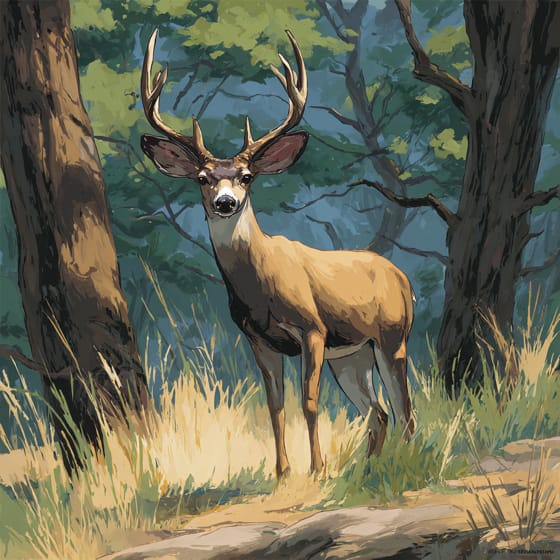
Odocoileus hemionus
Browses on its needles and twigs, especially in winter.
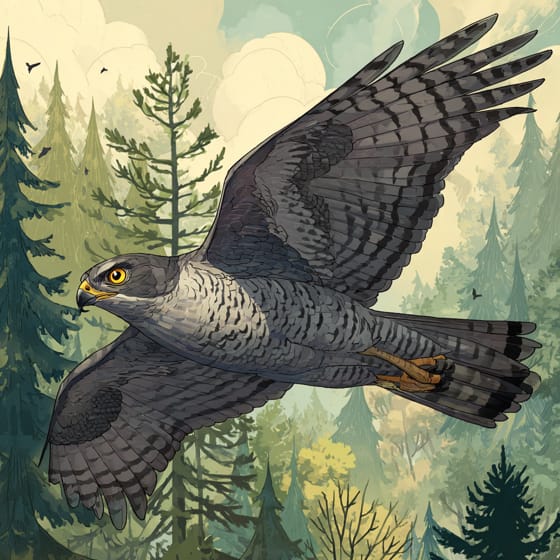
Accipiter gentilis
Prefers mature pines for building large, sturdy nests.
Rhizopogon luteolus
Forms a beneficial relationship helping the tree absorb nutrients.
Aromatic plants produce and emit fragrant volatile organic compounds, often for defense or to attract pollinators.
Broadleaf trees are angiosperms characterized by flat, wide leaves that are typically shed annually in temperate climates.
Coniferous plants are typically evergreen, bearing needles or scales and reproductive cones.
Evergreen plants retain their foliage throughout the year, never shedding all their leaves at once.

Timber refers to wood that has been prepared for use in building and carpentry.

This habitat trait identifies species found in mountainous regions, characterized by high elevation, steep slopes, and varying climate zones.

This trait characterizes organisms with an exceptionally long lifespan compared to others of their kind.

Describes a species whose presence and role have a disproportionately large effect on its environment.
No aliases listed yet.
Danger
1/5 · Very low
Stay on paths when exploring near trees, and don't climb without an adult.
The easiest way to identify Southwestern Ponderosa Pine is to use the Snappit nature identifier app.
2000-4500 cm
600-1500 cm
Spring-early summer
Yes
None
Perennial
Wind
Zoom in to split clusters and explore where this object has been snapped.

New Mexico, US
You might spot Tree Cholla, Colorado Pinyon, and House Finch.
View guide →

New Mexico, US
You might spot Tree Cholla, Mule Deer, and Sacred Datura.
View guide →

New Mexico, US
You might spot Tree Cholla, Colorado Pinyon, and Apache Plume.
View guide →

Arizona, US
You might spot Dark-Eyed Junco and Plateau Fence Lizard.
View guide →

Arizona, US
You might spot Southwestern Ponderosa Pine and Plateau Fence Lizard.
View guide →

Arizona, US
You might spot Fernbush, Mat Rock Spiraea, and Baker Kingcup Cactus.
View guide →
Take the discovery with you
Snap it with Snappit to identify it, learn what makes it special, and add the discovery to your collection.









.jpg&width=800)


_001.jpg&width=800)


