_Hypericum_perforatum_flower_and_buttons.jpg&width=800)




St John's Wort
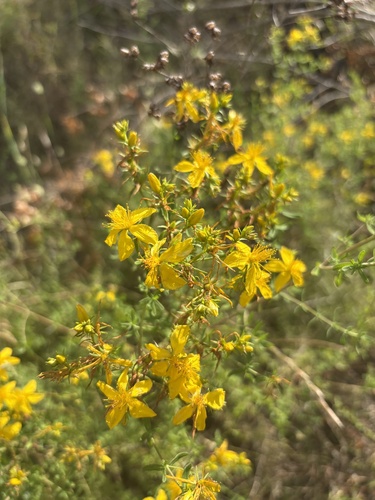
Hypericum perforatum
St. John's Wort is a bright yellow flower that grows in sunny fields and meadows. It is known for its healing properties and is often used in herbal medicine.
Habitat: Fields, Meadows
The St John's Wort has bright yellow, star-shaped flowers with five petals, often adorned with tiny black dots. Its oval leaves appear to have tiny transparent holes when held to the light, a unique feature.
Category
PlantsRarity
Common
Danger
1/5 · Very low
Snaps
22
Animals with white fur can get sunburned from eating too much of it!
Hold a leaf to the sun; it looks like it's full of tiny holes!
Some beetles are specially adapted to only eat St John's Wort!
Squeeze its flower buds to see them 'bleed' a surprising red juice!
St John's Wort can release a dark red liquid when its flowers or buds are crushed, which helps it defend against hungry insects.
St John's Wort has translucent dots on its leaves that act like tiny windows, possibly helping it regulate light or store oils.
St John's Wort produces special chemicals, like hypericin, that protect it from being eaten by many herbivores.
Apis mellifera
Visits flowers for nectar and pollen
Bombus terrestris
An important pollinator of its flowers
Chrysolina hyperici
Feeds on the leaves and flowers
Aphis hyperici
Sucks sap from stems and leaves
Perennial plants live for more than two years, typically returning to grow and bloom each year from their roots.
Aromatic plants produce and emit fragrant volatile organic compounds, often for defense or to attract pollinators.
Flowering plants are any plants that produce flowers as part of their reproductive cycle.
Shade tolerant plants are adapted to grow and thrive in areas with low light levels, requiring less direct sunlight.

Medicinal plants possess chemical compounds that can be used for therapeutic purposes to treat illnesses or maintain health.
Danger
1/5 · Very low
While St. John's Wort is a beautiful plant, it's important not to pick or eat wild plants without adult supervision.
The easiest way to identify St John's Wort is to use the Snappit nature identifier app.
30-90 cm
30-60 cm
1-2.5 cm
Summer
No
Moderate
Perennial
Zoom in to split clusters and explore where this object has been snapped.
May 30, 2026
Sonoma Botanical GardenPhoto attribution
no rights reserved
License: CC0 1.0 ↗
Image may be shown cropped inside the card frame.
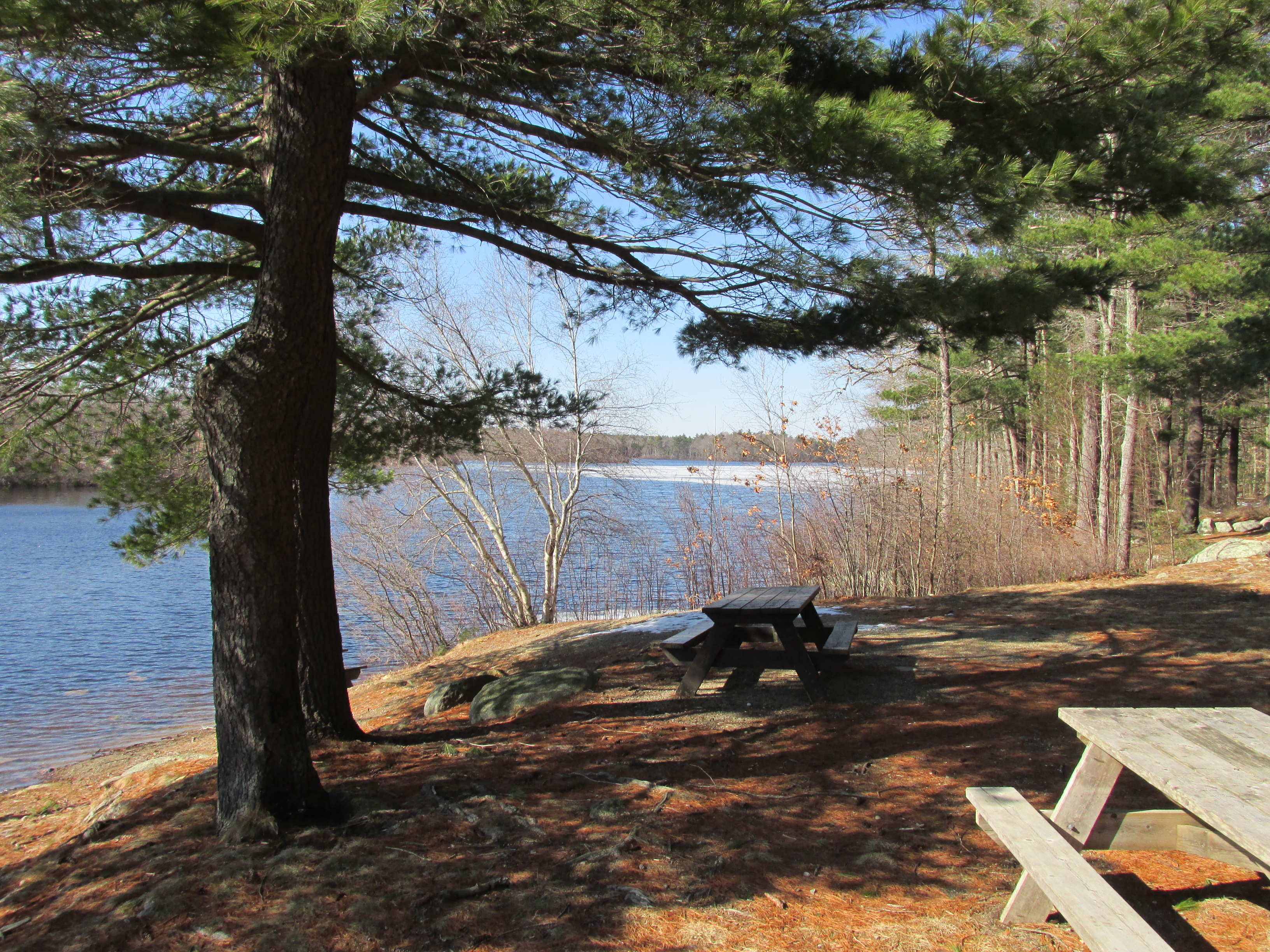
Massachusetts, US
You might spot Eastern White Pine and Common Eastern Bumble Bee.
View guide →

Oregon, US
You might spot Duck, Pacific Trillium, and Wood Duck.
View guide →

Rhode Island, US
You might spot Spotted Lanternfly, Duck, and American Robin.
View guide →

New York, US
You might spot Common Eastern Bumble Bee and American Robin.
View guide →

Connecticut, US
You might spot Hay-Scented Fern, Canada Mayflower, and Wood Frog.
View guide →

Pennsylvania, US
You might spot Spotted Lanternfly, Duck, and Asian Lady Beetle.
View guide →
Take the discovery with you
Snap it with Snappit to identify it, learn what makes it special, and add the discovery to your collection.








.jpg&width=800)



_001.jpg&width=800)



