





sweetfern
Comptonia peregrina
Sweetfern is a lovely shrub that grows in sandy places. It has soft, fern-like leaves and gives off a sweet smell, especially when you touch it. It's a great plant for nature lovers to discover!
Habitat: Sandy areas
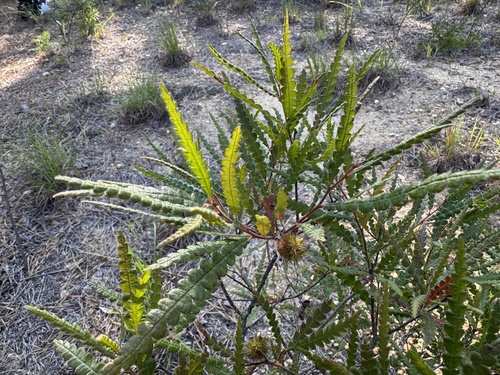
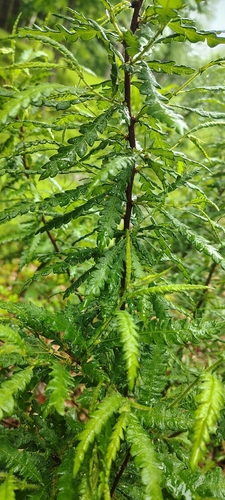
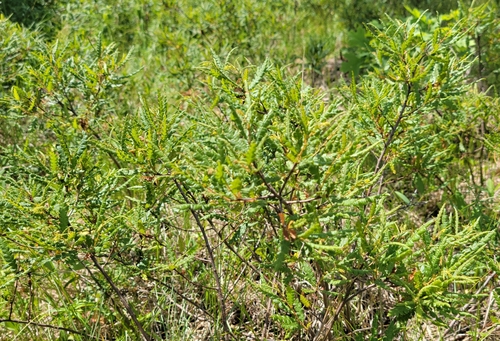
The sweetfern is a woody shrub that looks like a fern, with long, narrow, bright green leaves deeply lobed and highly aromatic. Its upright stems create a bushy appearance, contrasting with the soft, delicate look of its foliage.
Category
PlantsRarity
Common
Danger
1/5 · Very low
Snaps
40
Even though it's called a fern, it's actually a woody shrub related to bayberry plants!
Indigenous peoples historically used sweetfern for teas, medicines, and even insect repellent!
Its tiny, scale-like female flowers turn into small, cone-like fruits after pollination!
Rub its leaves for a strong, spicy-sweet smell, like a forest air freshener!
Sweetfern can add nitrogen to the soil using special bacteria in its roots, helping it grow in poor ground.
Sweetfern can quickly regrow after a fire, making it a pioneer plant in disturbed, open areas.
Sweetfern has highly fragrant leaves that deter some animals, protecting it from being eaten.
Frankia alni
Helps sweetfern grow in nutrient-poor soils.
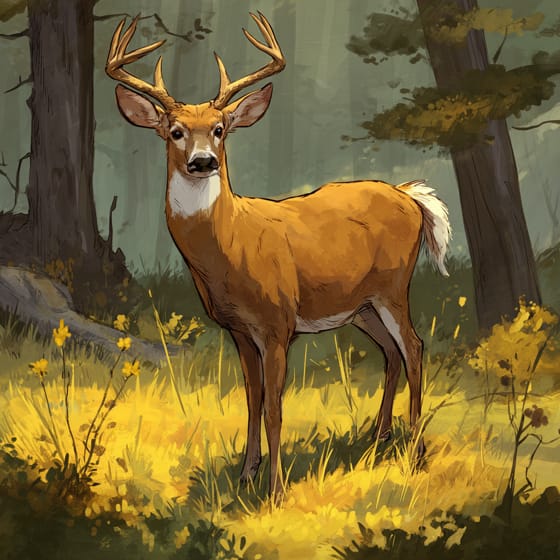
Odocoileus virginianus
Deer browse on its aromatic leaves and twigs.
Darapsa myron
Its caterpillars exclusively feed on sweetfern leaves.
Aromatic plants produce and emit fragrant volatile organic compounds, often for defense or to attract pollinators.
Deciduous plants periodically shed all their leaves, typically during autumn or dry seasons.
A shrub is a woody plant smaller than a tree, typically with multiple stems branching from or near the ground.
Fragrant flowers emit a pleasant aroma, often to attract pollinators or for defense.

Drought-tolerant plants can survive and flourish in conditions with limited water availability.

Edible plants are those parts of a plant that are considered safe for human consumption.
No aliases listed yet.
Danger
1/5 · Very low
Always look but don't touch plants unless you know they are safe.
The easiest way to identify sweetfern is to use the Snappit nature identifier app.
50-150 cm
100-300 cm
Spring
Yes
None
Perennial
Wind
Zoom in to split clusters and explore where this object has been snapped.
Jun 19, 2026
Camp EvansPhoto attribution
(c) Jason K., some rights reserved (CC BY)
License: CC BY 4.0 ↗
Image may be shown cropped inside the card frame.
May 23, 2026
Canton Center Historic DistrictPhoto attribution
no rights reserved
License: CC0 1.0 ↗
Image may be shown cropped inside the card frame.
Jul 2, 2023
Canoe Landing Prairie State Natural AreaPhoto attribution
(c) aarongunnar, some rights reserved (CC BY)
License: CC BY 4.0 ↗
Image may be shown cropped inside the card frame.

New York, US
You might spot Sundial Lupine, Spotted Horsemint, and New Jersey Tea.
View guide →

Pennsylvania, US
You might spot Mountain Laurel, Ghost Pipe, and Sweetfern.
View guide →

Rhode Island, US
You might spot Common Eastern Bumble Bee and Osprey.
View guide →

Connecticut, US
You might spot Striped Wintergreen and Common Eastern Bumble Bee.
View guide →

New Jersey, US
You might spot Brant, Laughing Gull, and Great Black-Backed Gull.
View guide →

Connecticut, US
You might spot Green Frog and Mountain Laurel.
View guide →
Take the discovery with you
Snap it with Snappit to identify it, learn what makes it special, and add the discovery to your collection.








.jpg&width=800)


_001.jpg&width=800)



