





thimbleberry
Rubus parviflorus
Thimbleberries are sweet, red berries that grow on tall bushes. They are soft and look like little cups, perfect for picking and eating right from the plant!
Habitat: Forests
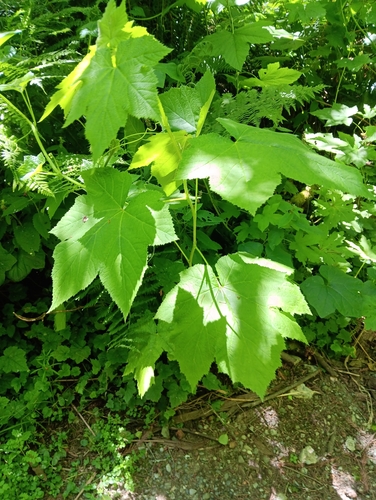
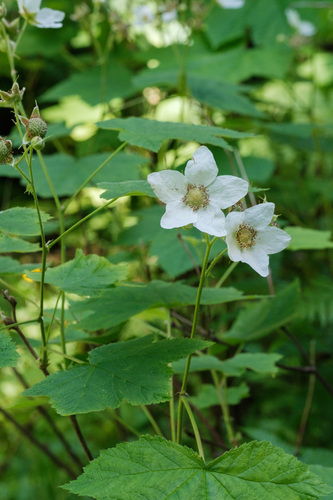
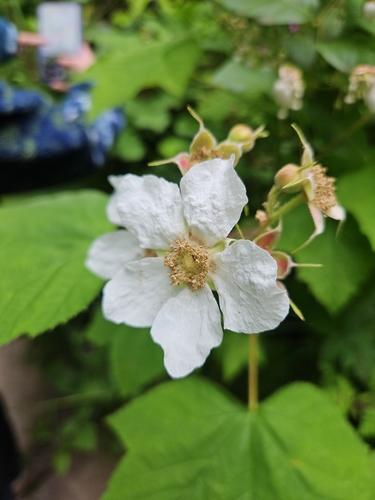
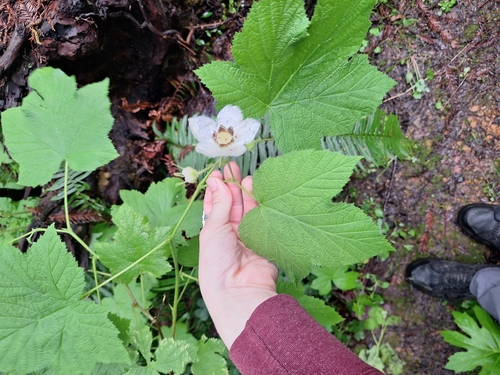
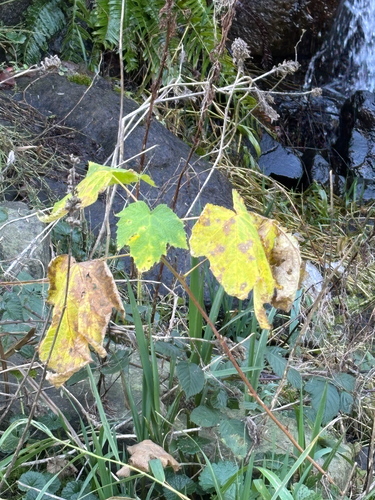
The thimbleberry has large, soft, maple-leaf-shaped leaves and showy white flowers resembling wild roses. Its bright red, cap-like berries, which look like tiny sewing thimbles, easily separate from their core when picked.
Category
PlantsRarity
Common
Danger
1/5 · Very low
Snaps
50
If you ever get lost, finding thimbleberries might mean you're near water because they love moist soil!
Its extra-large, soft leaves can be used like a natural, biodegradable paper towel in the wilderness!
The thimbleberry's bright red fruit is so delicate, it often falls apart right in your hand!
Unlike many berry bushes, thimbleberry plants do not have thorns, making their fruit easy to pick and enjoy!
Thimbleberry can spread underground with rhizomes that help it quickly colonize new clearings after disturbances.
Thimbleberry produces large, showy white flowers that strongly attract a wide variety of native insects for pollination.
Its juicy, edible berries attract birds and mammals to eat them, which helps to spread its seeds far and wide.
Bombus occidentalis
Feeds on thimbleberry nectar
Ursus americanus
Eats the sweet, ripe berries
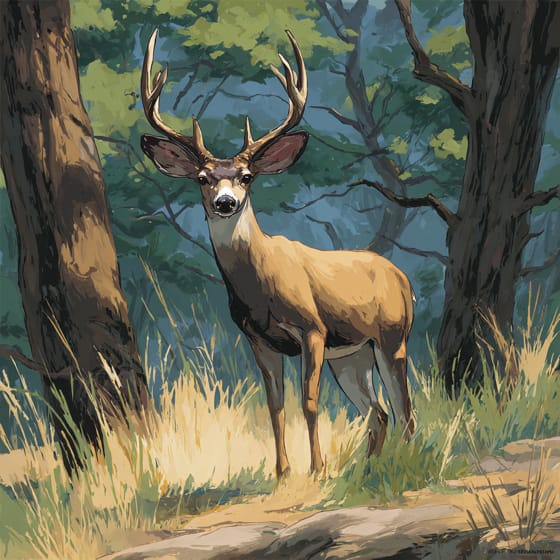
Odocoileus hemionus
Browses on leaves and shoots
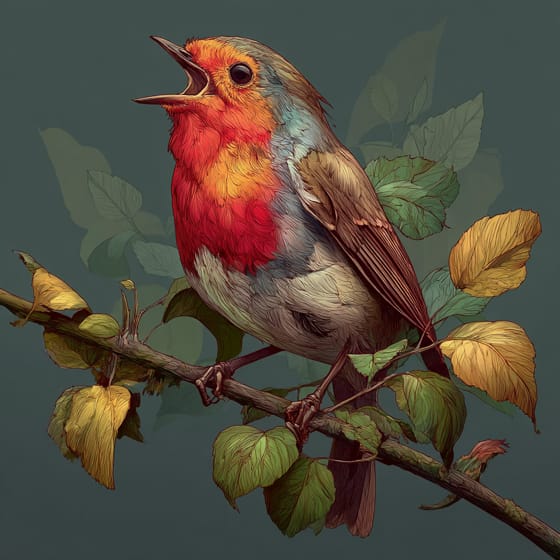
Turdus migratorius
Consumes the nutritious berries
Deciduous plants periodically shed all their leaves, typically during autumn or dry seasons.
Flowering plants are any plants that produce flowers as part of their reproductive cycle.
A shrub is a woody plant smaller than a tree, typically with multiple stems branching from or near the ground.
Fruit-bearing plants produce fruits, which are the mature ovaries of flowering plants containing seeds.

Edible plants are those parts of a plant that are considered safe for human consumption.

Describes plants that are particularly attractive and beneficial to a wide range of pollinating organisms.

Rapid growing plants exhibit accelerated growth rates, quickly increasing in size and biomass within a short period.

Forest habitats are terrestrial environments dominated by dense tree cover, supporting a high diversity of plant and animal life.
Danger
1/5 · Very low
Always ask an adult before picking and eating berries in the wild.
The easiest way to identify thimbleberry is to use the Snappit nature identifier app.
100-250 cm
100-300 cm
2-6 cm
Late spring to mid-summer
Yes
None
Perennial
Zoom in to split clusters and explore where this object has been snapped.
Jun 5, 2026
Arcata Community ForestPhoto attribution
no rights reserved
License: CC0 1.0 ↗
Image may be shown cropped inside the card frame.
May 28, 2026
Hoyt ArboretumPhoto attribution
no rights reserved
License: CC0 1.0 ↗
Image may be shown cropped inside the card frame.
May 25, 2026
Hoyt ArboretumPhoto attribution
no rights reserved
License: CC0 1.0 ↗
Image may be shown cropped inside the card frame.
May 4, 2026
Headwaters Forest ReservePhoto attribution
no rights reserved
License: CC0 1.0 ↗
Image may be shown cropped inside the card frame.
Jan 23, 2026
Martha Springer Botanical GardenPhoto attribution
(c) Aden Sommerville, some rights reserved (CC BY)
License: CC BY 4.0 ↗
Image may be shown cropped inside the card frame.

Oregon, US
You might spot Duck, Pacific Trillium, and Wood Duck.
View guide →

US
You might spot Bald Eagle, Common Raven, and Salmonberry.
View guide →

Washington, US
You might spot Pacific Banana Slug and Oregon Forestsnail.
View guide →

Montana, US
You might spot Great Blanketflower and Seven-Spotted Lady Beetle.
View guide →

Michigan, US
You might spot Yellow Lady's Slipper and Ring-Billed Gull.
View guide →

Oregon, US
You might spot Oregon Oak, Pacific Poison Oak, and American Bullfrog.
View guide →
Take the discovery with you
Snap it with Snappit to identify it, learn what makes it special, and add the discovery to your collection.






.jpg&width=800)



_001.jpg&width=800)



